Killin and Ardeonaig
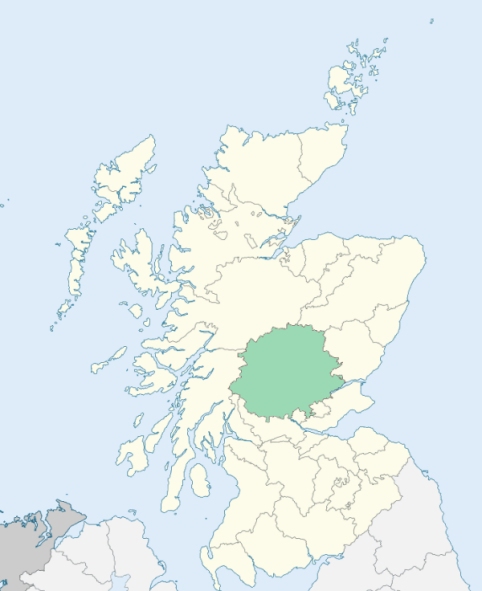
Killin is a parish in the district of Breadalbane, Perthshire. It consists of two detached sections and a large main body. One of the detached sections stretches southward from Loch Tay at the distance of 3¼ miles from the eastern extremity of the main body, and is bounded by portions of Kenmore, and by Comrie. The other detached portion lies on the north side of the River Lochy, 2½ miles north of the nearest point of the main body, is bounded by Fortingall, Kenmore, and a part of Weem. The main body of the parish extends from the head of Loch Tay to the boundary with Argyllshire. It is bounded on the north by detached parts of Kenmore and Weem, on the east by the main body of Kenmore, by Loch Tay, and by a part of Weem, on the south by Comrie and Balquhidder, and on the south-west, west and north-west by Argyllshire. (1867: The Imperial Gazetteer of Scotland, by John Marius Wilson).
Ardchyle, Ardnagaul, Ballichroisk, Borland, Clifton, Crianlarich, Killin, Liangarstan, Lix, Momore, Tullich, Tyndrum
Achline or Auchlyne
The parish of Killin had two detached parts:
No. 1. Botournie, in Glenlochay
No. 2 Ardeonaig, on the south shore of Loch Tay
Killin detached No. 2 was transferred to the parish of Kenmore. Kenmore detached No. 1 and Kenmore detached No. 2 were annexed to the parish of Killin, and the part of Kenmore detached No. 5 which lay in the basin of the River Lochay was also annexed to Killin. Through the annexation of Kenmore detached No. 2, Killin detached No. 1 was united with the main portion of the parish of Killin. Weem detached No. 1 and Weem detached No. 3 were annexed to the parish of Killin, and the part of Weem detached No. 9 which lay in the basin of the River Lochay was also annexed to Killin. See affected properties and landholders. (1892: Boundary of counties and parishes in Scotland as settled by the Boundary Commissioners under the Local Government Act, 1889, by Hay Shennan)
PRE-REFORMATION GOVERNANCE:
POST-REFORMATION GOVERNANCE:
The parishes of Killin and Ardeonaig were united in 1617.
Killin. The church of Killin was dedicated to St Fillan. At Achlyne, in Glen Dochart, within this parish, stand the ruins of a chapel of St Fillan. It owned some much-prized relics of the Saint, and was visited by many pilgrims.
Ardeonaig. The church of Ardeonaig was dedicated to St Adamnan.
Disjoined Quoad Sacra Parishes:
Strathfillan. The parish was united to Killin by the Commission of Parliament in 1617. The church was dedicated to St Fillan of Glen Dochart, who dwelt here. On the site of his ancient church, King Robert I founded, in 1314, the Augustinian Priory of Strathfillan, a cell of the Abbey of Inchaffray. In this parish are mission chapels at Crianlarich and Bridge of Orchy. On 27 February 1882 the parish was disjoined from Killin, and in 1900 was transferred to the Presbytery of Dunbarton.
Includes ministers, licentiates, assistants, readers, and clerks.
Killin and Ardeonaig (QO)
Strathfillan (QS)
(1928: Fasti Ecclesiæ Scoticanæ, by Hew Scott, D. D.)
Parish registers turned over to the Registrar-General, as a result of the Registration of Births, Deaths, and Marriages (Scotland) Act of 1854. The letters B. D. and M. indicate Births (or Baptisms), Deaths (or Burials), and Marriages (or Proclamations of Banns) respectively. Numbers indicate separate volumes or books. Note: These records are by no means complete or without damage; consult the Detailed List of the Old Parochial Registers of Scotland (1872) to learn more about the condition of the records.
| OPR and RD Numbers | |||
|---|---|---|---|
| Date Range | Name | Number | Type |
| 1617-1854 | Killin | 361 | OPR |
| 1855-1971 | Killin | 361 | RD |
| 1972-2003 | Killin, Perth | 387 | RD |
| 2004-2006 | Killin, Stirling | 387 | RD |
| 2009 | Stirling, Killin | 387 | RD |
| 2026 | Stirling Council; Killin Community Council | ||
(2009: Parishes and Registration Districts of Scotland - Old and New, National Records of Scotland)
Local community councils (2026) are provided as a potential source of additional information for settlements within the original boundaries of the parish. (Source)
Statistics from informal and official censuses
Anderson, Brown, Cameron, Campbell, Ferguson, Robertson, Robson, Sinclair, Stewart, Walker
Note: Names appearing in research materials, other than censuses. Simple names (First name, surname only) have been omitted unless they appear associated with large properties. All women's names, and men's names with occupations, military ranks, or peerage titles are included.
By the Reverend Mr Patrick Stuart, Minister.
"There are at present 2360 souls in the parish, 1135 of whom are males, and 1225 females. Among these are 36 weavers, 22 tailors, 19 shoemakers, 14 wrights, 9 flax-dressers, 7 merchants, 6 smiths, and 2 bakers.
Killin and Clifton are the only villages in this parish. The village of Killin contains only about 150 souls, but the district of country that surrounds it, is for several miles, closely inhabited. Most of the villagers are tradesmen, who have an acre of ground, along with a house and garden. Clifton is a small village, which lies in the west end of the parish. It contains about 200 persons, who have hitherto earned their bread principally in working at a lead mine in that neighbourhood.
There are several houses in this parish in which ale and spirits are sold, but none that deserve to be termed inns except two. One of these is in the village of Killin, and the other at Tyndrum, in the west end of the parish. A distillery, too, has been erected lately in the neighbourhood of the village of Killin, which is the only one in the parish.
Gaelic is the language generally spoken in the country; but most of the younger people understand less or more of the English language, and can converse in it. They make a practice, when young, of going for several years to serve in the low country, principally for the purpose of learning the English language. The generality of the people are lively and intelligent, without being turbulent, have a competent share of knowledge, and attend religious ordinances regularly, and with great decorum."
(This section contains excerpts, at times restructured or paraphrased, from an article appearing in Statistical Account of Scotland, Sir John Sinclair, 1791-1799)
Primary Sources:
Statistical Account of Scotland (1791-1799), Volume 17, p. 368
New Statistical Account of Scotland (1834-1845), Volume 10, p. 1066
See Parish Page Sources for all source information and links.