Balquidder
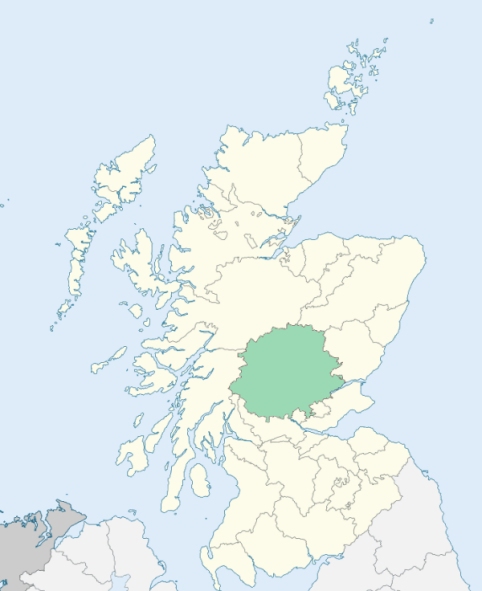
Balquhidder is a highland parish in the south-west of Perthshire. It is bounded by the parishes of Killin, Comrie, and Callander. (1867: The Imperial Gazetteer of Scotland, by John Marius Wilson).
Achtow, Balquidder, Kirkton, Lochearnhead, Strathyre
Edinample
PRE-REFORMATION GOVERNANCE:
POST-REFORMATION GOVERNANCE:
The church of this parish was dedicated to St Angus, who, of old, made Balquhidder the seat of his mission. The hillock on which he preached is still called Beannach Aonghais, "the blessing of Angus." Balquhidder Church was rebuilt by David Carnegie of Stronvar.
Includes ministers, licentiates, assistants, readers, and clerks.
(1928: Fasti Ecclesiæ Scoticanæ, by Hew Scott, D. D.)
Parish registers turned over to the Registrar-General, as a result of the Registration of Births, Deaths, and Marriages (Scotland) Act of 1854. The letters B. D. and M. indicate Births (or Baptisms), Deaths (or Burials), and Marriages (or Proclamations of Banns) respectively. Numbers indicate separate volumes or books. Note: These records are by no means complete or without damage; consult the Detailed List of the Old Parochial Registers of Scotland (1872) to learn more about the condition of the records.
| OPR and RD Numbers | |||
|---|---|---|---|
| Date Range | Name | Number | Type |
| 1696-1854 | Balquhidder | 331 | OPR |
| 1855-1968 | Balquhidder | 331 | RD |
| 2009 | Stirling, Callander | 393 | RD |
| 2026 | Stirling Council; Balquhidder, Lochearnhead and Strathyre Community Council | ||
(2009: Parishes and Registration Districts of Scotland - Old and New, National Records of Scotland)
Local community councils (2026) are provided as a potential source of additional information for settlements within the original boundaries of the parish. (Source)
Statistics from informal and official censuses
Buchanan, Cameron, Campbell, Ferguson, Fisher, Hill, Irvine, Morrison, Stewart, Thornton
Note: Names appearing in research materials, other than censuses. Simple names (First name, surname only) have been omitted unless they appear associated with large properties. All women's names, and men's names with occupations, military ranks, or peerage titles are included.
By the Reverend Mr Duncan Stewart.
"The number of souls is about 1300. Upon each farm, besides the tenants, there are one or two cottagers, consisting of weavers, tailors, dyke-builders, and old women. There is 1 writer in the parish; and 3 students of philosophy from it attend the college of Glasgow.
Most of the tenants keep a maid-servant for the purpose of spinning woolen and linen yarn, for clothing the family, and for sale. There are few men-servants employed, excepting herds. There are 4 mills for dressing flax. The crops raised in the parish are by no means sufficient for the consumption of the inhabitants: about one-fifth part of the oat-meal used, is imported.
The language of the common people is the Celtic, but most, (if not all of them), can buy and sell and transact business with their low-country neighbours in English. The people are, in general, lively, intelligent, fond of news, and hospitable to strangers. Few of them are rich, and not many of them poor: upon the whole, they live comfortably. The men in general are from 5 feet 5 inches, to 5 feet 9 inches high, tight, and well-looking: the women from 5 feet to 5 feet 6 inches, not remarkable for their looks; they rather exceed their circumstances in dress before marriage."
(This section contains excerpts, at times restructured or paraphrased, from an article appearing in Statistical Account of Scotland, Sir John Sinclair, 1791-1799)
Primary Sources:
Statistical Account of Scotland (1791-1799), Volume 6, p. 88
New Statistical Account of Scotland (1834-1845), Volume 10, p. 344
See Parish Page Sources for all source information and links.