Comrie and Tullichetil
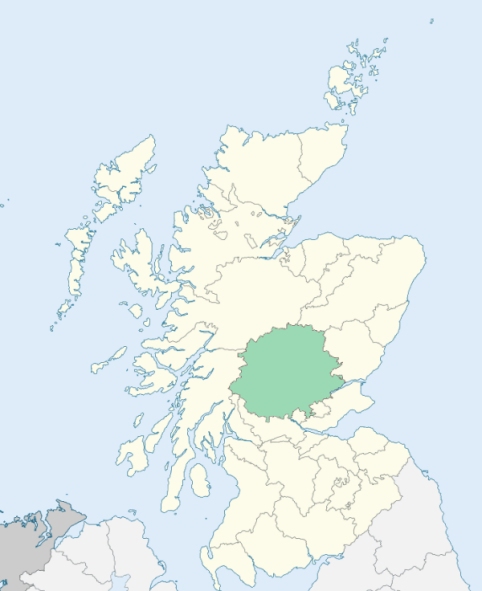
Comrie is a parish at the head of the Strathearn district of Perthshire. It is bounded by Killin, Weem, Kenmore, Dull, Monzie, Monzievaird, Muthil, Callander, and Balquhidder. (1867: The Imperial Gazetteer of Scotland, by John Marius Wilson).
Comrie, Dalginross, Ross, St Fillans
Aberuchill, Ardcoirlich, Cowden, Dalchonzie, Dunira, Strowan
Detached parts of Monzievaird & Strowan have been transferred to Comrie. Part of the parish of Muthill was also annexed to Comrie. See affected properties and landholders. (1892: Boundary of counties and parishes in Scotland as settled by the Boundary Commissioners under the Local Government Act, 1889, by Hay Shennan)
PRE-REFORMATION GOVERNANCE:
POST-REFORMATION GOVERNANCE:
The parishes of Comrie and Tulliechetil were united in the sixteenth century. Dundurn also was then joined with them, but it was severed again in 1895.
Comrie. The church of Comrie was dedicated to St Kessog. A fair of St Kessog was held here on the 10th of March.
Tulliechetil. The name of this parish, Tullach Cadail (the Hill of Sleep), is said to be owing to its church being built at an ancient place of burial.
Disjoined Quoad Sacra Parishes:
Dundurn. The ancient parish of Dundrun was united to Comrie and Tulliechetil in the sixteenth century. It was severed from them on 14 March 1895. Its church was dedicated to St Fillan of Ratharven the Leper.
Includes ministers, licentiates, assistants, readers, and clerks.
Comrie (QO)
Tulliechetil (QO)
Dundurn (QS)
(1928: Fasti Ecclesiæ Scoticanæ, by Hew Scott, D. D.)
Parish registers turned over to the Registrar-General, as a result of the Registration of Births, Deaths, and Marriages (Scotland) Act of 1854. The letters B. D. and M. indicate Births (or Baptisms), Deaths (or Burials), and Marriages (or Proclamations of Banns) respectively. Numbers indicate separate volumes or books. Note: These records are by no means complete or without damage; consult the Detailed List of the Old Parochial Registers of Scotland (1872) to learn more about the condition of the records.
| OPR and RD Numbers | |||
|---|---|---|---|
| Date Range | Name | Number | Type |
| 1693-1854 | Comrie | 341 | OPR |
| 1855-1892 | Comrie | 341 | RD |
| 1893-1968 | Comrie | 341a | RD |
| 1893-1968 | Coupar Angus | 341b | RD |
| 1969-1971 | Coupar Angus | 341 | RD |
| 1972-2003 | Coupar Angus | 389 | RD |
| 2009 | Perth and Kinross, Crieff | 394 | RD |
| 2026 | Perth and Kinross Council; Coupar Angus and Bendochy Community Council | ||
(2009: Parishes and Registration Districts of Scotland - Old and New, National Records of Scotland)
Local community councils (2026) are provided as a potential source of additional information for settlements within the original boundaries of the parish. (Source)
Statistics from informal and official censuses
Cameron, Campbell, Carmichael, Comrie, Drummond, Ferguson, Kay, Menzies, Robertson, Sharp
Note: Names appearing in research materials, other than censuses. Simple names (First name, surname only) have been omitted unless they appear associated with large properties. All women's names, and men's names with occupations, military ranks, or peerage titles are included.
By the Reverend Mr Colin Baxter, Minister of Monzievaird, from Materials chiefly collected by the Reverend Mr Hugh M'Diarmid, Minister of Comrie.
"The number of inhabitants, of all ages, amounts to about 3000. Many boys and girls are employed as herds, and many young men and women, as servants, every year, in the neighbouring Lowland parishes. For 8 years past, none have emigrated from the parish, but 6 cottagers, with their families, to Blair-Drummond Moss, in Monteith.
Our staple manufacture is linen yarn, of which a great quantity is spun and sold every year. With the money which this yarn brings, most of the farmers pay a great part of their rents. The women make also a great quantity of plaiden cloth, and a considerable quantity of tartan, of which they make plaids and hose. These are partly for home use, and partly for the market.
Like the generality of the common Highlanders, the lower ranks here are modest, peaceable, and very obliging. There are few law-suits among them; and there have been none for these 10 years, except about legacies, multures, and marches. They are frugal, moderate, and industrious; and, except at merry meetings, are not much addicted to drinking. The common language of the people is Gaelic. All the natives understand it; but many, especially of the old, do not understand English well. All the young people can speak English; but, in order to acquire it, they must go to service in the Low Country."
(This section contains excerpts, at times restructured or paraphrased, from an article appearing in Statistical Account of Scotland, Sir John Sinclair, 1791-1799)
Primary Sources:
Statistical Account of Scotland (1791-1799), Volume 11, p. 178
New Statistical Account of Scotland (1834-1845), Volume 10, p. 578
See Parish Page Sources for all source information and links.