Foulis Wester, Foulis in Strathearn
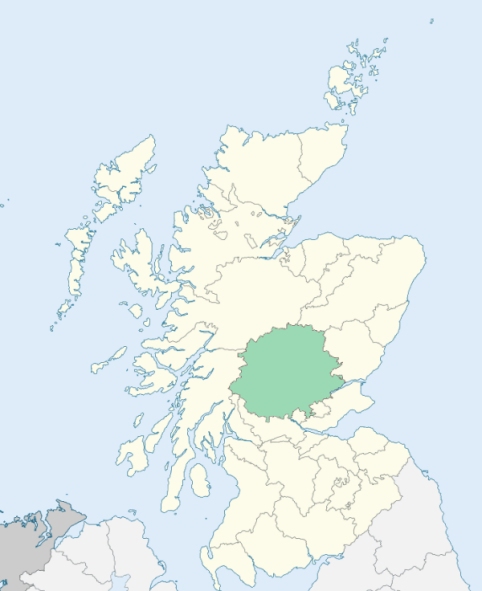
Fowlis Wester is a parish near the centre of Perthshire. It consists of two very slenderly united divisions. The southern division is bounded by Monzie, Methven, Madderty, and Crieff. The northern division is bounded by Little Dunkeld, a detached part and the main body of Monzie, and by Dull. (1867: The Imperial Gazetteer of Scotland, by John Marius Wilson)
Buchanty, Castleton, Dalbarber, Fowlis, Gilmerton, Milton
Abercairney, Cultoquhey, Glenalmond, Keillour, Logiealmond
The detached part of the parish of Fowlis Wester, situated at Auchnafree, has been transferred to the parish of Monzievaird & Strowan. The part of the parish of Fowlis Wester which lay in the basin of the River Bran was transferred to the parish of Little Dunkeld. The part of the parish of Fowlis Wester which lay to the north of the Almond and in the basin of the Almond was transferred to the parish of Monzie. The detached part of the parish of Crieff at Auchilanzie, and all that part of the parish of Crieff which lies in the basin of the Almond were transferred to the parish of Fowlis Wester. The effect of this clause on the main portion of the parish of Crieff was to cut off all that part of the old parish which lay north of the old parish of Fowlis Wester and north of the watershed between Glenalmond and Glenturret, near Stonefield Hill. See affected properties and landholders. (1892: Boundary of counties and parishes in Scotland as settled by the Boundary Commissioners under the Local Government Act, 1889, by Hay Shennan)
PRE-REFORMATION GOVERNANCE:
POST-REFORMATION GOVERNANCE:
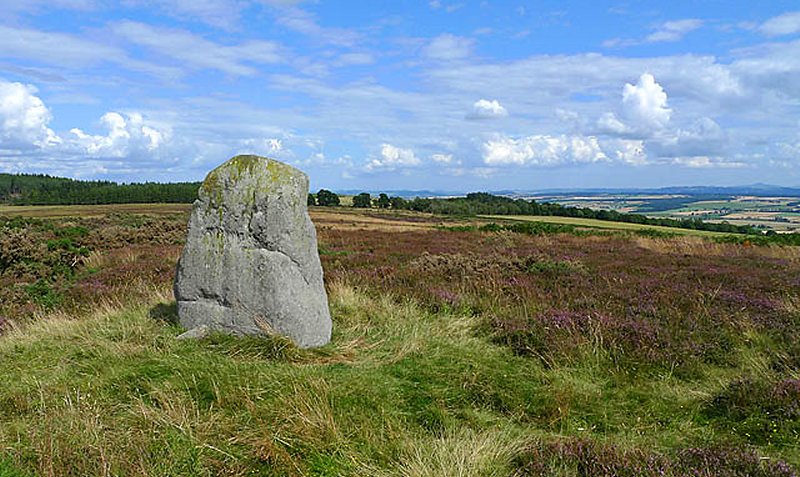
The church of Foulis was dedicated to St Bean, and a fair of St Bean was held there. There was a chapel in the parish at Gorthy, and at the Bridge of Buchanty there was another, dedicated to St Bean. Bannochy Well (St Bean's Well) is to the west of the manse.
Disjoined Quoad Sacra Parishes:
Amulree. The name of this parish, Ath Mhalruibh (the ford of Malrubh), commemorates an ancient chapel of St Malrubh, which stood here beside the ford of the River Braan. Amulree was disjoined from Dull, Fowlis Wester, Kenmore, Little Dunkeld, Monzie, Weem, and Crieff on 15 July 1871. The church was begun in 1743, but owing to the (Jacobite) Rebellion in 1745, was not completed until 1752.
Includes ministers, licentiates, assistants, readers, and clerks.
Fowlis Wester (QO)
Amulree (QS)
(1928: Fasti Ecclesiæ Scoticanæ, by Hew Scott, D. D.)
Parish registers turned over to the Registrar-General, as a result of the Registration of Births, Deaths, and Marriages (Scotland) Act of 1854. The letters B. D. and M. indicate Births (or Baptisms), Deaths (or Burials), and Marriages (or Proclamations of Banns) respectively. Numbers indicate separate volumes or books. Note: These records are by no means complete or without damage; consult the Detailed List of the Old Parochial Registers of Scotland (1872) to learn more about the condition of the records.
| OPR and RD Numbers | |||
|---|---|---|---|
| Date Range | Name | Number | Type |
| 1674-1854 | Fowlis Wester | 357 | OPR |
| 1855-1953 | Fowlis Wester | 357 | RD |
| 2009 | Perth and Kinross, Crieff | 394 | RD |
| 2026 | Perth and Kinross Council; East Strathearn Community Council | ||
(2009: Parishes and Registration Districts of Scotland - Old and New, National Records of Scotland)
Local community councils (2026) are provided as a potential source of additional information for settlements within the original boundaries of the parish. (Source)
Statistics from informal and official censuses
Anderson, Cameron, Christie, Drummond, Robertson, Stewart, Taylor, Todd, Wilson, Young
Note: Names appearing in research materials, other than censuses. Simple names (First name, surname only) have been omitted unless they appear associated with large properties. All women's names, and men's names with occupations, military ranks, or peerage titles are included.
By the Reverend Mr Robert Stirling, Minister of Crieff.
"In 1794 the number of souls was 1224, of which 608 were males, and 616 females. Among the heads of families there are 2 butchers, 2 fiddlers, 5 innkeepers, 7 shopkeepers, 9 shoemakers, 9 smiths, 10 wrights, 10 tailors, 50 weavers, and 169 farmers. Of the farmers, three have sheep farms.
The people are universally attached to the Established Church, except nine families, whose heads and children are Antiburghers, except also the two residing heritors, who are of the Episcopal communion. The people are in general devout as well as sober and industrious, lovers of peace, and well affected to government. The inhabitants of the northern half of the parish commonly use among themselves the Gaelic tounge; all of them, however, can speak English, which is the only language spoken or understood on the south side of the hill."
(This section contains excerpts, at times restructured or paraphrased, from an article appearing in Statistical Account of Scotland, Sir John Sinclair, 1791-1799)
Primary Sources:
Statistical Account of Scotland (1791-1799), Volume 15, p. 594
New Statistical Account of Scotland (1834-1845), Volume 10, p. 249
See Parish Page Sources for all source information and links.