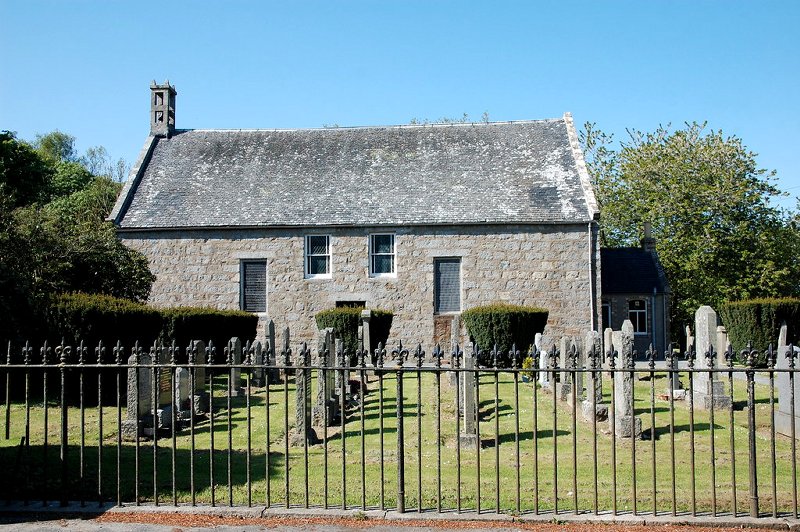
Keith-Hall, Monkeggie
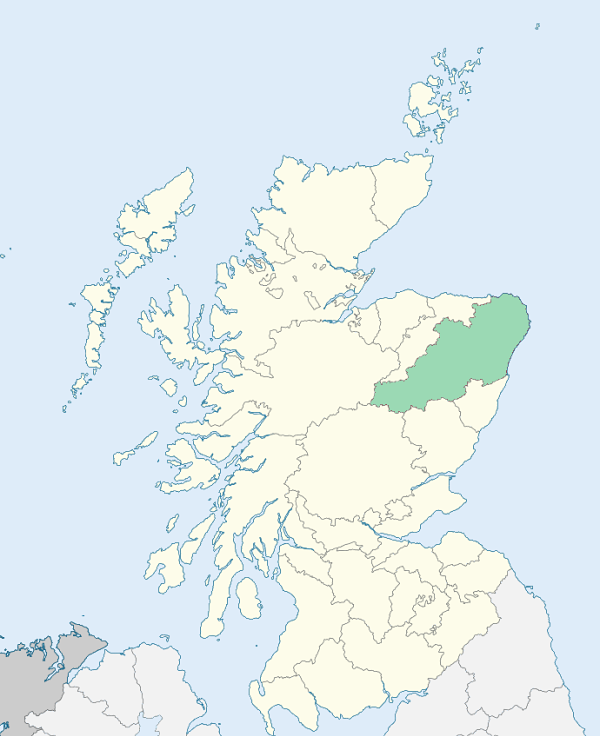
Keith-Hall and Kinkell is a united parish in the district of Garioch, Aberdeenshire. It is bounded by the parishes of Chapel of Garioch, Bourtie, Udny, New Machar, Fintray, Kintore, and Inverurie. (1867: The Imperial Gazetteer of Scotland, by John Marius Wilson).
Keith-Hall or Keithhall, Kinmuick
Balbithan
PRE-REFORMATION GOVERNANCE:
POST-REFORMATION GOVERNANCE:
The parishes of Keithhall and Kinkell were united on 20 February 1754.
Keithhall, or Monkeggie. The vicarage of Monkeggie belonged to the adjoning parsonage of Kinkell. Its church was dedicated to St Serf. A fair of St Serf was held at Monkeggie.
Kinkell. The ancient church was dedicated to St Michael. A fair of St Michael was held near the church. The Knights of the Order of St John (Knights Hospitaller) had a commandery at Kinkell.
Includes ministers, licentiates, assistants, readers, and clerks.
Keithhall (QO)
Kinkell (QO)
(1928: Fasti Ecclesiæ Scoticanæ, by Hew Scott, D. D.)
Parish registers turned over to the Registrar-General, as a result of the Registration of Births, Deaths, and Marriages (Scotland) Act of 1854. The letters B. D. and M. indicate Births (or Baptisms), Deaths (or Burials), and Marriages (or Proclamations of Banns) respectively. Numbers indicate separate volumes or books. Note: These records are by no means complete or without damage; consult the Detailed List of the Old Parochial Registers of Scotland (1872) to learn more about the condition of the records.
| OPR and RD Numbers | |||
|---|---|---|---|
| Date Range | Name | Number | Type |
| 1678-1854 | Keithhall and Kinkell | 206 | OPR |
| 1855-1967 | Keithhall and Kinkell | 206 | RD |
| 2009 | Aberdeenshire, Inverurie | 319 | RD |
| 2026 | (Keithhall) Aberdeenshire Council; Inverurie Community Council | ||
| 2026 | (Kinkell) Aberdeenshire Council; Garioch Community Council | ||
(2009: Parishes and Registration Districts of Scotland - Old and New, National Records of Scotland)
Local community councils (2026) are provided as a potential source of additional information for settlements within the original boundaries of the parish. (Source)
Statistics from informal and official censuses
Allan, Booth, Clark, Donald, Duncan, Mackie, Milne, Philip, Smith, Walker
Note: Names appearing in research materials, other than censuses. Simple names (First name, surname only) have been omitted unless they appear associated with large properties. All women's names, and men's names with occupations, military ranks, or peerage titles are included.
By the Reverend Mr George Skene Keith.
"The population at Whitsunday 1791, was 838 souls of all ages. The number of the males and females is exactly equal. There were 31 farmers, 113 small farmers, or subtenants, and 64 have only a house, and sometimes a small garden, subsisting chiefly by knitting stockings. Of the small farmers and subtenants, 4 are blacksmiths, 6 house-carpenters, or cart-wrights, 3 tailors, 5 shoemakers, and 2 weavers.
The knitting of stockings, is the principal manufacture of this district. It is carried on by almost all the women, and by many boys and old men. Since the introduction of loom-stockings, the knitting of stockings has been on the decline.
Oats, barley, pease, turnips, potatoes, a few carrots, and a good many greens and cabbages, are the principal productions of the district. The district supplies itself with provisions; and sends a considerable quantity to Aberdeen. A few apple trees, and some pears and cherries are found in the gardens.
The language spoken in this district is English, or rather that particular dialect of Scottish, known by the name of Broad Buchan, or Aberdeenshire dialect. No Gaelic is spoken within 30 English miles of this district, excepting by natives of the Highlands.
The inhabitants are, in general, very industrious, and live plainly, and in such sobriety, that, since 1788, three different attempts to settle an ale-house among them, have proven abortive. They dress better than their neighbours. It has been said, that the people of Kintore and Inverury put all their money in their bellies, and those of Keith-hall and Kinkell on their backs. They are, in general, very charitable and humane. No instance has occurred, in the memory of any person, of any inhabitant of the district being brought before a court of justice, for any crime. Several of the young men go to Aberdeen, as mechanics: But none go to the navy, and very few into the army."
(This section contains excerpts, at times restructured or paraphrased, from an article appearing in Statistical Account of Scotland, Sir John Sinclair, 1791-1799)
Primary Sources:
Statistical Account of Scotland (1791-1799), Volume 2, p. 527
New Statistical Account of Scotland (1834-1845), Volume 12, p. 743
See Parish Page Sources for all source information and links.