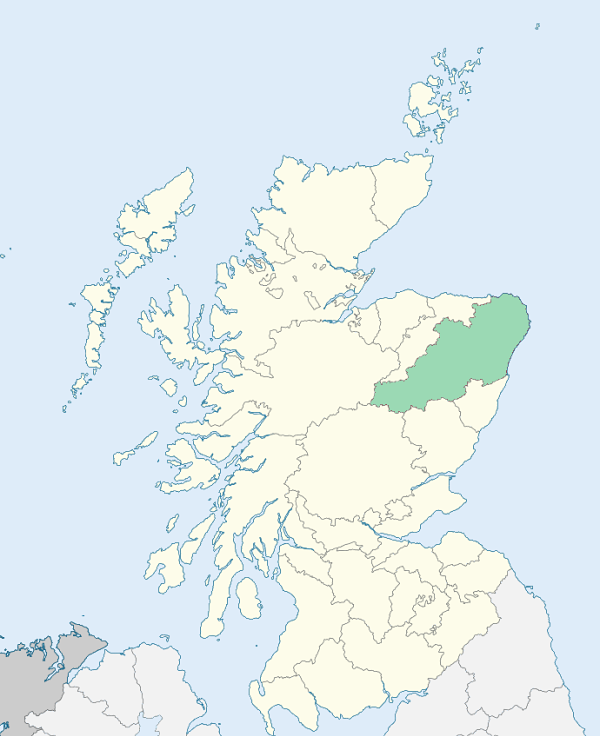
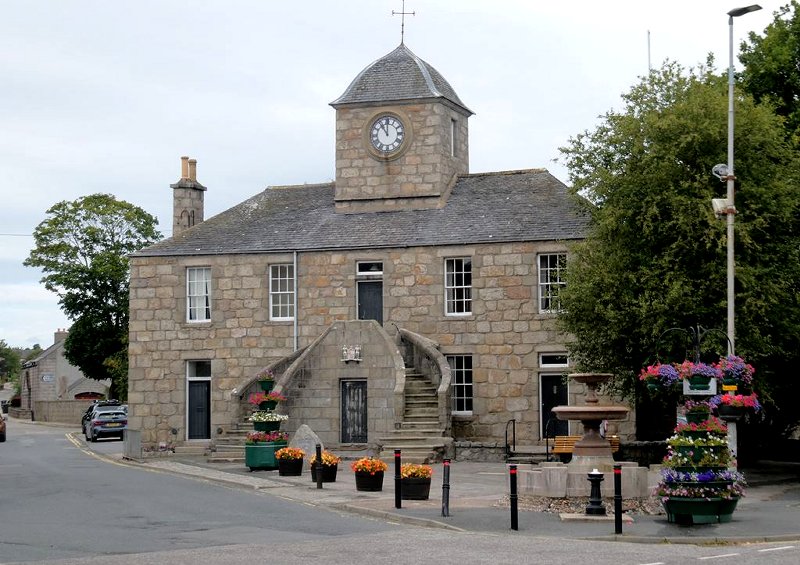
Kintore is a parish, and a suburb of the burgh of Inverurie, in the Garioch district of Aberdeenshire. It is bounded by the parishes of Inverurie, Keith-Hall, Fintray, Kinellar, Skene, and Kemnay. (1867: The Imperial Gazetteer of Scotland, by John Marius Wilson).
Kintore
PRE-REFORMATION GOVERNANCE:
POST-REFORMATION GOVERNANCE:
The church of Kintore was dedicated to St Mary. Kintore was a vicarage belonging to the neighbouring parsonage of Kinkell. In 1702 the parish of Kintore was transferred from the Presbytery of Aberdeen to that of Garioch. A fair of St Jerome was held at Kintore and a Marymas fair also.
Includes ministers, licentiates, assistants, readers, and clerks.
(1928: Fasti Ecclesiæ Scoticanæ, by Hew Scott, D. D.)
Parish registers turned over to the Registrar-General, as a result of the Registration of Births, Deaths, and Marriages (Scotland) Act of 1854. The letters B. D. and M. indicate Births (or Baptisms), Deaths (or Burials), and Marriages (or Proclamations of Banns) respectively. Numbers indicate separate volumes or books. Note: These records are by no means complete or without damage; consult the Detailed List of the Old Parochial Registers of Scotland (1872) to learn more about the condition of the records.
| OPR and RD Numbers | |||
|---|---|---|---|
| Date Range | Name | Number | Type |
| 1717-1854 | Kintore | 213 | OPR |
| 1855-1855 | Kintore Burgh | 213-1 | RD |
| 1855-1855 | Kintore Landward | 213-2 | RD |
| 1856-1867 | Kintore | 213 | |
| 2009 | Aberdeenshire, Inverurie | 319 | RD |
| 2026 | Aberdeenshire Council; Kintore and District Community Council | ||
(2009: Parishes and Registration Districts of Scotland - Old and New, National Records of Scotland)
Local community councils (2026) are provided as a potential source of additional information for settlements within the original boundaries of the parish. (Source)
Statistics from informal and official censuses
Cruickshank, Duncan, Forbes, Fraser, Morrison, Robertson, Smith, Strachan, Thomson, Wilson
Note: Names appearing in research materials, other than censuses. Simple names (First name, surname only) have been omitted unless they appear associated with large properties. All women's names, and men's names with occupations, military ranks, or peerage titles are included.
By the Reverend Mr George Adams.
"The parish contains at present, including the town, 862 souls, whereof 392 are males, and 470 females. The knitting of stockings, partly accounts for the proportion of females, though that manufacture is much on the decline, and the price reduced, since loom frames have been so much improved; and many of the males learn trades, and go to other places, there being no tradesman or manufacturer here of any kind, but what are necessary for the work in the parish.
The people are in general peaceable, and not given to feuds or divisions, charitable and industrious, strangers to luxury and vice; and in the Royal Burgh, not much given to political speculations. The living and dress of the country-people are much better within the last fifty years. Instead of country made stuff, which men formerly wore, they now purchase cloth at Aberdeen, and the women now use cardinals of different kinds, instead of plaids which they formerly used."
(This section contains excerpts, at times restructured or paraphrased, from an article appearing in Statistical Account of Scotland, Sir John Sinclair, 1791-1799)
Primary Sources:
Statistical Account of Scotland (1791-1799), Volume 13, p. 81
New Statistical Account of Scotland (1834-1845), Volume 12, p. 655
See Parish Page Sources for all source information and links.