St Johnstoun
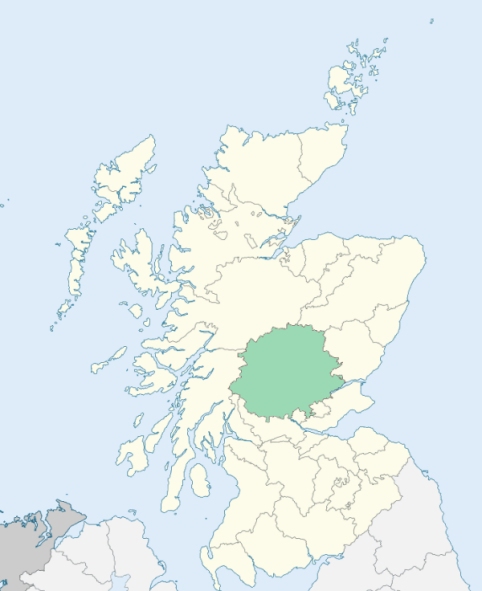
Perth is a parish in the Perth proper district of Perthshire. It is bounded by Redgorton, Scone, Kinnoul, Kinfauns, Rhynd, Dunbarney, Forteviot, Aberdalgie, and Tibbermore. The River Almond separates it from Redgorton, and the River Tay separates it from Scone, Kinnoul, and Kinfauns. (1867: The Imperial Gazetteer of Scotland, by John Marius Wilson).
Cherrybank, Craigend, Craigie, Dovecotland, Friarton, Perth, Tulloch
Pitheavlis or Pitheveliss
The parish of Tibbermore had two detached parts, both of which were wholly surrounded by the parish of Perth. Tibbermore detached No. 2, situated at York Place, Perth, was situated wholly within the parliamentary and municipal boundary of the burgh of Perth, and the greater portion of Tibbermore detached No. 1 was also situated within the same boundary. The effect of the Order is to transfer to the parish of Perth the whole of Tibbermore detached no. 1 and so much of Tibbermore detached No. 2 as lies within the municipal boundaries of the burgh of Perth, and to transfer to the parish of Tibbermore that part of Perth parish which lay north of the Scouring Burn and west and north of the west and north burgh boundaries. See affected properties and landholders. (1892: Boundary of counties and parishes in Scotland as settled by the Boundary Commissioners under the Local Government Act, 1889, by Hay Shennan)
PRE-REFORMATION GOVERNANCE:
POST-REFORMATION GOVERNANCE:
St John's or East Parish. Called for a time the parish of St Johnstoun. The church of Perth was dedicated to St John the Baptist, and the town itself was long known as St Johnstoun. Its ancient Celtic name of Perth was then seldom heard except among those who spoke Gaelic. The church belonged to the Abbey of Dunfermline. There were also in this parish, partly in the town and partly outside of it, various religious houses of a smaller kind. At the end of the Bridge of Perth, on the town side of the Tay, was the chapel of St Mary; it was already there in 1210. Outside the town stood the Hospital of St Magdalene. Nearer Perth was St Leonard's Hospital and Priory, a Cistercian House. Not far from it stood the chapel of St Laurence. Between it and St John's Church there was the Hospital of St Anne. In the heart of the city stood the chapel of the Holy Rood. There too was St Paul's Hospital, built in 1434. On the north side of Perth, at the place called the Claypots, stood the Hospital of St Katherine, and the chapel of Our Lady of Loretto. To keep in mind the birth of its patron saint, Perth held the fair of St John in Harvest. By the fair of Midsummer Day it commemorated his martyrdom. So far back as 1442, the Midsummer Tryst was a leading event of the year. Four other fairs were annually observed - Our Lady Day in Lentron, Palm Sunday, Andrewmas Fair, and the Tryst of St Denys. On 27 October 1921 the existing parishes, East, Middle and West, were disjoined and erected into two parishes - the parish of St John and the parish of St Mark. The former to embrace the building known as the Church of St John the Baptist, and the latter the existing Chapel of Ease, St Mark's Church.
St Paul's. St Paul's Parish was disjoined from St John's and erected by the Commissioners of Teinds on 11 March 1807.
Disjoined Quoad Sacra Parishes:
St Andrew's. The church was opened 29 Sept 1885. St Andrew's Parish was disjoined from St John's, or the East Parish of Perth, on 15 July 1889.
St Leonard's. Erected as an extension church, and had a constitution from General Assembly 1 June 1835. The parish was erected by Court of Teinds, 20 December 1865.
St Stephen's, previously Gaelic Chapel. A chapel was built here for Gaelic services in 1788. On 13 December 1901, St Stephen's Parish was disjoined from St John's, St Leonard's, and Tibbermore.
Includes ministers, licentiates, assistants, readers, and clerks.
St John's, or East Parish (QO)
St Paul's (QO)
West Parish (QO)
Middle Parish (QO)
St Andrew's (QS)
St Leonard's (QS)
St Stephen's, or Gaelic Chapel (QS)
(1928: Fasti Ecclesiæ Scoticanæ, by Hew Scott, D. D.)
Parish registers turned over to the Registrar-General, as a result of the Registration of Births, Deaths, and Marriages (Scotland) Act of 1854. The letters B. D. and M. indicate Births (or Baptisms), Deaths (or Burials), and Marriages (or Proclamations of Banns) respectively. Numbers indicate separate volumes or books. Note: These records are by no means complete or without damage; consult the Detailed List of the Old Parochial Registers of Scotland (1872) to learn more about the condition of the records.
| OPR and RD Numbers | |||
|---|---|---|---|
| Date Range | Name | Number | Type |
| 1561-1854 | Perth | 387 | OPR |
| 1855-1861 | Perth Burgh | 387-1 | RD |
| 1855-1861 | Perth Landward | 387-2 | RD |
| 1862-1971 | Perth | 387 | RD |
| 1972-2003 | Perth | 390 | RD |
| 2009 | Perth and Kinross, Perth | 390 | RD |
| 2026 | Perth and Kinross Council; Bridgend, Gannochy and Kinnoull Community Council Central Community Council City South Community Council Letham Community Council North Inch and Muirton Community Council North Muirton Community Council Tulloch Community Council | ||
(2009: Parishes and Registration Districts of Scotland - Old and New, National Records of Scotland)
Local community councils (2026) are provided as a potential source of additional information for settlements within the original boundaries of the parish. (Source)
Statistics from informal and official censuses
East Church: Anderson, Brown, Campbell, Henderson, Robertson, Smith, Stewart, Taylor, Wilson, Young
Middle Church: Anderson, Brown, Henderson, Menzies, Miller, Robertson, Stewart, Taylor, Wilson, Young
St Pauls: Campbell, MacDonald, Menzies, Miller, Robertson, Scott, Stewart, Taylor, Wilson, Young
West Church: Anderson, Cameron, Campbell, Menzies, Reid, Robertson, Smith, Stewart, Thomson, Young
Note: Names appearing in research materials, other than censuses. Simple names (First name, surname only) have been omitted unless they appear associated with large properties. All women's names, and men's names with occupations, military ranks, or peerage titles are included.
By the Reverend Mr James Scott.
"The number of inhabitants in the town and parish of Perth is 19,871. The poor are very numerous. The inhabitants in general, are charitably disposed. Besides what they give in private to distressed persons or families, they often make large voluntary contributions. About 200 of the most respectable inhabitants of the town, are associated as Volunteers, to bear a part in the defence of our constitution, and the maintenance of peace and good order.
I see nothing in the manners of the inhabitants of Perth to distinguish them, in any very great degree, from the manners of the inhabitants of such other towns, as are said, in the modern sense of the expression, to be in an improved state. The craftsmen in Perth, were long distinguished by a strict regard to religion, and by the remarkable care which they took in training up their children, their apprentices, and even their journeymen, in good principles and practices. I trust it is still generally the case. I have heard, however, from some of them, that they do not find it a matter so easy to control their young people, as it formerly was.
It is to be remarked, that many of the boys who come as apprentices from different parts of the country, leave the town as soon as they have learned their trade. Also many other young men, whose parents are residing in the town, go to seek their fortune elsewhere in the kingdom, or in foreign parts. The females in general remain, and there are always more unmarried women than bachelors.
The staple manufacture of Perth is linen; and of late, a considerable quantity of cotton-cloth. There are above 1500 looms employed in the town and suburbs. There are 3 printing-works in this neighbourhood, some of them only lately established. At Stanly, there is a considerable cotton-mill for spinning twist. There is also a cotton-work for spinning twist at Cromwell-park, and a smaller one at Stormont bleach-field. There are 4 public bleachfields in this neighbourhood, that whiten cloth for the manufacturers in the principal towns of Scotland.
The manufacture of shoes and boots is carried on here with great nicety. There are 3 mills for the manufacture of paper. The crushing of linseed into oil has been a trade in this town and neighbourhood for many years past. The salmon fishery on the Tay is very extensive.
(This section contains excerpts, at times restructured or paraphrased, from an article appearing in Statistical Account of Scotland, Sir John Sinclair, 1791-1799)
Primary Sources:
Statistical Account of Scotland (1791-1799), Volume 18, p. 489
New Statistical Account of Scotland (1834-1845), Volume 10, p. 1
See Parish Page Sources for all source information and links.