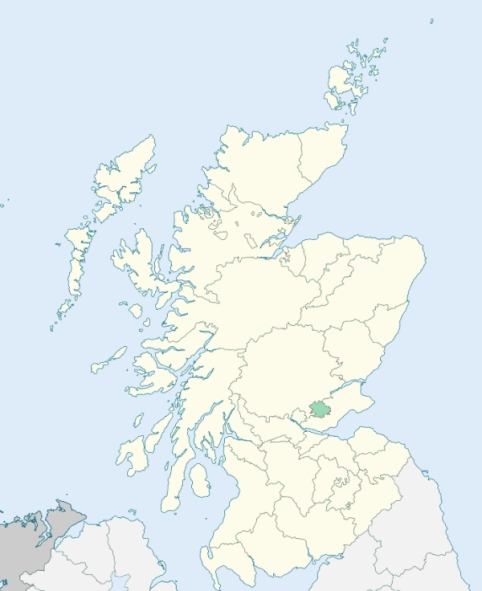
Fossoway and Tulliebole is a united parish, chiefly in Perthshire, but partly in Kinross-shire. It is bounded on the north by Dunning; on the east by Orwell and Kinross; on the south by Cleish and Saline; on the west by Clackmannanshire; and on the northwest by Muckhart. (1867: The Imperial Gazetteer of Scotland, by John Marius Wilson)
Aldie, Blairingone, Carnbo, Crook of Devon
The parish of Fossoway & Tulliebole was situated partly in the county of Kinross and partly in the county of Perth. A small portion of the Perthshire part of the parish was transferred to the parish of Glendevon, and the parish of Fossoway & Tulliebole, as thus altered in area, was placed wholly in the county of Kinross. See affected properties and landholders. (1892: Boundary of counties and parishes in Scotland as settled by the Boundary Commissioners under the Local Government Act, 1889, by Hay Shennan)
PRE-REFORMATION GOVERNANCE:
POST-REFORMATION GOVERNANCE:
The parishes of Fossoway and Tulliebole were united in 1614.
Fossoway. In 1891 part of the parish of Fossoway was taken from Perthshire and added to the county of Kinross.
Tulliebole. In 1685 the parish of Tulliebole was severed from Perthshire and incorporated in the county of Kinross.
Disjoined Quoad Sacra Parishes:
Blairingone. A chapel was opened here in 1838. The parish was disjoined from Fossoway and erected 18 July 1860.
(1928: Fasti Ecclesiæ Scoticanæ, by Hew Scott, D. D.)
Includes ministers, licentiates, assistants, readers, and clerks.
Fossoway and Tulliebole (QO)
Tulliebole (QO)
Blairingone (QS)
(1928: Fasti Ecclesiæ Scoticanæ, by Hew Scott, D. D.)
Parish registers turned over to the Registrar-General, as a result of the Registration of Births, Deaths, and Marriages (Scotland) Act of 1854. The letters B. D. and M. indicate Births (or Baptisms), Deaths (or Burials), and Marriages (or Proclamations of Banns) respectively. Numbers indicate separate volumes or books. Note: These records are by no means complete or without damage; consult the Detailed List of the Old Parochial Registers of Scotland (1872) to learn more about the condition of the records.
| OPR and RD Numbers | |||
|---|---|---|---|
| Date Range | Name | Number | Type |
| 1609-1854 | Fossoway and Tulliebole | 461 | OPR |
| 1855-1922 | Fossoway and Tulliebole | 461 | RD |
| 1923-1971 | Fossoway | 461 | RD |
| 2009 | Perth and Kinross, Kinross | 452 | RD |
| 2026 | Perth and Kinross Council; Fossoway Community Council | ||
(2009: Parishes and Registration Districts of Scotland - Old and New, National Records of Scotland)
Local community councils (2026) are provided as a potential source of additional information for settlements within the original boundaries of the parish. (Source)
Statistics from informal and official censuses
Anderson, Fyfe, Graham, Harley, Mitchell, Reid, Robertson, Sharp, Taylor, Young
Note: Names appearing in research materials, other than censuses. Simple names (First name, surname only) have been omitted unless they appear associated with large properties. All women's names, and men's names with occupations, military ranks, or peerage titles are included.
By the Reverend Mr William Graham.
"The number of inhabitants at present is 1505, of whom 727 are males, and 778 are females. Of these, 1065 belong to the Established Church; there are 388 Antiburgher seceders, 48 Burghers, 2 Episcopalians, 1 Cameronian, and 1 Roman Catholic.
The stature of the inhabitants is not above the middle size. The height of the tallest man in the parish, is about 6 feet 4 inches. It hath been observed, that those of the middle size, are in general more robust, have fewer complaints, and live longer, than those who are above the ordinary stature. Although few of the original inhabitants of the parish have been much distinguished by their talents, they are not destitute of natural abilities. Their natural dispositions are friendly, generous, and humane. They are contented with their situations, and are not disposed to leave the place of their nativity. They are in general active, and industrious.
Besides the business of agriculture, they apply to the common trades practiced in the country. There are tailors, shoemakers, blacksmiths, masons, carpenters, and weavers; all of them well employed, and able to provide for their families. Weavers are employed partly in the manufacture of the cloth used in the parish; and partly by the manufacturers of the neighbouring towns. There is only one baker in the parish."
(This section contains excerpts, at times restructured or paraphrased, from an article appearing in Statistical Account of Scotland, Sir John Sinclair, 1791-1799)
Primary Sources:
Statistical Account of Scotland (1791-1799), Volume 18, p. 445
New Statistical Account of Scotland (1834-1845), Volume 10, p. 1016
See Parish Page Sources for all source information and links.