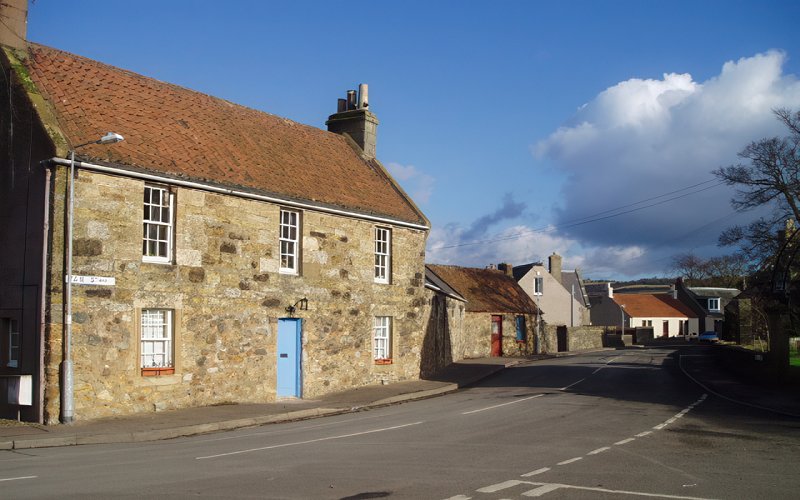
King's Kettle, Kingskettle, Lathrisk
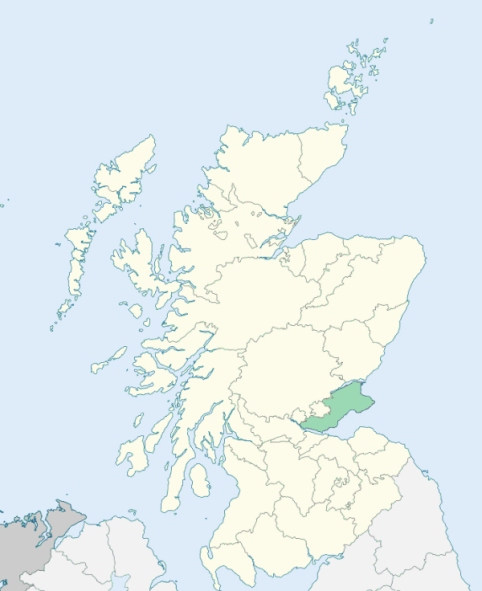
Kettle is a parish in the centre of Fife. It is bounded by Collessie, Cults, Ceres, Scoonie, Kennoway, Markinch, and Falkland. (1867: The Imperial Gazetteer of Scotland, by John Marius Wilson).
Balmalcolm, Bankton Park, Boghall, Burnside, Burnturk, Coalton of Burnturk, Colpieden, Crosshouses, Damns, Holekettle or Kettle Bridge, Kettle, Muirhead, Myreside
Lathrisk House
PRE-REFORMATION GOVERNANCE:
POST-REFORMATION GOVERNANCE:
The church of Lathrisk was dedicated to St Athernash. But there was a later dedication to St John the Evangelist. The church belonged to the Priory of St Andrews. (1928: Fasti Ecclesiæ Scoticanæ, by Hew Scott, D. D.)
Includes ministers, licentiates, assistants, readers, and clerks.
(1928: Fasti Ecclesiæ Scoticanæ, by Hew Scott, D. D.)
Parish registers turned over to the Registrar-General, as a result of the Registration of Births, Deaths, and Marriages (Scotland) Act of 1854. The letters B. D. and M. indicate Births (or Baptisms), Deaths (or Burials), and Marriages (or Proclamations of Banns) respectively. Numbers indicate separate volumes or books. Note: These records are by no means complete or without damage; consult the Detailed List of the Old Parochial Registers of Scotland (1872) to learn more about the condition of the records.
| OPR and RD Numbers | |||
|---|---|---|---|
| Date Range | Name | Number | Type |
| 1633-1854 | Kettle | 435 | OPR |
| 1855-1967 | Kettle | 435 | RD |
| 2009 | Fife, Cupar | 417 | RD |
| 2026 | Fife Council; Kettle Community Council | ||
(2009: Parishes and Registration Districts of Scotland - Old and New, National Records of Scotland)
Local community councils (2026) are provided as a potential source of additional information for settlements within the original boundaries of the parish. (Source)
Statistics from informal and official censuses
Bell, Berwick, Birrell, Campbell, Inglis, Moyes, Pratt, Robertson, Scott, Smart
Note: Names appearing in research materials, other than censuses. Simple names (First name, surname only) have been omitted unless they appear associated with large properties. All women's names, and men's names with occupations, military ranks, or peerage titles are included.
By the Reverend Mr Peter Barclay.
"The total inhabitants in December 1790 was 1759. There were 414 householders, 587 separatists from the establishment above 8 years. 157 persons have left the parish in 12 years. Kettle village contains 516 inhabitants, Balmalcolm 81, Coalton 78, and the country part of the parish 1084.
There are 7 blacksmiths, including 3 apprentices; 8 shoemakers, including 2 apprentices; 10 tailors, including 4 apprentices; 2 butchers, 2 bakers, 8 carpenters and wheel-wrights, 5 lint-dressers, 12 masons, 1 clockmaker, about 12 colliers, 130 hired servants, 90 day-labourers, 4 gardeners, and 3 shop-keepers.
A considerable quantity of linen is made in the parish. There are about 170 looms, which are wrought or superintended by about 60 master-weavers; the number of apprentices is 18, and the rest of the workmen are journeymen. The looms find employment for women and children; and hence, a family being advantageous, the men marry early.
The farms in the parish are 32, and the average of servants on each is 5, viz. 3 men and 2 women. Most of the farms have cottagers, whence they obtain assistance in hay-time and harvest. The parish produced both more corn and cattle than is sufficient for its own maintenance, and of course brings the surplus to market.
The people are in general charitable, and well disposed. Both living and dress have undergone a remarkable change within these 20 years, owing to the influx of wealth, and rise of wages. A martial spirit seems to pervade the lower ranks, who can scarcely be prevented from entering into the army or navy on the report of a war.
There are 7 or 8 public houses in the parish, but they produce no bad effects: Most of them are places of accommodation, and could not be wanted. The inhabitants of this parish are neither chargeable with the vice of drunkenness, nor of wasting their time or money."
(This section contains excerpts, at times restructured or paraphrased, from an article appearing in Statistical Account of Scotland, Sir John Sinclair, 1791-1799)
Primary Sources:
Statistical Account of Scotland (1791-1799), Volume 1, p. 369
New Statistical Account of Scotland (1834-1845), Volume 9, Section I, p. 103
See Parish Page Sources for all source information and links.