Kilgour
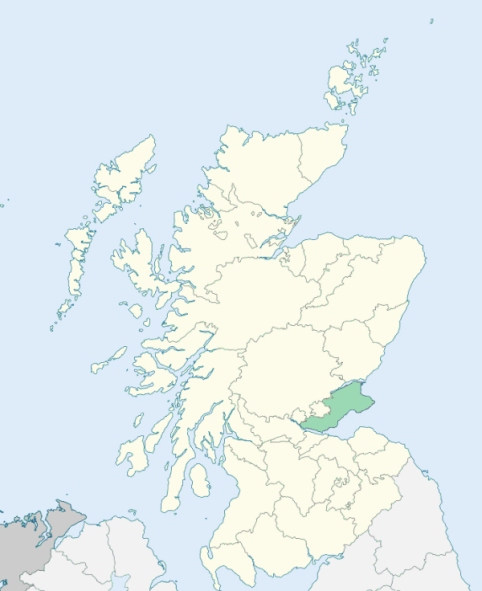
Falkland is a parish in the Cupar district of Fife. It is bounded by Strathmiglo, Auchtermuchty, Kettle, Markinch, Leslie, and Portmoak. (1867: The Imperial Gazetteer of Scotland, by John Marius Wilson).
Balmbrae, Falkland, Freuchie, Newton of Falkland, Ravenshall
PRE-REFORMATION GOVERNANCE:
POST-REFORMATION GOVERNANCE:
The church of Falkland belonged to the Priory of St Andrews. A place of worship in the parish was known as the Chapel of Our Lady on the Hill. Near the manse are Our Lady's Well and St John's Well. Both are upon land which of old belonged to the Order of the Knights of the Temple (Knights Templar). A fair of St Angus was held at Falkland.
Disjoined Quoad Sacra Parishes:
Freuchie. The church was opened for worship 15 October 1876. The parish of Freuchie was disjoined from Falkland on 15 March 1880. This remained long a moorland neighbourhood. Hence comes its name, Freuchie (Fraochach = heathery).
(1928: Fasti Ecclesiæ Scoticanæ, by Hew Scott, D. D.)
Includes ministers, licentiates, assistants, readers, and clerks.
Falkland (QO)
Freuchie (QS)
(1928: Fasti Ecclesiæ Scoticanæ, by Hew Scott, D. D.)
Parish registers turned over to the Registrar-General, as a result of the Registration of Births, Deaths, and Marriages (Scotland) Act of 1854. The letters B. D. and M. indicate Births (or Baptisms), Deaths (or Burials), and Marriages (or Proclamations of Banns) respectively. Numbers indicate separate volumes or books. Note: These records are by no means complete or without damage; consult the Detailed List of the Old Parochial Registers of Scotland (1872) to learn more about the condition of the records.
| OPR and RD Numbers | |||
|---|---|---|---|
| Date Range | Name | Number | Type |
| 1661-1854 | Falkland | 428 | OPR |
| 1855-1855 | Falkland Burgh | 428-1 | RD |
| 1855-1855 | Falkland Landward | 428-2 | RD |
| 1856-1967 | Falkland | 428 | RD |
| 2009 | Fife, Auchtermuchy | 418 | RD |
| 2026 | Fife Council; Royal Burgh of Falkland and Newton of Falkland Community Council | ||
(2009: Parishes and Registration Districts of Scotland - Old and New, National Records of Scotland)
Local community councils (2026) are provided as a potential source of additional information for settlements within the original boundaries of the parish. (Source)
Statistics from informal and official censuses
Birrell, Bruce, Duncan, Lawson, Miller, Ness, Reekie, Reid, Robertson, Wallace
Note: Names appearing in research materials, other than censuses. Simple names (First name, surname only) have been omitted unless they appear associated with large properties. All women's names, and men's names with occupations, military ranks, or peerage titles are included.
By the Reverend Mr Andrew Brown.
"In the parish at present are 2198 souls. Of these 937 are in the town of Falkland, 120 in Ballinblae, a contiguous village, 193 in Newton, another village, 476 in Feruchie, another village, and 472 in what is properly the country part of the parish. Of these are 1068 males, and 1130 females.
In the parish are 337 tradesmen, of whom 50 are apprentices. Of these 231 are weavers, 45 shoemakers, 22 tailors, 12 masons, 16 wrights, including wheel, plough, cart, wrights, and cabinet-makers, of the last very few, and 11 blacksmiths, each trade including its proportion of apprentices. The weaving of coarse linen is the principal branch of manufacture, and that is principally carried on in the town and villages.
There are two houses in Falkland that go by the name of inns. Of ale-houses, there 10 in the town of Falkland, 1 in Newton, and 3 in Freuchie. These generally belong to brewers; and though still more than are favourable to either the health or morals of the inhabitants, are said not to exceed half the number of what have sometimes been known in the parish. It were injustice to the generally sober and industrious character of the parishioners, to say, that they are either idle or prodigal; but where there are temptations, some will always be tempted."
(This section contains excerpts, at times restructured or paraphrased, from an article appearing in Statistical Account of Scotland, Sir John Sinclair, 1791-1799)
Primary Sources:
Statistical Account of Scotland (1791-1799), Volume 4, p. 437
New Statistical Account of Scotland (1834-1845), Volume 9, Section I, p. 920
See Parish Page Sources for all source information and links.