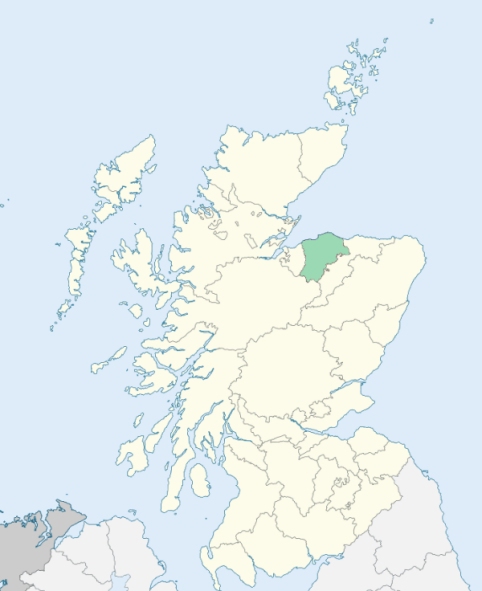
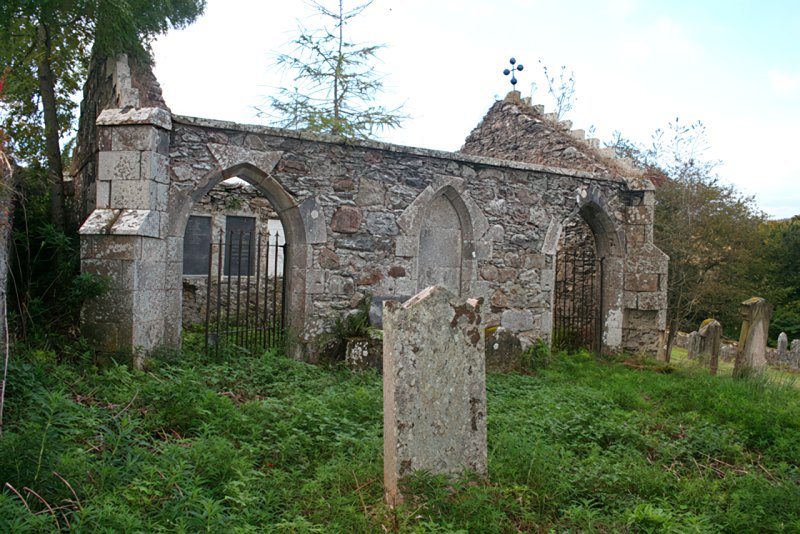
Boharm is a parish partly in Morayshire, but chiefly in Banffshire. It is bounded by Bellie, Keith, Botriphnie, Mortlach, Aberlour, and Rothes. (1867: The Imperial Gazetteer of Scotland, by John Marius Wilson).
Arndilly, Aultmore, Blackhillock, Dulnain Bridge, Dundurcas, Mulben
Whereas each of the parishes of Bellie, Boharm, Inveravon, Keith, and Rothes is situated partly in the county of Banff and partly in the county of Elgin: The whole of the parish of Boharm shall be included in and form part of the county of Elgin. See affected properties and landholders. (1892: Boundary of counties and parishes in Scotland as settled by the Boundary Commissioners under the Local Government Act, 1889, by Hay Shennan)
PRE-REFORMATION GOVERNANCE:
POST-REFORMATION GOVERNANCE:
The parishes of Arndilly and Dundurcas were united on 26 June 1782.
Arndilly. In early times this parish was called Ardantullaich, which came to be shortened into Arndilly. The church was afterwards removed to Boharm. Arndilly was a prebend of Elgin Cathedral. At the Boat of Brig, in this parish, there was a Hospital of St Nicholas. Its old name was the Hospital of the Brig of Spey. The river, however, swept the bridge away, and the ferry that took its place was called the Boat of Brig. In modern times the bridge has been rebuilt. At Arndilly fairs were held on Marymas and Lady Day in Harvest.
Dundurcas. In the parish of Dundurcas there was a chapel dedicated to Our Lady of Grace. It was a much favoured resort of pilgrims.
(1928: Fasti Ecclesiæ Scoticanæ, by Hew Scott, D. D.)
Includes ministers, licentiates, assistants, readers, and clerks.
(1928: Fasti Ecclesiæ Scoticanæ, by Hew Scott, D. D.)
Parish registers turned over to the Registrar-General, as a result of the Registration of Births, Deaths, and Marriages (Scotland) Act of 1854. The letters B. D. and M. indicate Births (or Baptisms), Deaths (or Burials), and Marriages (or Proclamations of Banns) respectively. Numbers indicate separate volumes or books. Note: These records are by no means complete or without damage; consult the Detailed List of the Old Parochial Registers of Scotland (1872) to learn more about the condition of the records.
| OPR and RD Numbers | |||
|---|---|---|---|
| Date Range | Name | Number | Type |
| 1634-1854 | Boharm | 128 | OPR |
| 1855-1869 | Boharm | 128 | RD |
| 1870-1892 | Boharm | 128a | RD |
| 1870-1892 | Cromdale and Advie | 128b1 | RD |
| 1870-1892 | Inverallan | 128b2 | RD |
| 1893-1965 | Cromdale and Advie | 128-1 | RD |
| 1893-1965 | Inverallan | 128-2 | RD |
| 1966-1967 | Grantown on Spey | 128 | RD |
| 1972-2001 | Grantown on Spey | 283 | RD |
| 2002-2006 | Grantown on Spey and Nethybridge | 283 | RD |
| 2009 | Highland, Grantown-on-Spey and Nethybridge | 283 | RD |
| 2026 | (Boharm) Moray Council; Strathisla Community Council | ||
| 2026 | (Cromdale and Inverallan) Moray Council; Cromdale and Inverallan Community Council | ||
| 2026 | (Grantown on Spey) Highland Council; Grantown-on-Spey & Vicinity Community Council | ||
| 2026 | (Nethybridge) Highland Council; Nethy Bridge Community Council | ||
(2009: Parishes and Registration Districts of Scotland - Old and New, National Records of Scotland)
Local community councils (2026) are provided as a potential source of additional information for settlements within the original boundaries of the parish. (Source)
Statistics from informal and official censuses
Bremner, Fraser, Grant, Hay, Innes, Milne, Milton, Robertson, Ross, Watt
Note: Names appearing in research materials, other than censuses. Simple names (First name, surname only) have been omitted unless they appear associated with large properties. All women's names, and men's names with occupations, military ranks, or peerage titles are included.
By the Reverend Mr Francis Leslie, Minister.
"Of late, the population has been rather on the decrease, owing to several smaller farms, on which from 2 to 6 families resided, being reduced into a single farm, and occupied by a single family. At present, the number of persons amounts to 1294, of whom 588 are males, and 706 females.
They all reside in the country and follow the occupation of husbandry, with the exception of the few craftsmen who are requisite for that object, and for the more immediate accommodation of the people. There are none who have left the parish for want of employment; yet a few go southward in summer, on account of the higher wages given in that part of the kingdom. The Scotch is the only language spoken in the parish.
The people, on the whole, are industrious, economical, obliging, and kind, according to their manners and circumstances; very attentive to the national religion; and there is no remembrance of any having been judicially punished for the violation of the laws of morality or justice. They appear, in general, to enjoy the necessaries, and many of the comforts of life, and to be contented with that situation in the world which has been allotted to them by Providence."
(This section contains excerpts, at times restructured or paraphrased, from an article appearing in Statistical Account of Scotland, Sir John Sinclair, 1791-1799)
Primary Sources:
Statistical Account of Scotland (1791-1799), Volume 17, p. 358
New Statistical Account of Scotland (1834-1845), Volume 13, Section I, p. 355
See Parish Page Sources for all source information and links.