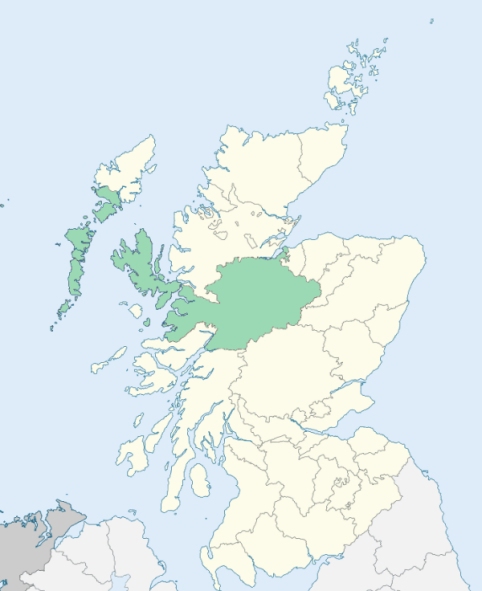
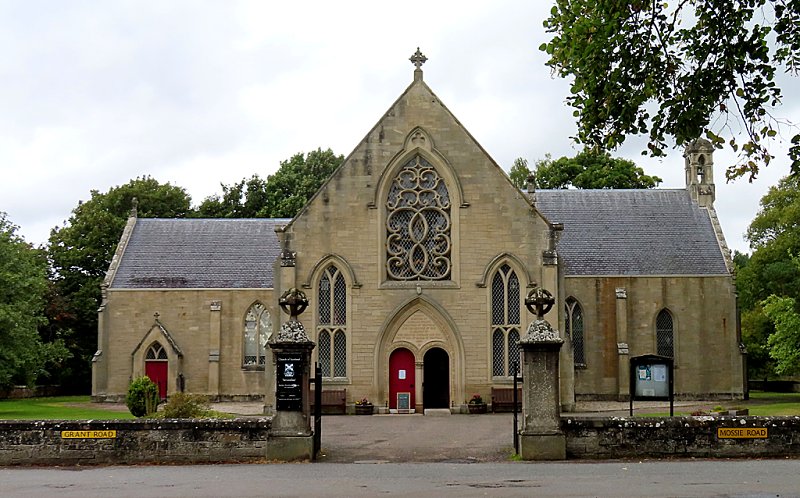
Cromdale, Inverallan, and Advie is a united parish in the Strathspey districts of Inverness-shire and Morayshire. It is bounded by Knockando on the north, by Inveravon and Kirkmichael on the east, by Abernethy on the south, and by Duthil on the west. (1867: The Imperial Gazetteer of Scotland, by John Marius Wilson).
Advie, Camerory, Craggan, Cromdale, Delliefure, Dulnain Bridge, Grantown or Grantown-on-Spey
The parish of Cromdale was situated partly in the county of Elgin and partly in the county of Inverness. No change has been made on the county boundary, but the Inverness-shire part of the parish has been transferred to the parish of Duthil and Rothiemurchas. See affected properties and landholders. (1892: Boundary of counties and parishes in Scotland as settled by the Boundary Commissioners under the Local Government Act, 1889, by Hay Shennan)
PRE-REFORMATION GOVERNANCE:
POST-REFORMATION GOVERNANCE:
The parishes of Cromdale, Inverallan, and Advie were united, but have been severed again. Inverallan was disjoined on 24 May 1869, and Advie on 16 July 1888.
Cromdale. The church of Cromdale was dedicated to St Luag. It was a prebend of the Cathedral of Elgin.
Inverallan. There is a good ground for the belief that the church of Inverallan was dedicated to St Futach. Inverallan was a mensal kirk of the Bishop of Moray. In 1835 a Parliamentary church was built at Grantown-on-Spey, near Inverallan. On 4 May 1869 the parish of Inverallan was again disjoined quoad sacra from Cromdale and Advie. There is a mission chapel of St Drostan within the bounds at Dulnain Bridge.
Advie. The church of Advie was dedicated to St Bride. Advie was a prebend of the Cathedral of Elgin. The parishes of Advie and Cromdale were united before the Reformation. A mission station was begun at Advie in 1861. A church was built in 1874, and the district was erected into a parish 16 July 1888. In 1905 the church was enlarged and the interior renewed.
Includes ministers, licentiates, assistants, readers, and clerks.
Cromdale (QO)
Inverallan (QO)
Advie (QO)
(1928: Fasti Ecclesiæ Scoticanæ, by Hew Scott, D. D.)
Parish registers turned over to the Registrar-General, as a result of the Registration of Births, Deaths, and Marriages (Scotland) Act of 1854. The letters B. D. and M. indicate Births (or Baptisms), Deaths (or Burials), and Marriages (or Proclamations of Banns) respectively. Numbers indicate separate volumes or books. Note: These records are by no means complete or without damage; consult the Detailed List of the Old Parochial Registers of Scotland (1872) to learn more about the condition of the records.
| OPR and RD Numbers | |||
|---|---|---|---|
| Date Range | Name | Number | Type |
| 1702-1854 | Inverallan | 93 | OPR |
| 1855-1862 | Cromdale and Inverallan | 93 | RD |
| 1863-1869 | Cromdale and Advie | 93-1 | RD |
| 1863-1869 | Inverallan | 93-2 | RD |
| 1870-1892 | Cromdale and Advie | 128b-1 | RD |
| 1870-1892 | Inverallan | 128b-2 | RD |
| 1893-1965 | Cromdale and Advie | 128-1 | RD |
| 2009 | Highland, Grantown-on-Spey and Nethybridge | 283 | RD |
| 2026 | (Cromdale) Moray Council; Cromdale and Inverallan Community Council | ||
| 2026 | (Inverallan) Moray Council; Cromdale and Inverallan Community Council | ||
| 2026 | (Advie) Moray Council; Strathisla Community Council | ||
(2009: Parishes and Registration Districts of Scotland - Old and New, National Records of Scotland)
Local community councils (2026) are provided as a potential source of additional information for settlements within the original boundaries of the parish. (Source)
Statistics from informal and official censuses
Calder, Cameron, Cruickshank, Cumming, Fraser, Grant, Ross, Smith, Stewart, Stuart
Note: Names appearing in research materials, other than censuses. Simple names (First name, surname only) have been omitted unless they appear associated with large properties. All women's names, and men's names with occupations, military ranks, or peerage titles are included.
By the Reverend Mr Lewis Grant.
"The number of souls belonging to the parish, may be stated at 3000, but many of them go occasionally south, during the summer season, to work at roads, and other public works, which renders the amount fluctuating. The common people speak the Gaelic tongue, but the English is the prevailing language, which they pronounce with great propriety, and with very little of the brogue.
Grantown is a village erected under the influence of the Grant family, it being little more than 20 years, since the place, where it stands, was a poor rugged piece of heath. It now contains from 300 to 400 inhabitants, some of whom are as good tradesmen as any in the kingdom. Shoemakers, tailors, weavers of wool, linen, and stockings, blacksmiths, wrights, masons, and 12 merchants keep regular shops in it. A brewery was established in this place immediately at the first building of it, on purpose to keep the people from drinking spiritous liquors, and it continues to give satisfaction. Two bakers carry on the business of their profession with success.
(The people) are very industrious, obliging, and remarkable for nothing so much as neatness of dress at kirk and market, agreeable to their rank in life. The women have long been distinguished among their neighbours for making webs, particularly those of the woollen kind; and for great cleanliness in their houses, which were formerly built of turf, and lined with wood. But the practice now, with all farmers in easy circumstances, is to have their houses built of stone and lime, with glass windows, &c. and their barns and kiln of the same materials."
(This section contains excerpts, at times restructured or paraphrased, from an article appearing in Statistical Account of Scotland, Sir John Sinclair, 1791-1799)
Primary Sources:
Statistical Account of Scotland (1791-1799), Volume 8, p. 251
New Statistical Account of Scotland (1834-1845), Volume 14, Section I, p. 432
See Parish Page Sources for all source information and links.