Skirdustan
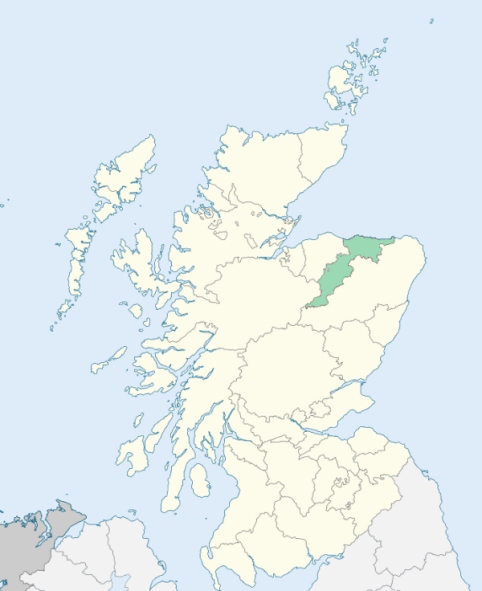
Aberlour is a parish in the south-west of Banffshire. It is bounded by Morayshire, and by the parishes of Boharm, Mortlach, and Inveraven. The Spey divides it from Morayshire, the Fiddich from Boharm, and the Dullan Burn from part of Mortlach. (1867: The Imperial Gazetteer of Scotland, by John Marius Wilson).
Aberlour, Allarick, Aultbeg, Ballinteem, Balnacoul, Blairshinnoch, Boat of Fiddoch, Bogside, Charlestown, Clashmarloch, Craigellachie, Deldonnel, Derrybeg, Drumside, Edingarrow, Kinermony, Lyne, Milltown or Milton, Polduie, Ruthrie
PRE-REFORMATION GOVERNANCE:
POST-REFORMATION GOVERNANCE:
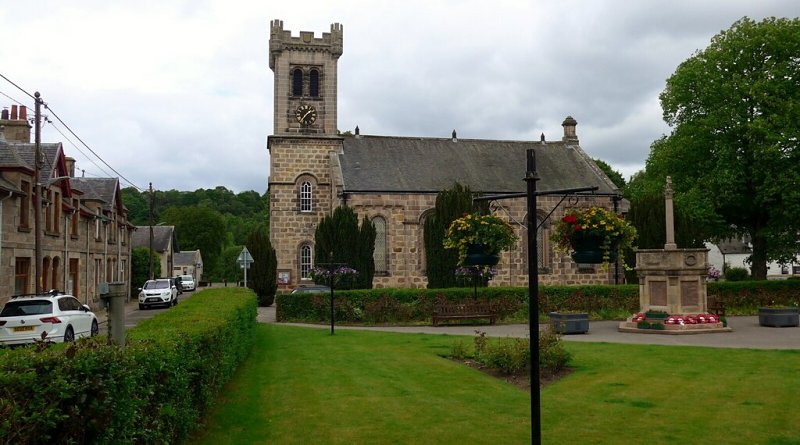
The parish church was dedicated to St Drostan. Skirdustan was a prebend of Elgin Cathedral. At Kinnermonie, in this parish there was a Commandery of the Templars. At Charleston of Aberlour a fair of St Drostan was held There is a mission chapel within the bounds at Craigellachie.
Disjoined Quoad Sacra Parishes:
Glenlivet. The General Assembly of 1712, upon a representation from the Presbytery of Aberlour in 1711, granted an allowance for an assistant minister in Inveraven who was to carry on work in the district of Glenlivet. There was no fixed place of worship till 1736 when a chapel was erected at Achbreck. In 1825 the church was entirely renewed, and manse and offices built. Glenlivet was erected into a parish on 15 March 1865. There were of old chapels within the bounds at Chapel Chriosd, Chapel Donain, and Buitterloch.
Glenrinnes. Glenrinnes became a station under the Royal Bounty Committee in 1725. Disjoined from Mortlach and Aberlour and erected a parish quoad sacra 15 March 1865.
Includes ministers, licentiates, assistants, readers, and clerks.
Aberlour (QO)
Glenlivet (QS)
Glenrinnes (QS)
(1928: Fasti Ecclesiæ Scoticanæ, by Hew Scott, D. D.)
Parish registers turned over to the Registrar-General, as a result of the Registration of Births, Deaths, and Marriages (Scotland) Act of 1854. The letters B. D. and M. indicate Births (or Baptisms), Deaths (or Burials), and Marriages (or Proclamations of Banns) respectively. Numbers indicate separate volumes or books. Note: These records are by no means complete or without damage; consult the Detailed List of the Old Parochial Registers of Scotland (1872) to learn more about the condition of the records.
| OPR and RD Numbers | |||
|---|---|---|---|
| Date Range | Name | Number | Type |
| 1708-1854 | Aberlour | 145 | OPR |
| 1855-1971 | Aberlour | 145 | RD |
| 1972-2002 | Aberlour | 296 | RD |
| 2009 | Moray, Keith | 295 | RD |
| 2026 | Moray Council; Speyside Community Council | ||
(2009: Parishes and Registration Districts of Scotland - Old and New, National Records of Scotland)
Local community councils (2026) are provided as a potential source of additional information for settlements within the original boundaries of the parish. (Source)
Statistics from informal and official censuses
Cameron, Gordon, Grant, Green, Kemp, Mitchell, Munro, Smith, Stewart, Stuart
Note: Names appearing in research materials, other than censuses. Simple names (First name, surname only) have been omitted unless they appear associated with large properties. All women's names, and men's names with occupations, military ranks, or peerage titles are included.
By the Reverend Mr James Thomson.
"There are, at present, about 920 souls; about 450 males, and 470 females. Though there are scarce any remarkable for longevity, yet the people are generally healthy, and, a few excepted, who are carried off by small pox and consumptions, arrive at the age of 70, 80, and not a few at 84. The whole are of the Established Church, except about 10 or 11, who are Roman Catholics.
The inhabitants, except a very few servants and cottagers who come from Strathspey and Badenoch, are natives, descended from ancestors who have lived in the parish for many generations. Since the year 1782, when there were whole families emigrating from the neighbouring parishes to North America, none, except a few aspiring young men, who have had a more liberal education than their neighbours, have left this parish, and gone, some to London, some to the West India Islands."
(This section contains excerpts, at times restructured or paraphrased, from an article appearing in Statistical Account of Scotland, Sir John Sinclair, 1791-1799)
Primary Sources:
Statistical Account of Scotland (1791-1799), Volume 4, p. 64
New Statistical Account of Scotland (1834-1845), Volume 13, Section I, p. 110
See Parish Page Sources for all source information and links.