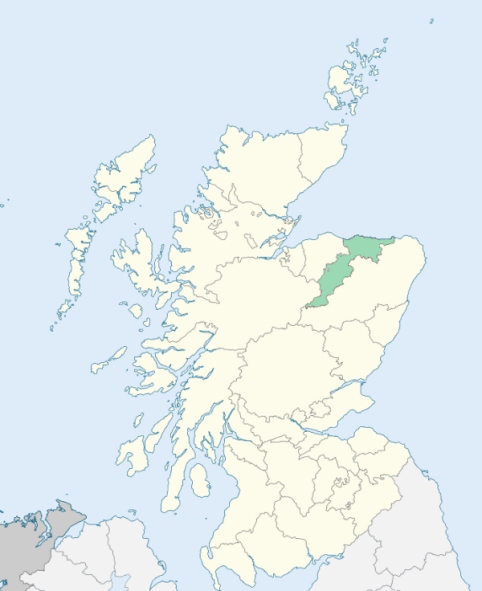
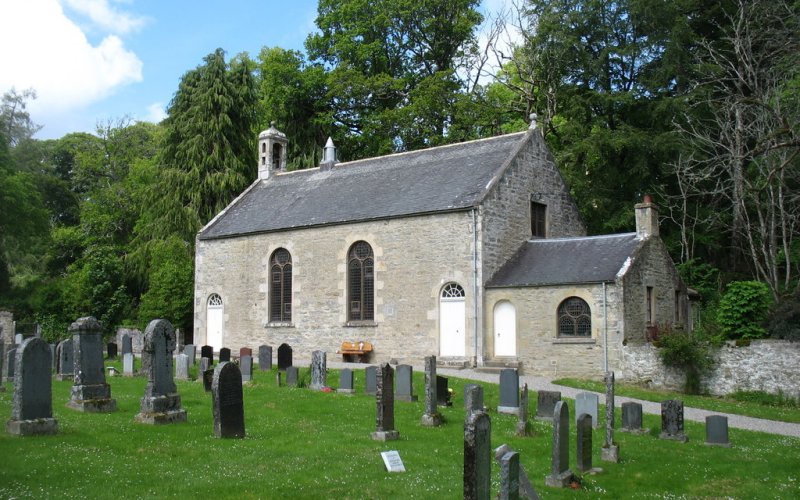
Botriphnie is a parish in the centre of Banffshire. It is situated in the narrow part of the county, and extends quite across it, being bounded on the east by Aberdeenshire, on the north-west by Morayshire, and on other sides by the parishes of Keith, Boharm, and Mortlach. (1867: The Imperial Gazetteer of Scotland, by John Marius Wilson).
Allenach, Ardbrack, Bellyhack, Belnascoug, Blackmure, Bodinfinnoch, Botriphnie, Braehead, Broadrashes, Butterbrae, Corrie, Cottartown, Drummuir, Easterton, Hillays, Lynemore or Lynmore, Newburgh, Ryal, Sachenward, Sheils, Sloggan, Sunnybrae, Tauchars, Tennanton, Tombrack, Towiebeg, Whitecow
PRE-REFORMATION GOVERNANCE:
POST-REFORMATION GOVERNANCE:
The church of Botriphnie was dedicated to St Fumach, who, in early times, had set up his mission here. Near the church was St Fumach's Well, and nearby was held St Fumach's Fair.
Includes ministers, licentiates, assistants, readers, and clerks.
(1928: Fasti Ecclesiæ Scoticanæ, by Hew Scott, D. D.)
Parish registers turned over to the Registrar-General, as a result of the Registration of Births, Deaths, and Marriages (Scotland) Act of 1854. The letters B. D. and M. indicate Births (or Baptisms), Deaths (or Burials), and Marriages (or Proclamations of Banns) respectively. Numbers indicate separate volumes or books. Note: These records are by no means complete or without damage; consult the Detailed List of the Old Parochial Registers of Scotland (1872) to learn more about the condition of the records.
| OPR and RD Numbers | |||
|---|---|---|---|
| Date Range | Name | Number | Type |
| 1683-1854 | Botriphnie | 148 | OPR |
| 1855-1967 | Botriphnie | 148 | RD |
| 2009 | Moray, Keith | 295 | RD |
| 2026 | Moray Council; Strathisla Community Council | ||
(2009: Parishes and Registration Districts of Scotland - Old and New, National Records of Scotland)
Local community councils (2026) are provided as a potential source of additional information for settlements within the original boundaries of the parish. (Source)
Statistics from informal and official censuses
Burgess, Cruickshank, Duncan, George, Grant, Gray, Milne, Stewart, Sutherland, Wiseman
Note: Names appearing in research materials, other than censuses. Simple names (First name, surname only) have been omitted unless they appear associated with large properties. All women's names, and men's names with occupations, military ranks, or peerage titles are included.
By the Reverend Mr Alexander Angus.
"In this parish there are 9 weavers, 3 turners, chiefly employed in making spinning wheels, 1 carpenter, 4 tailors, 4 shoemakers, 2 shopkeepers, and 12 masons. The latter are not much employed within the parish; but they find work in the southern counties, and reside here in the winter.
The women are employed in spinning linen yarn, from flax partly of their own rearing, and partly imported from Holland by the manufacturers. A considerable quantity of linen cloth is likewise made from flax reared in the parish, which after it is bleached, is sold at an annual fair held in Keith in September, and at Huntly in July.
The population of this parish has decreased about 80 since 1774; at that period the numbers were 700, and they are now 620, of all ages. The people are sober, industrious, and of good morals, and well affected to our present constitution."
(This section contains excerpts, at times restructured or paraphrased, from an article appearing in Statistical Account of Scotland, Sir John Sinclair, 1791-1799)
Primary Sources:
Statistical Account of Scotland (1791-1799), Volume 10, p. 187
New Statistical Account of Scotland (1834-1845), Volume 13, Section I, p. 209
See Parish Page Sources for all source information and links.