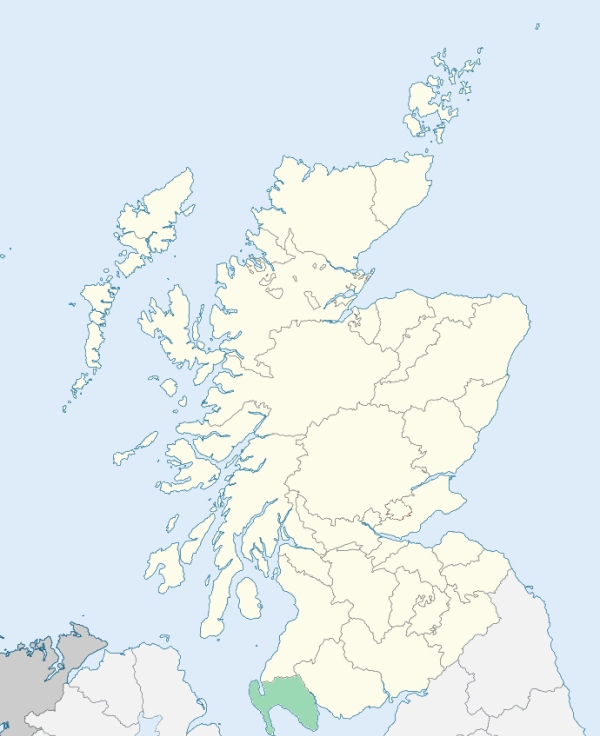
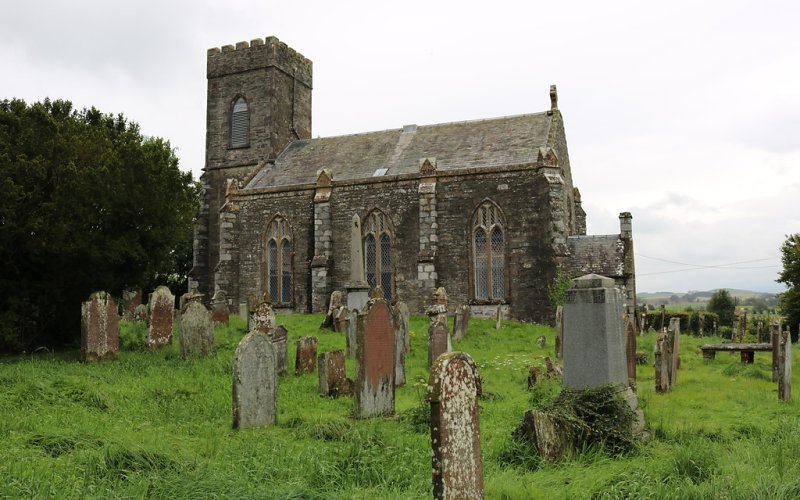
Kirkinner is a parish in the south-east of Wigtownshire. It is bounded on the east by Wigtown Bay, which divides it from Kirkcudbrightshire, and on other sides by the parishes of Sorbie, Glasserton, Mochrum, Kirkcowan, and Wigtown. (1867: The Imperial Gazetteer of Scotland, by John Marius Wilson).
Kirkinner, Marchfarm, Slohabert
Barnbarroch
PRE-REFORMATION GOVERNANCE:
POST-REFORMATION GOVERNANCE:
The parishes of Kirkinner and Longcastle were united in 1650.
Kirkinner. The church was dedicated to St Kinera. Before the Reformation it belonged to the Chapel Royal of Stirling.
Longcastle. The ruins of the church still stand in the churchyard at Longcastle.
Includes ministers, licentiates, assistants, readers, and clerks.
Kirkinner (QO)
Longcastle (QO)
(1928: Fasti Ecclesiæ Scoticanæ, by Hew Scott, D. D.)
Parish registers turned over to the Registrar-General, as a result of the Registration of Births, Deaths, and Marriages (Scotland) Act of 1854. The letters B. D. and M. indicate Births (or Baptisms), Deaths (or Burials), and Marriages (or Proclamations of Banns) respectively. Numbers indicate separate volumes or books. Note: These records are by no means complete or without damage; consult the Detailed List of the Old Parochial Registers of Scotland (1872) to learn more about the condition of the records.
| OPR and RD Numbers | |||
|---|---|---|---|
| Date Range | Name | Number | Type |
| 1694-1854 | Kirkinner | 889 | OPR |
| 1855-1966 | Kirkinner | 889 | RD |
| 2009 | Dumfries and Galloway, Wigtown | 874 | RD |
| 2026 | Dumfries and Galloway Council; Royal Burgh of Wigtown and District Community Council | ||
(2009: Parishes and Registration Districts of Scotland - Old and New, National Records of Scotland)
Local community councils (2026) are provided as a potential source of additional information for settlements within the original boundaries of the parish. (Source)
Statistics from informal and official censuses
Black, Ferguson, Heron, Kelly, Milligan, Muir, Reid, Rodgers, Smith, Turner
Note: Names appearing in research materials, other than censuses. Simple names (First name, surname only) have been omitted unless they appear associated with large properties. All women's names, and men's names with occupations, military ranks, or peerage titles are included.
By the Reverend Mr John Graham.
"According to Dr Webster's returns (1755), the population was 792. The present population is 1152, of whom 563 are males, and 589 are females. There are between 90 and 100 Seceders, 6 or 7 Roman Catholics from Ireland, and the rest of the Established Church. Between 40 and 50 persons emigrated from this parish to America, in the year 1775, with a view to settle there as planters or artisans. There is neither physician, surgeon, nor apothecary in the parish.
The number of families is 238. Upwards of 30 of these have come into the parish within these 12 years last past, owing to the division of one large farm into 13 or 14 smaller possessions, so that the increase of inhabitants in that time, seems to be nearly 200.
The number of farmers, who rent lands in tillage, is about 50. There are, besides these, a considerable number who pay rent for small spots of land, either immediately to the proprietors, or to principal tenants, who depend on their industry as day-labourers, or as handicraftsmen, for their subsistence. The families of this class are about 20. Each considerable farmer, besides servants who live in his house, has generally a married servant, to whom he gives a house, a small garden, and a cow's grass, and allows him to plant 3 or 4 bushels of potatoes for his own use.
There are 10 weavers, 7 tailors, 7 carpenters, 3 shoemakers, and 10 household servants in the parish. Besides the married servants above mentioned, I reckon one male and two female servants for each of the 50 farmers, and a boy between 12 and 16 years of age. The other 20, who possess very small farms, have the work of the farm chiefly performed by themselves and their children.
There are about 27 Irish families, and 9 or 10 single men, employed as day-labourers. Not one half of the inhabitants, above the age of 20 years, have been born in the parish.
Our principal object is agriculture. Nothing is manufactured for any distant market. The people are generally prudent and economical, yet humane and generous to the extent of their ability. On the whole, we enjoy a reasonable degree of the comforts and advantages of society, and the body of the people do not betray any discontentment with their situation and circumstances."
(This section contains excerpts, at times restructured or paraphrased, from an article appearing in Statistical Account of Scotland, Sir John Sinclair, 1791-1799)
Primary Sources:
Statistical Account of Scotland (1791-1799), Volume 4, p. 138
New Statistical Account of Scotland (1834-1845), Volume 4, Section III, p. 9
See Parish Page Sources for all source information and links.