Wigton
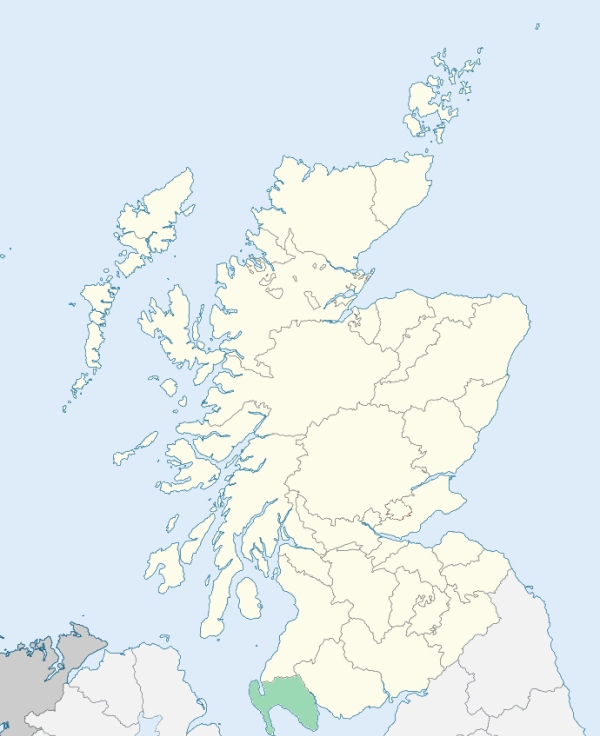
Wigtown is a parish on the east border of Wigtownshire. It is bounded on the north-west, north, and north-east, by Penninghame, on the east by Wigtown Bay, which divides it from Kirkcudbrightshire, and on the south and south-west by the River Bladenoch, which divides it from Kirkinner. (1867: The Imperial Gazetteer of Scotland, by John Marius Wilson).
Auchleand, Balmeg, Bladnoch or Bladenoch, Carsegowan, Culquhirk, Glenturk, Wigtown
PRE-REFORMATION GOVERNANCE:
POST-REFORMATION GOVERNANCE:
The church of Wigtown was dedicated to St Machuit. It belonged to the Priory of Whitern (Whithorn). Beside the ruins of the old church there stands in the churchyard a new parish church, built about 1850. In the churchyard are two monumental stones of some note, marking the graves of person put to death in 1685 by orders of the Royal Commission for the suppression of Nonconformity. The one records the names of three men hanged without trial; and on the other are commemorated two women, one of them but eighteen years of age, drowned at stakes within tidemark on the sands at the mouth of the Bladnoch, close by the church. Near the church stood a priory of the Black Friars, founded in 1264 by the Lady Dervorgilla of Galloway, mother of King John Baliol.
Includes ministers, licentiates, assistants, readers, and clerks.
(1928: Fasti Ecclesiæ Scoticanæ, by Hew Scott, D. D.)
Parish registers turned over to the Registrar-General, as a result of the Registration of Births, Deaths, and Marriages (Scotland) Act of 1854. The letters B. D. and M. indicate Births (or Baptisms), Deaths (or Burials), and Marriages (or Proclamations of Banns) respectively. Numbers indicate separate volumes or books. Note: These records are by no means complete or without damage; consult the Detailed List of the Old Parochial Registers of Scotland (1872) to learn more about the condition of the records.
Note: These records are by no means complete or without damage; consult the Detailed List of the Old Parochial Registers of Scotland (1872) to read more about the condition of the records.
| OPR and RD Numbers | |||
|---|---|---|---|
| Date Range | Name | Number | Type |
| 1706-1854 | Wigtown | 901 | OPR |
| 1855-1855 | Wigtown Burgh | 901-1 | RD |
| 1855-1855 | Wigtown Landward | 901-2 | RD |
| 1856-1971 | Wigtown | 901 | RD |
| 1972-2004 | Wigtown | 874 | RD |
| 2005-2009 | Dumfries and Galloway, Wigtown | 874 | RD |
| 2026 | Dumfries and Galloway Council; Royal Burgh of Wigtown and District Community Council | ||
(2009: Parishes and Registration Districts of Scotland - Old and New, National Records of Scotland)
Local community councils (2026) are provided as a potential source of additional information for settlements within the original boundaries of the parish. (Source)
Statistics from informal and official censuses
Brown, Campbell, Fraser, Gilmour, Kelly, Kennedy, Murray, Smith, Thomson, Wallace
Note: Names appearing in research materials, other than censuses. Simple names (First name, surname only) have been omitted unless they appear associated with large properties. All women's names, and men's names with occupations, military ranks, or peerage titles are included. Dates range from 1833-1891, unless otherwise noted.
By the Reverend Mr Andrew Duncan.
"In 1793, from an enumeration taken by the present incumbent, the inhabitants were found to amount to 1350. In the town are 1032; in the country 318. There are 637 males, 713 females; 301 are under 10 years of age. There 191 Seceders, 27 Cameronians, 146 Irish, or of Irish parents.
Of occupations there are, 2 surgeons, 5 writers, 4 messengers, 16 shopkeepers, 6 innkeepers, 2 watchmakers, 3 gardeners, 2 dyers, 2 saddlers, 3 smiths, 12 masons, 16 carpenters, 26 weavers, 14 shoemakers, 15 tailors, 3 coopers, 1 staymaker, 1 stocking weaver, 1 flax-dresser, 24 apprentices, 2 butchers, 4 bakers, 2 millers, 1 tanner, 2 maltmen, 12 seamen, 16 fishermen, 10 carters, 2 carriers, 35 farmers, 10 cottagers, 62 day labourers, 2 male domestic servants, 54 female domestic servants, 30 male farm servants, and 26 female farm servants. Some of the above are not wholly employed in their own line, the fishermen only occasionally.
Two small manufactures, the one of wool and the other of cotton, were introduced into this town, about a year and a half ago. In the former of these, which employs between 30 and 40 persons, the wool is manufactured into plaiding and flannel, and sent mostly to the English market. The latter, which would have employed about 20 persons, is now almost entirely ruined."
(This section contains excerpts - sometimes paraphrased or restructured by the Webmaster - from an article appearing in Statistical Account of Scotland, Sir John Sinclair, 1791-1799, Vol 14, p. 481)
Primary Sources:
Statistical Account of Scotland (1791-1799), Volume 14, p. 470
New Statistical Account of Scotland (1834-1845), Volume 4, Section III, p. 1
See Parish Page Sources for all source information and links.