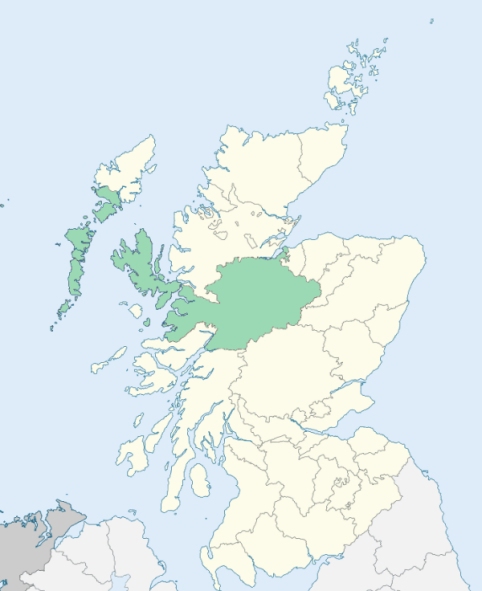
Urquhart and Glenmoriston is a united parish in the north-west division of Inverness-shire. It is bounded on the north by Kiltarlity, Kirkhill, and Inverness, on the east by Loch Ness, which separates it from Dores and Boleskine, on the south by Boleskine and Kilmonivaig, on the south-west by Ross-shire, and on the west and north-west by Kilmorack and Kiltarlity. (1867: The Imperial Gazetteer of Scotland, by John Marius Wilson).
Achlain, Achnaconeran, Alltsigh, Balbeg, Balchraggan, Balnacarn, Balnain, Bunloit, Corrimony, Dalreichard or Dalchreichart, Drumnadrochit, Dundreggan, East Lewiston, Glenmoriston, Invermoriston, Lenie, Lewiston, Millton or Milntown, Tomchrasky, Urquhart, West Lewiston
Corriemony
PRE-REFORMATION GOVERNANCE:
POST-REFORMATION GOVERNANCE:
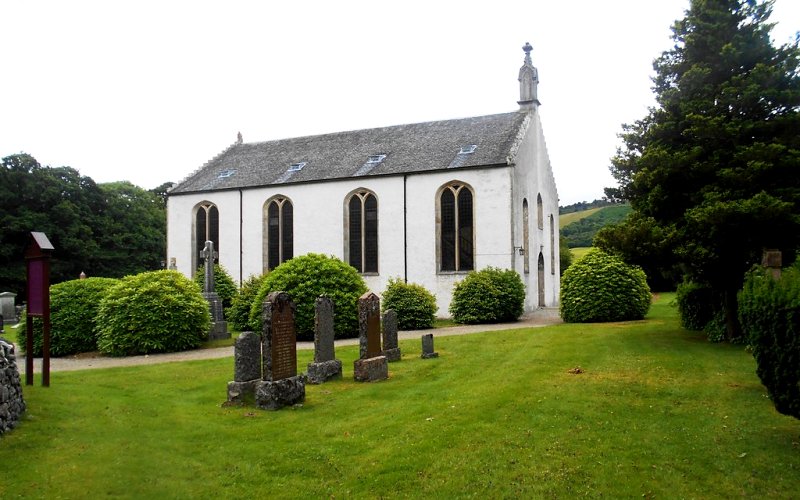
Urquhart, Glen Urquhart, or Urchardan Mo Dhrostain. The church of Glen Urquhart was dedicated to St Drostan. At Teampal Niniain in this parish, the Knights Templars had a Commandery. Within the bounds there were five chapels - St Michael's at Cill Mhichiel, near Drumnadrochit, St Curadan's at Cill Churadain, at Corriemony, St Ninians' at Abriachan, St Adamnan's at Croit Eonain, and St Cyril's at Pitkerail. This parish was transferred 28 May 1884 from the Presbytery of Abertarff to that of Inverness.
Glenmoriston. The ancient name of this parish is Gleann Mòr Essdin = The Great Glen of the Waterfall. Its church was dedicated to St Irchard. At Invermoriston, within the bounds, there were Wells of St Irchard and St Columba. The parishes of Glen Urquhart and Glenmoriston were united about 1600. From 1676 to 1688 Abertarff was conjoined with Glenmoriston. Glenmoriston was disjoined again quoad sacra on 9 March 1891. A fair of St Irchard was held at Invermoriston. There is now a mission chapel in this parish at Dalchriechart.
Includes ministers, licentiates, assistants, readers, and clerks.
Urquhart (QO)
Glenmoriston (QO)
(1928: Fasti Ecclesiæ Scoticanæ, by Hew Scott, D. D.)
Parish registers turned over to the Registrar-General, as a result of the Registration of Births, Deaths, and Marriages (Scotland) Act of 1854. The letters B. D. and M. indicate Births (or Baptisms), Deaths (or Burials), and Marriages (or Proclamations of Banns) respectively. Numbers indicate separate volumes or books. Note: These records are by no means complete or without damage; consult the Detailed List of the Old Parochial Registers of Scotland (1872) to learn more about the condition of the records.
| OPR and RD Numbers | |||
|---|---|---|---|
| Date Range | Name | Number | Type |
| 1739-1854 | Urquhart and Glenmoriston | 107 | OPR |
| 1855-1970 | Urquhart | 107-1 | RD |
| 1855-1970 | Glenmoriston | 107-2 | RD |
| 2009 | (Urquhart) Highland, Inverness | 240 | RD |
| 2009 | (Glenmoriston) Highland, Fort Augustus | 235 | RD |
| 2026 | (Urquhart) Highland Council; Glen Urquhart Community Council | ||
| 2026 | (Glenmoriston) Highland Council; Fort Augustus and Glenmoriston Community Council | ||
(2009: Parishes and Registration Districts of Scotland - Old and New, National Records of Scotland)
Local community councils (2026) are provided as a potential source of additional information for settlements within the original boundaries of the parish. (Source)
Statistics from informal and official censuses
Cameron, Campbell, Chisholm, Cumming, Fraser, Grant, MacDonald, Mackenzie, MacMillan, Urquhart
Note: Names appearing in research materials, other than censuses. Simple names (First name, surname only) have been omitted unless they appear associated with large properties. All women's names, and men's names with occupations, military ranks, or peerage titles are included.
By: No attribution listed in source material; clergy at the time of publication were James Fowler (Urquhart) and Simon Fraser (Glenmoriston).
"The great body of the people live by cultivating the ground, either as tenants, mailers*, or servants. There is a sufficiency of artisans for the accommodations of the country, and most of them have a small piece of land, which yields them the comforts of a milch-cow.
The number of inhabitants in the parish of Urquhart, of all ages, are 2355, of which, in Urquhart properly so called, there are 1710; and in Glenmoriston 645. The number of marriages and baptisms have increased for several years past, owing to the more regular behaviour of the people, and their being in more comfortable circumstances. A proof of which is, that early marriages are very frequent, and which, naturally, prevent irregularities. Here, it may be observed that 80 men were raised in 1793, for the First Fencible Regiment; and there are now in the parish two companies of volunteers; one in Urquhart, of 60, and the other in Glenmoriston, of 40 men.
Before the years 1745 and 1746, this parish was exceedingly exposed to depredations from their neighbours in the West Highlands, who came and took up their cattle and other property without ceremony, for which they made no compensation. Now, by the exercise of the laws, and a well governed police, property is as secure as in any part of the island."
*Maillar: A tenant-famer who pays his rent in money
(This section contains excerpts, at times restructured or paraphrased, from an article appearing in Statistical Account of Scotland, Sir John Sinclair, 1791-1799)
Primary Sources:
Statistical Account of Scotland (1791-1799), Volume 20, p. 297
New Statistical Account of Scotland (1834-1845), Volume 14, Section I, p. 36
See Parish Page Sources for all source information and links.