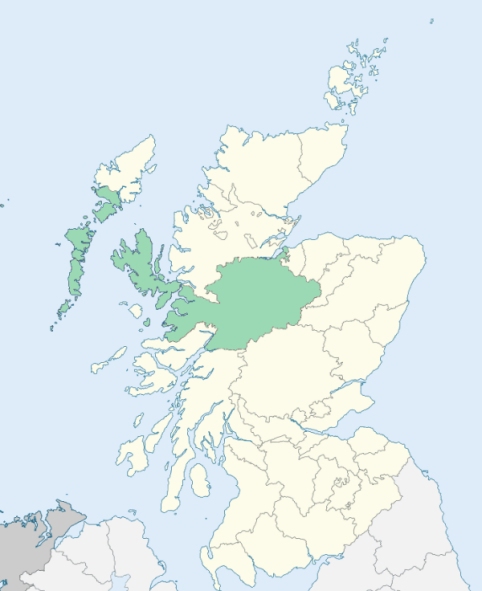
Kiltarlity is a parish in Inverness-shire. It is bounded by Ross-shire, and by the parishes of Kilmorack, Kirkhill, Inverness, Urquhart and Glenmoriston. (1867: The Imperial Gazetteer of Scotland, by John Marius Wilson).
Bearnock, Belladrum, Buntait, Caiplich, Camault Muir, Cougie, Culburnie, Eskdalemuir, Fanellan, Kiltarlity, Tomnacross
Belladrum, Chisholm
The parish of Kiltarlity & Convinth was situated wholly in Inverness-shire and had one detached part. The detached part was separated from the main portion of the parish by an intervening portion of the parish of Kilmorack. This intervening portion of Kilmorack was transferred to Kiltarlity & Convinth, thus uniting the detached part of the latter parish with its main portion. See affected properties and landholders. (1892: Boundary of counties and parishes in Scotland as settled by the Boundary Commissioners under the Local Government Act, 1889, by Hay Shennan)
PRE-REFORMATION GOVERNANCE:
POST-REFORMATION GOVERNANCE:
The parishes of Kiltarlity and Conveth were united about 1500.
Kiltarlity. The church of Kiltarlity was dedicated to St Talorgan. It belonged to the Priory of Beauly. A fair of St Muireach was held at Kiltarlity. There is a mission chapel in this parish at Guisachan in Strathglass.
Conveth, or Glen Convinth. Conveth church belonged to the Priory of Beaulieu. Convinth was the original parish, Kiltarlity having been formed out of it about 1223. The church of Glen Convinth was dedicated to St Laurence.
Disjoined Quoad Sacra Parishes:
Erchless. The parish of Erchless was disjoined from Kiltarlity, Kilmorack, and Kintail, and erected on 17 March 1884.
Includes ministers, licentiates, assistants, readers, and clerks.
Kiltarlity (QO)
Conveth, or Glen Convinth (QS)
Erchless (QS)
(1928: Fasti Ecclesiæ Scoticanæ, by Hew Scott, D. D.)
Parish registers turned over to the Registrar-General, as a result of the Registration of Births, Deaths, and Marriages (Scotland) Act of 1854. The letters B. D. and M. indicate Births (or Baptisms), Deaths (or Burials), and Marriages (or Proclamations of Banns) respectively. Numbers indicate separate volumes or books. Note: These records are by no means complete or without damage; consult the Detailed List of the Old Parochial Registers of Scotland (1872) to learn more about the condition of the records.
| OPR and RD Numbers | |||
|---|---|---|---|
| Date Range | Name | Number | Type |
| 1714-1854 | Kiltarlity | 101 | OPR |
| 1855-1970 | Kiltarlity | 101 | RD |
| 2009 | Highland | 230 | RD |
| 2026 | Highland Council; Kiltarlity Community Council | ||
(2009: Parishes and Registration Districts of Scotland - Old and New, National Records of Scotland)
Local community councils (2026) are provided as a potential source of additional information for settlements within the original boundaries of the parish. (Source)
Statistics from informal and official censuses
Cameron, Campbell, Chisholm, Fraser, Grant, MacDonald, MacLean, Munro, Ross, Stewart
Note: Names appearing in research materials, other than censuses. Simple names (First name, surname only) have been omitted unless they appear associated with large properties. All women's names, and men's names with occupations, military ranks, or peerage titles are included.
By the Reverend Mr John Fraser.
"By an exact survey in September 1793, the number of souls in these united parishes was 2495. There are 392 married couples, 19 widowers, 99 widows, 167 male-servants, 177 female-servants, 12 tailors, 22 weavers, 7 wrights, 7 shoemakers, 7 millers, 10 smiths, 6 masons, 4 chapmen or small merchants, 4 gardeners, 5 overseers, 3 drivers, 3 schoolmasters, 1 catechist, 2 students in divinity, tutors in two different families, and 13 apprentices to different trades.
The language principally spoken in this parish is the Gaelic. In the heights of the parish, very few of the inhabitants understand any other language. But in the lower end of the parish, many of them being taught to read and write at school, can transact ordinary business in English, only they speak this language with the Gaelic idiom.
The people, in general, are sober and industrious, humane, generous and hospitable, and seemingly contented with their situation; but I am persuaded, the number of distilleries in this and the neighbouring parishes, have been rather prejudicial to the health, morals and industry of some of the inhabitants. The size of the people is from 5 feet 5 inches to 6 feet high; they are at the same time strong and active."
(This section contains excerpts, at times restructured or paraphrased, from an article appearing in Statistical Account of Scotland, Sir John Sinclair, 1791-1799)
Primary Sources:
Statistical Account of Scotland (1791-1799), Volume 13, p. 507
New Statistical Account of Scotland (1834-1845), Volume 14, Section I, p. 483
See Parish Page Sources for all source information and links.