Edenkillie, Brae-Moray
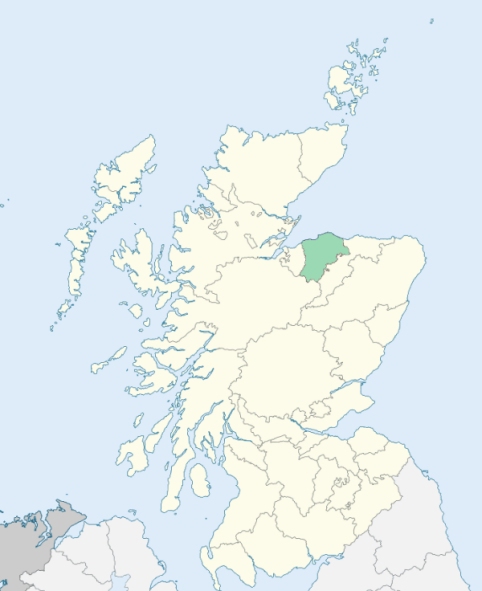
Edinkillie is a parish in the west side of Morayshire. It is bounded by Dyke, Rafford, Dallas, Knockando, Cromdale, Ardclach, and Auldearn. (1867: The Imperial Gazetteer of Scotland, by John Marius Wilson).
Carnoch, Conicavel, Darnaway, Dava, Edinkillie, Logie Tythenach, Tullidivie
Altyre, Duniphail or Dunphail, Relugas
The parish of Ardclach had two detached parts which were at the same time detached parts of the county of Nairn. They were surrounded by the Elginshire parish of Edinkillie. These two detached parts were transferred to the county of Elgin and the parish of Edinkillie. See affected properties and landholders. (1892: Boundary of counties and parishes in Scotland as settled by the Boundary Commissioners under the Local Government Act, 1889, by Hay Shennan)
PRE-REFORMATION GOVERNANCE:
POST-REFORMATION GOVERNANCE:
Edinkillie was of old a vicarage. In this parish there were chapels at Tullidivie and Logie Tythenach. There is now a mission chapel at Darnaway. (1928: Fasti Ecclesiæ Scoticanæ, by Hew Scott, D. D.)
Includes ministers, licentiates, assistants, readers, and clerks.
(1928: Fasti Ecclesiæ Scoticanæ, by Hew Scott, D. D.)
Parish registers turned over to the Registrar-General, as a result of the Registration of Births, Deaths, and Marriages (Scotland) Act of 1854. The letters B. D. and M. indicate Births (or Baptisms), Deaths (or Burials), and Marriages (or Proclamations of Banns) respectively. Numbers indicate separate volumes or books. Note: These records are by no means complete or without damage; consult the Detailed List of the Old Parochial Registers of Scotland (1872) to learn more about the condition of the records.
| OPR and RD Numbers | |||
|---|---|---|---|
| Date Range | Name | Number | Type |
| 1702-1854 | Edinkillie | 134 | OPR |
| 1855-1954 | Edinkillie | 134 | RD |
| 2009 | Moray, Forres | 281 | RD |
| 2026 | Moray Council; Finderne Community Council | ||
(2009: Parishes and Registration Districts of Scotland - Old and New, National Records of Scotland)
Local community councils (2026) are provided as a potential source of additional information for settlements within the original boundaries of the parish. (Source)
Statistics from informal and official censuses
Anderson, Cameron, Duncan, Fraser, Grant, Mathieson, Paterson, Petrie, Robertson, Ross
Note: Names appearing in research materials, other than censuses. Simple names (First name, surname only) have been omitted unless they appear associated with large properties. All women's names, and men's names with occupations, military ranks, or peerage titles are included.
By the Reverend Mr John MacDonnel, lately Minister of that Parish, now Minister of Forres.
"The number of souls in 1791 is 1800, and the population appears to be upon the increase, as a good deal of the waste land, in the remoter parts of the parish, has lately been brought into culture, by families settling in these wilder parts of it. Many of the people live to a great age. There are two women, now alive, whose ages amount to 180.
The chief employment of the inhabitants is agriculture. There is little industry among the men, except in the poor employment of preparing and carrying peats to the town of Forres, at the distance of 10 or 12 miles. The women are diligent spinners. The people, in this part of the country, have such frequent intercourse with the town of Forres, that they buy the greatest part of their necessaries at the markets there. This likewise gives them an opportunity to get their own manufactures disposed of, which are but very few. There are a sufficient number of weavers and tailors, for manufacturing the stuffs worn by the inhabitants. There are 2 shoemakers, 4 coopers, and 10 riddle-makers*; and almost every man in the parish is a cart-wright.
There are no less than 4 distilleries for making whisky in this parish, which consumes a great quantity of barley; and, what is astonishing, they sell these spirits as fast as they can run them! The inhabitants of this parish are, however, in general, sober. In the lower part of the parish, the Scotch dialect of the English language is only spoken; but, in the upper part, the Gaelic is still much in use. The people are rather gloomy in their ideas as to religion; but they are of a peaceable disposition, sober and honest in their dealings, and very ready to extend their charity to the poor."
*Riddle: A flat, round coarse-meshed sieve with a ring or frame.
(This section contains excerpts, at times restructured or paraphrased, from an article appearing in Statistical Account of Scotland, Sir John Sinclair, 1791-1799)
Primary Sources:
Statistical Account of Scotland (1791-1799), Volume 8, p. 553
New Statistical Account of Scotland (1834-1845), Volume 13, Section II, p. 159
See Parish Page Sources for all source information and links.