Dollas
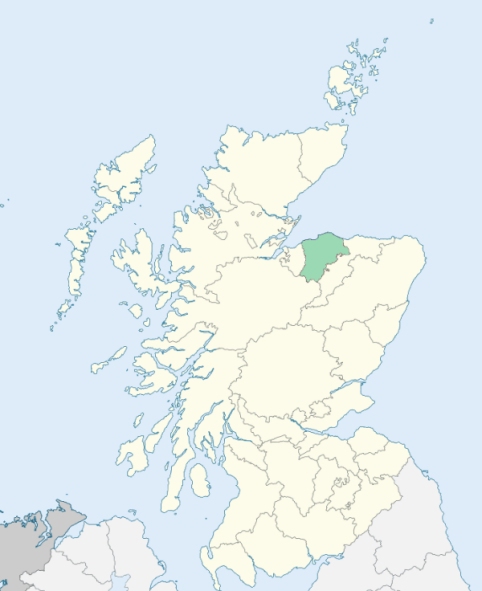
Dallas is a parish in the centre of Morayshire. It is bounded by Elgin, Birnie, Rothes, Knockando, Edenkillie, and Rafford. (1867: The Imperial Gazetteer of Scotland, by John Marius Wilson).
Bridge of Lossie, Dallas, Kellas
PRE-REFORMATION GOVERNANCE:
POST-REFORMATION GOVERNANCE:
Before the Reformation the parish of Dallas was a prebend held by the sub-dean of Moray. Altyre was conjoined with Dallas from before 1601 to 1657. Easter Kellas was disjoined from Elgin and added to Dallas in 1658. The church was dedicated to St Michael. A Michaelmas fair was held at Dallas. (1928: Fasti Ecclesiæ Scoticanæ, by Hew Scott, D. D.)
Includes ministers, licentiates, assistants, readers, and clerks.
Dallas (QO)
Altyre (QO)
(1928: Fasti Ecclesiæ Scoticanæ, by Hew Scott, D. D.)
Parish registers turned over to the Registrar-General, as a result of the Registration of Births, Deaths, and Marriages (Scotland) Act of 1854. The letters B. D. and M. indicate Births (or Baptisms), Deaths (or Burials), and Marriages (or Proclamations of Banns) respectively. Numbers indicate separate volumes or books. Note: These records are by no means complete or without damage; consult the Detailed List of the Old Parochial Registers of Scotland (1872) to learn more about the condition of the records.
| OPR and RD Numbers | |||
|---|---|---|---|
| Date Range | Name | Number | Type |
| 1742-1854 | Dallas | 129 | OPR |
| 1855-1967 | Dallas | 129 | RD |
| 2009 | Moray Council, Forres | 281 | RD |
| 2026 | Moray Council, Heldon Community Council | ||
(2009: Parishes and Registration Districts of Scotland - Old and New, National Records of Scotland)
Local community councils (2026) are provided as a potential source of additional information for settlements within the original boundaries of the parish. (Source)
Statistics from informal and official censuses
Allan, Anderson, Cameron, Douglas, Findlay, Forsyth, Gallon, Grant, Philip, Young
Note: Names appearing in research materials, other than censuses. Simple names (First name, surname only) have been omitted unless they appear associated with large properties. All women's names, and men's names with occupations, military ranks, or peerage titles are included.
By the Reverend Mr David Milne.
"The present incumbent found the number of souls in July and August 1778, to be 917: Of whom 84 were under 6 years of age; 434 were males, 483 females. In 1788 the number amounted to 888, of whom 426 were males, 462 females. The English language is spoken throughout the parish. The inhabitants are much inclined to industry and frugality. They are also disposed to acts of humanity.
A good many weavers are constantly employed in making coarse cloth, commonly called plaiden, from the produce of their sheep, which, in the summer markets is sold. By that, and other sources of industry, they are enabled to support their families and pay their rents. Their dress and manners are considerably improved within these few years. It is thought, and earnestly to be wished, that their condition may be meliorated. This, it is believed, might be done, by introducing and encouraging a stocking manufactory, or some such useful and accommodating employment, especially to occupy the young."
(This section contains excerpts, at times restructured or paraphrased, from an article appearing in Statistical Account of Scotland, Sir John Sinclair, 1791-1799)
Primary Sources:
Statistical Account of Scotland (1791-1799), Volume 4, p. 105
New Statistical Account of Scotland (1834-1845), Volume 13, Section II, p. 178
See Parish Page Sources for all source information and links.