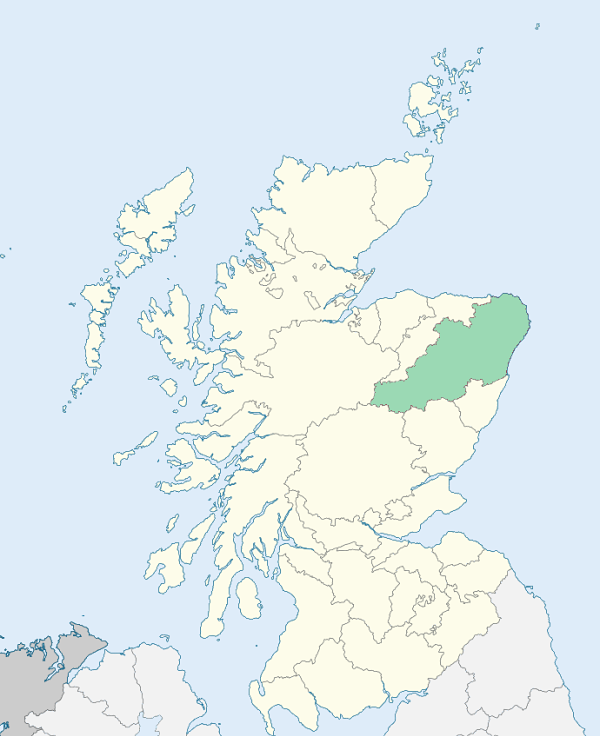
Aberdour is a parish on the north coast of Aberdeenshire. It is bounded by the sea, and by the parishes of Pitsligo, Tyrie, New Deer, King-Edward, and Gamrie. (1867: The Imperial Gazetteer of Scotland, by John Marius Wilson)
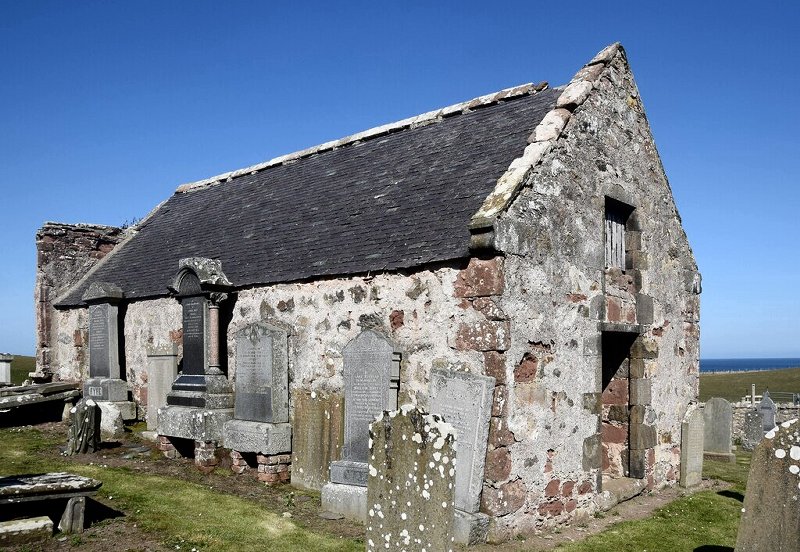
Aberdour or New Aberdour, Pennan
Auchinanne, Auchintumb, Auchmacleedie, Braco, Middlemuir
The parish of Aberdour had a detached part which was situated on the north border of the parish of Strichen. On the east of this detached part lay a detached part of the parish of Fraserburgh, which also adjoined the parish of Strichen. These two detached parts were transferred to the parish of Strichen. See affected properties and landholders. (1892: Boundary of counties and parishes in Scotland as settled by the Boundary Commissioners under the Local Government Act, 1889, by Hay Shennan)
PRE-REFORMATION GOVERNANCE:
POST-REFORMATION GOVERNANCE:
St Drostan established his mission at Aberdour in or about the year 580. In later times the parish church was dedicated to him. Aberdour was a prebend of Aberdeen. There were in the parish Wells of St Drostan and St John. There is a mission chapel within the bounds at Auchmedden, where, at Chapelden, a chapel stood in pre-Reformation times.
Disjoined Quoad Sacra Parishes:
New Byth. A chapel was built here in 1793. The parish of New Byth was disjoined from Kinedward and Aberdour on 18 December 1867.
New Pitsligo. The village of New Pitsligo was founded on 12 September 1787 by Sir William Forbes of Pitsligo, Bart., who was superior of the lands. At Cavoch within the bounds, a chapel was built in 1799. The parish of New Pitsligo was disjoined from Tyrie, Aberdour, Strichen, and New Deer, 9 March 1853, mainly through the generous aid given by Sir John Stuart Forbes of Pitsligo, Bart.
Includes ministers, licentiates, assistants, readers, and clerks.
Aberdour (QO)
New Byth (QS)
New Pitsligo (QS)
(1928: Fasti Ecclesiæ Scoticanæ, by Hew Scott, D. D.)
Parish registers turned over to the Registrar-General, as a result of the Registration of Births, Deaths, and Marriages (Scotland) Act of 1854. The letters B. D. and M. indicate Births (or Baptisms), Deaths (or Burials), and Marriages (or Proclamations of Banns) respectively. Numbers indicate separate volumes or books. Note: These records are by no means complete or without damage; consult the Detailed List of the Old Parochial Registers of Scotland (1872) to learn more about the condition of the records.
| OPR and RD Numbers | |||
|---|---|---|---|
| Date Range | Name | Number | Type |
| 1698-1854 | Aberdour | 169 | OPR |
| 1866-1967 | Aberdour | 169 | RD |
| 2009 | (New Aberdour) Aberdeenshire, Fraserburgh | 311 | RD |
| 2026 | Aberdeenshire Council; New Aberdour, Tyrie and Pennan Community Council | ||
(2009: Parishes and Registration Districts of Scotland - Old and New, National Records of Scotland)
Local community councils (2026) are provided as a potential source of additional information for settlements within the original boundaries of the parish. (Source)
Statistics from informal and official censuses
Bruce, Chapman, Duncan, Gall, Gerrard, Scott, Watson, Watt, West, Whyte
Note: Names appearing in research materials, other than censuses. Simple names (First name, surname only) have been omitted unless they appear associated with large properties. All women's names, and men's names with occupations, military ranks, or peerage titles are included.
By the Reverend Mr Andrew Youngson.
"The number of inhabitants, as stated, is from actual enumeration: so is the number of tradesmen, and those of other occupations. Population in 1792, 1306 total; 609 males and 697 females. There are 4 shopkeepers, 4 innkeepers, 24 weavers with 2 apprentices, 16 shoemakers with 3 apprentices, 12 carpenters with 3 apprentices, 7 tailors with 3 apprentices, 3 masons, 20 sailors and fishermen, 12 millstone quarriers, 4 millers, 2 dyers, 2 male domestic servants, 2 female domestic servants, 87 male farm servants, 58 female farm servants. There have been 3 emigrants to North American since the year 1770, and 5 emigrants to West Indies.
Though the language spoken in this district is a dialect of the English, known by the name of broad Buchan, yet the ancient names of places seem to be derived from the Gaelic. The people, in general, are sober and industrious; and, till of late years were so peaceable, and so little inclined to litigation, that for 12 or 13 years after the year 1766, there was only one single instance of a lawsuit going from this parish to the courts at Aberdeen, and that arose from a difference between two tenants, about the boundaries of their respective farms.
The women are employed, partly for making coarse serges for home consumption, but principally in spinning linen yarn for the merchants, and by means of these, and breeding black cattle, the subtenants and smaller farmers make a shift to pay their rents to their landlords. No other kind of manufacture is carried on in this parish."
(This section contains excerpts, at times restructured or paraphrased, from an article appearing in Statistical Account of Scotland, Sir John Sinclair, 1791-1799)
Primary Sources:
Statistical Account of Scotland (1791-1799), Volume 12, p. 575
New Statistical Account of Scotland (1834-1845), Volume 12, p. 258
See Parish Page Sources for all source information and links.