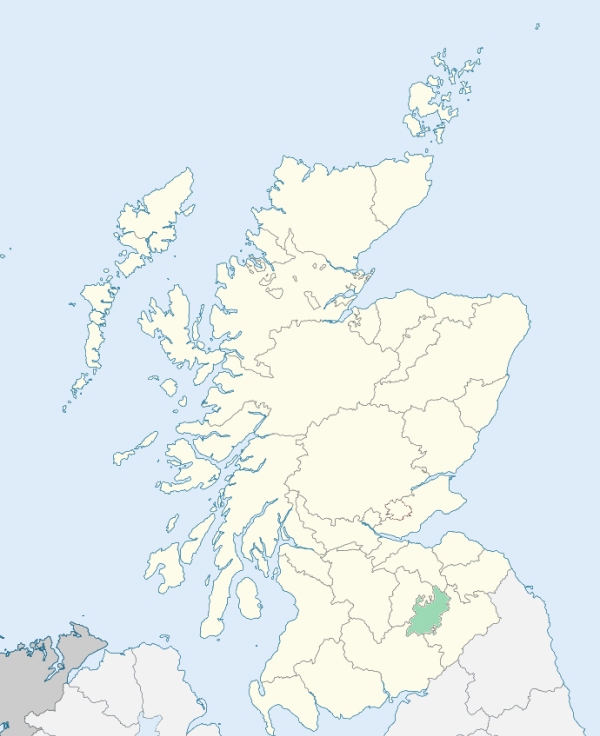
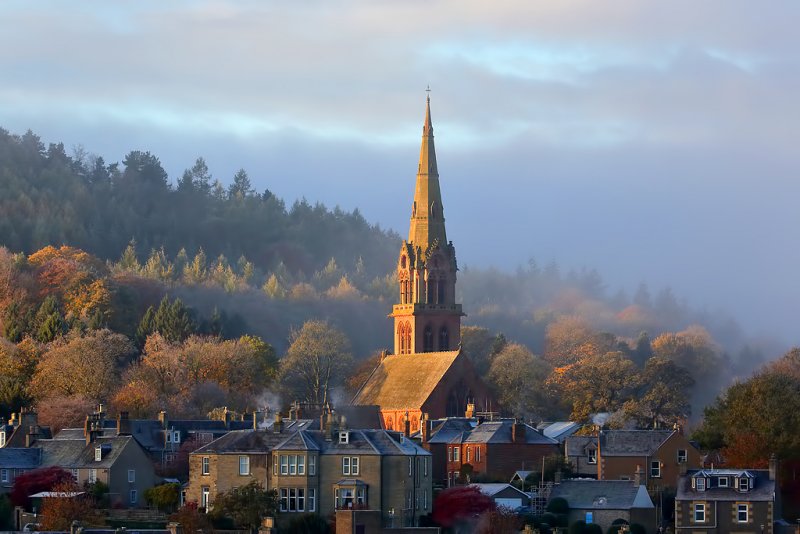
Galashiels is a parish in Selkirkshire and Roxburghshire. It is bounded on the north-east and south-east by Melrose, on the south and west by Selkirk, and on the west and north-west by Stow. (1867: The Imperial Gazetteer of Scotland, by John Marius Wilson).
Boleside, Faldonside, Fernilee, Galashiels, Glenmayne, Lindean
Abbotsford, Faldonside
(1) The parish of Galashiels was situated partly in the county of Selkirk and partly in the county of Roxburgh, the Roxburghshire part of the parish consisting of the old parish of Lindean. The parish of Galashiels was placed wholly within the county of Selkirk. See affected properties and landholders. (1892: Boundary of counties and parishes in Scotland as settled by the Boundary Commissioners under the Local Government Act, 1889, by Hay Shennan)
(2) The parish of Melrose was originally situated entirely in the county of Roxburgh. By Statute, it is secured that whatever part of the parish of Melrose may be at any time included within the police limits of Galashiels, shall ipso facto become part of the county of Selkirk. A considerable portion of the parish of Melrose was thus placed within the county of Selkirk. So much of Melrose parish was situated within the county of Selkirk (i.e., so much of Melrose parish as lay within the burgh of Galashiels) was transferred to the parish of Galashiels. No change was made on the county boundary, which accordingly is the Galashiels burgh boundary along that part of its course which ran formerly through the parish of Melrose. (1892: Boundary of counties and parishes in Scotland as settled by the Boundary Commissioners under the Local Government Act, 1889, by Hay Shennan)
PRE-REFORMATION GOVERNANCE:
POST-REFORMATION GOVERNANCE:
The parishes of Lindean and Bolside were united in the 13th century. The church was removed from Lindean to Galashiels in 1622. Until the Reformation Lindean belonged to the Abbey of Kelso. There was a fair of St John the Baptist at Galashiels.
Disjoined Quoad Sacra Parishes:
Caddonfoot. A chapel was opened here in 1863. The parish was disjoined quoad sacra from Galashiels, Innerleithen, Selkirk, Stow, and Yarrow in 1867.
Galashiels West. This parish was disjoined from Galashiels, 9 February 1874. A church was built in 1868 and enlarged in 1888.
Ladhope. A chapel was opened here 16 July 1838. The parish was disjoined from Melrose, 11 July 1855.
Includes ministers, licentiates, assistants, readers, and clerks.
Galashiels (QO)
Caddonfoot (QS)
Galashiels West (QS)
Ladhope (QS)
(1928: Fasti Ecclesiæ Scoticanæ, by Hew Scott, D. D.)
Parish registers turned over to the Registrar-General, as a result of the Registration of Births, Deaths, and Marriages (Scotland) Act of 1854. The letters B. D. and M. indicate Births (or Baptisms), Deaths (or Burials), and Marriages (or Proclamations of Banns) respectively. Numbers indicate separate volumes or books. Note: These records are by no means complete or without damage; consult the Detailed List of the Old Parochial Registers of Scotland (1872) to learn more about the condition of the records.
| OPR and RD Numbers | |||
|---|---|---|---|
| Date Range | Name | Number | Type |
| 1714-1854 | Galashiels | 775 | OPR |
| 1855-1971 | Galashiels | 775 | RD |
| 1972-2006 | Galashiels | 810 | RD |
| 2007-2009 | Scottish Borders, Galashiels | 810 | RD |
| 2026 | Scottish Borders Council; Galashiels and District Community Council Clovenfords and District Community Council | ||
(2009: Parishes and Registration Districts of Scotland - Old and New, National Records of Scotland)
Local community councils (2026) are provided as a potential source of additional information for settlements within the original boundaries of the parish. (Source)
Statistics from informal and official censuses
Anderson, Brown, Douglas, Murray, Sanderson, Scott, Smith, Tait, Thomson, Wilson
Note: Names appearing in research materials, other than censuses. Simple names (First name, surname only) have been omitted unless they appear associated with large properties. All women's names, and men's names with occupations, military ranks, or peerage titles are included.
By the Reverend Mr Robert Douglas.
"According to the return made to Dr Webster, in 1755, the number of souls then amounted to 998. Since 1770, when the present incumbent was admitted, the population has been on the increase. By a list, taken at that time, the inhabitants were between 870 and 880. A second list, taken in January, 1789, made their number 901; of whom 412 were males, and 489 females; 352 were under 14 years of age.
By an accurate list, taken in January 1791, their number was as follows: 426 males, 488 females, total 914, of whom 253 were below 10 years of age. In the village of Galashiels, 581; in Lindean, 51; in the country, 282. There are 209 families, of whom, 18 are farmers, 28 are cottars, whose residence depends on their remaining in the same service, and all the rest are leaseholders for a longer or shorter time.
There are many who adhere both to the Burgher and Antiburgher principles, and a few belong to the Church of Relief. There are also some classes of Independents, and Baptists; besides several who disclaim all attachment to any sect whatsoever, and seem to have no fixed principles of religion.
The manufacture of coarse woollen cloth is here carried on to great extent. In spinning wool, 241 women are constantly employed, besides occasional spinsters. In like manner, there are 43 looms in the village and suburbs, 9 of which are only occasionally used by the aged and infirm, and by young boys. Of those who purchase wool, and superintend the whole process of making it into cloth, there are 13 masters, who employ, at present, 50 journeymen and apprentices, in assorting, scouring, and scribbling the wool, before it is given out to spin; and in scouring, milling, dying, cropping, pressing, and finishing off the cloth.
Besides the manufacture of woollen cloth, which is no doubt the staple of the parish, other branches are carried to a considerable extent. Ten persons are employed as skinners and tanners. Seventeen are wrights, who, besides jobbing as cabinet-makers, and house carpenters, and wheel and mill wrights, and making all the common implements of husbandry, drive a very considerable trade, by purchasing growing timber, blocking it into ploughs, carts, hay-rakes, &c. annually, all which are sold to plough and cart-wrights, and farmers at a considerable distance. There are 3 blacksmiths, 3 bakers, 5 shoemakers, and 9 tailors. The number of merchants and shopkeepers cannot easily be ascertained, as almost every body buys and sells or barters.
In the parish and suburbs of the village, there are no less than 15 houses where ale or spirits are retailed. Yet, the people, in general, are sober and industrious in the extreme. Not one is addicted to dram-drinking or tippling; and very rarely is a tradesman, especially a manufacturer, seen in liquor."
(This section contains excerpts, at times restructured or paraphrased, from an article appearing in Statistical Account of Scotland, Sir John Sinclair, 1791-1799)
Primary Sources:
Statistical Account of Scotland (1791-1799), Volume 2, p. 299
New Statistical Account of Scotland (1834-1845), Volume 3, Section III, p. 11
See Parish Page Sources for all source information and links.