Jedworth, Jedart, Jeddart, Jedword, Gedword, Gedworth
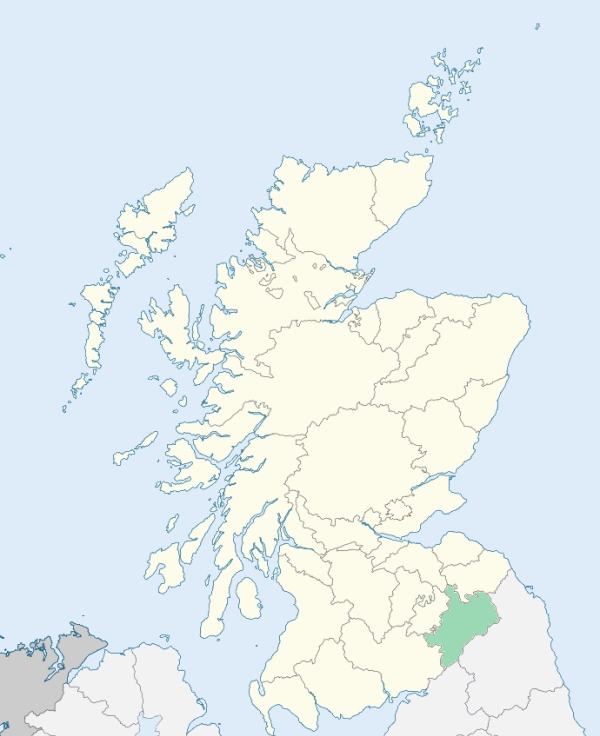
Jedburgh is a parish in the south side of the Teviotedale district of Roxburghshire. The name Jedburgh is locally pronounced Jeddart. It consists of two sections, southern and northern, lying a mile asunder at their nearest point of mutual approach, and both stretching lengthwise from south to north. The southern division, though the smaller, is the original Jedburgh, and it is bounded on the north-east and east by Oxnam, on the south by Northumberland, and on the west by Southdean. The northern and larger division is bounded by Ancrum, Crailing, Eckford, Hownam, Oxnam, Southdean, and Bedrule. The present parish of Jedburgh comprehends the ancient parishes of Jedworth, Old Jedworth, and Upper Crailing. Old Jedworth is in the southern section of the present parish and Upper Crailing is in the northern section. (1867: The Imperial Gazetteer of Scotland, by John Marius Wilson).
Bongate, Bonjedward, Camptown, Edgerston, Jedburgh, Lanton, Ulston
Hundalee, Hunthill, Langlee, Lintalee
The parish of Jedburgh had two detached parts, both of which were situated to the south of the main portion of the parish, and adjoined the parishes of Oxnam and Southdean. The following adjustments of boundaries were effected:
(a.) So much of the detached part of Jedburgh, situated at Old Jedward, as lay within the farm of Mervinslaw has been transferred to Southdean.
(b.) Part of the parish of Oxnam has been transferred to Jedburgh parish, with the result of uniting the detached parts of Jedburgh parish with the main portion thereof.
(c.) That part of Jedburgh parish which lay east of the part of Oxnam Burn has been transferred to Oxnam.
See affected properties and landholders. (1892: Boundary of counties and parishes in Scotland as settled by the Boundary Commissioners under the Local Government Act, 1889, by Hay Shennan)
PRE-REFORMATION GOVERNANCE:
POST-REFORMATION GOVERNANCE:
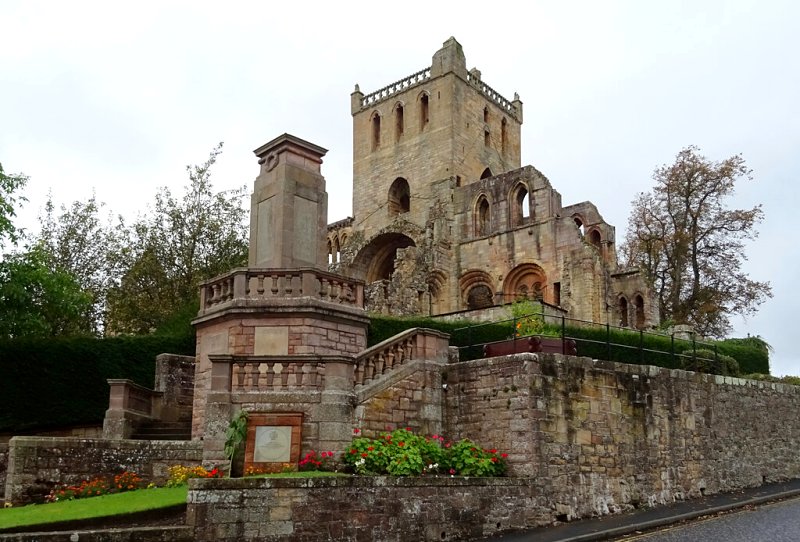
In 854, Ecgred, Bishop of Lindisfarne, built here a church of St Mary. A chapel with the same dedication was built by him at Old Jedart. There was another chapel at Scraesburgh, near Huntill. St Mary's Augustinian Abbey of Jedburgh, founded in 1118, is in the parish. After the Reformation a portion of the Abbey was used as the parish church. In 1875 a new church was built, mainly by the ninth Marquess of Lothian.
Disjoined Quoad Sacra Parishes:
Edgerston. A church was built at Edgerston in 1838. The parish was disjoined from Jedburgh, Southdean, and Oxnam in July 1855.
Includes ministers, licentiates, assistants, readers, and clerks.
Jedburgh (QO)
Edgerston (QS)
(1928: Fasti Ecclesiæ Scoticanæ, by Hew Scott, D. D.)
Parish registers turned over to the Registrar-General, as a result of the Registration of Births, Deaths, and Marriages (Scotland) Act of 1854. The letters B. D. and M. indicate Births (or Baptisms), Deaths (or Burials), and Marriages (or Proclamations of Banns) respectively. Numbers indicate separate volumes or books. Note: These records are by no means complete or without damage; consult the Detailed List of the Old Parochial Registers of Scotland (1872) to learn more about the condition of the records.
| OPR and RD Numbers | |||
|---|---|---|---|
| Date Range | Name | Number | Type |
| 1639-1854 | Jedburgh | 792 | OPR |
| 1855-1856 | Jedburgh Burgh | 792-1 | RD |
| 1855-1856 | Jedburgh Landward | 792-2 | RD |
| 1857-1963 | Jedburgh | 792 | RD |
| 1964-1967 | Jedburgh and Bedrule | 792 | RD |
| 1968-1971 | Jedburgh | 792 | RD |
| 1972-2006 | Jedburgh | 822 | RD |
| 2007-2009 | Scottish Borders, Jedburgh | 822 | RD |
| 2026 | Scottish Borders Council; Jedburgh Community Council | ||
(2009: Parishes and Registration Districts of Scotland - Old and New, National Records of Scotland)
Local community councils (2026) are provided as a potential source of additional information for settlements within the original boundaries of the parish. (Source)
Statistics from informal and official censuses
Bell, Brown, Henderson, Laidlaw, Oliver, Robson, Scott, Turnbull, Wood, Wright
Note: Names appearing in research materials, other than censuses. Simple names (First name, surname only) have been omitted unless they appear associated with large properties. All women's names, and men's names with occupations, military ranks, or peerage titles are included.
From Materials furnished by the Reverend Dr Thomas Somerville, Minister of Jedburgh.
"There is every reason to believe, that the population of this and of the neighbouring parishes has greatly diminished since the commencement of the present century. Some years after the Union, and even when the returns were made to Dr Webster about 40 years ago, the number of inhabitants in the parish was supposed to be about 6000. There is no evidence, however, of any particular enumeration having been made. At present they do not exceed half that number.
The inhabitants of the town were numbered with great accuracy about fifteen yeas ago, and fell short of 2000. The inhabitants of the country part of the parish do not exceed 800; and there are only two or three villages containing about 100 souls. The vestiges of uninhabited houses are to be seen both in the town and in the country.
There are four clergymen in the town of Jedburgh; the minister of the Established Church, of the Relief congregation, of the Burgher, and the Antiburgher, seceders. Their respective examination rolls are as follows: Established Church 800; Relief congregation 1200; Burgher congregation 600; Antiburgher 150. Total 2750 examinable persons; that is, persons from six to seven years old, and upwards. There are not more than five or six who profess the Episcopal religion, and there are no Catholics, in the parish.
There are 19 farmers, and a number of smaller tenants. There are three physicians, three surgeons, and ten writers, or attorneys. There is rather a want of industry in the town of Jedburgh, owing to the destructive influence of borough politics; but to this rule there are many exceptions; and the common labourers in the country are remarkable for the quantity of work which they perform.
In general, it may be observed, that all ranks of people live more soberly, and are less addicted to drinking, than they were some years ago; and that persons in a better situation are charitably disposed. Crimes are becoming every day more rare. Only one instance of suicide has occurred for these 17 years past; and no inhabitant of the parish has been banished for these many years. Five have suffered capital punishments; but not one of them for murder."
(This section contains excerpts, at times restructured or paraphrased, from an article appearing in Statistical Account of Scotland, Sir John Sinclair, 1791-1799)
Primary Sources:
Statistical Account of Scotland (1791-1799), Volume 1, p. 1
New Statistical Account of Scotland (1834-1845), Volume 3, Section I, p. 1
See Parish Page Sources for all source information and links.