Oxenham
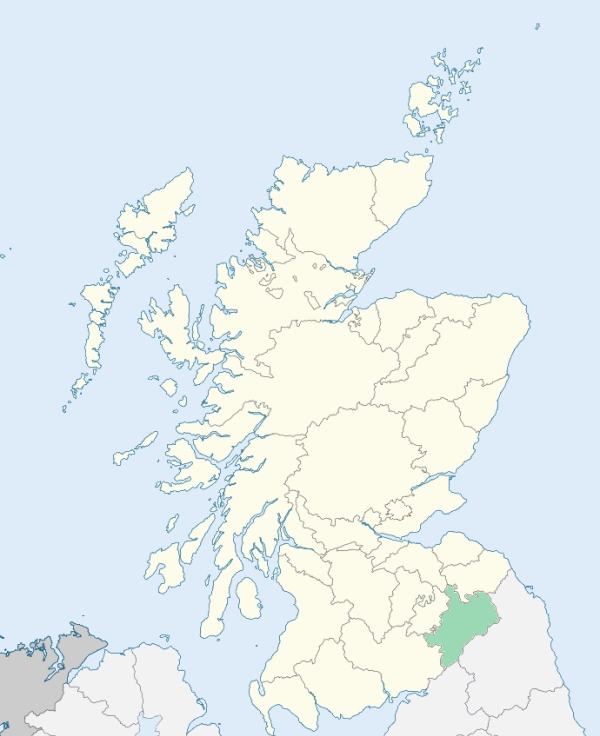
Oxnam is a parish near the middle of the eastern border of Roxburghshire. It is bounded by England, and by the parishes of Jedburgh, Southdean, Crailing, and Hownam. (1867: The Imperial Gazetteer of Scotland, by John Marius Wilson).
Mossburnford, Newbigging, Oxnam, Swinside Townfoot
The parish of Jedburgh had two detached parts, both of which were situated to the south of the main portion of the parish, and adjoined the parishes of Oxnam and Southdean. The following adjustments of boundaries were effected:
(a.) So much of the detached part of Jedburgh, situated at Old Jedward, as lay within the farm of Mervinslaw has been transferred to Southdean.
(b.) Part of the parish of Oxnam has been transferred to Jedburgh parish, with the result of uniting the detached parts of Jedburgh parish with the main portion thereof.
(c.) That part of Jedburgh parish which lay east of the part of Oxnam Burn has been transferred to Oxnam.
See affected properties and landholders. (1892: Boundary of counties and parishes in Scotland as settled by the Boundary Commissioners under the Local Government Act, 1889, by Hay Shennan)
PRE-REFORMATION GOVERNANCE:
POST-REFORMATION GOVERNANCE:
From 1165 to 1560 Oxnam belonged to the Abbey of Jedburgh. There were chapels in the parish at Plenderleith and Middleknowes.
Disjoined Quoad Sacra Parishes:
Edgerston. A church was built at Edgerston in 1838. The parish was disjoined from Jedburgh, Southdean, and Oxnam in July 1855.
Includes ministers, licentiates, assistants, readers, and clerks.
Oxnam (QO)
Edgerston (QS)
(1928: Fasti Ecclesiæ Scoticanæ, by Hew Scott, D. D.)
Parish registers turned over to the Registrar-General, as a result of the Registration of Births, Deaths, and Marriages (Scotland) Act of 1854. The letters B. D. and M. indicate Births (or Baptisms), Deaths (or Burials), and Marriages (or Proclamations of Banns) respectively. Numbers indicate separate volumes or books. Note: These records are by no means complete or without damage; consult the Detailed List of the Old Parochial Registers of Scotland (1872) to learn more about the condition of the records.
| OPR and RD Numbers | |||
|---|---|---|---|
| Date Range | Name | Number | Type |
| 1700-1854 | Oxnam | 802 | OPR |
| 1855-1892 | Oxnam | 802 | RD |
| 1893-1967 | Oxnam | 802a | RD |
| 1893-1967 | Roberton | 802b | RD |
| 2009 | (Oxnam) Scottish Borders, Jedburgh | 822 | RD |
| 2009 | (Roberton) Scottish Borders, Hawick | 823 | RD |
| 2026 | (Oxnam) Scottish Borders Council; Oxnam Water Community Council | ||
| 2026 | (Roberton) Scottish Borders Council; Upper Teviotdale and Borthwick Water Community Council | ||
(2009: Parishes and Registration Districts of Scotland - Old and New, National Records of Scotland)
Local community councils (2026) are provided as a potential source of additional information for settlements within the original boundaries of the parish. (Source)
Statistics from informal and official censuses
Davidson, Douglas, Elliot, Hall, Hislop, Little, Scott, Simson, Thomson, Wyllie
Note: Names appearing in research materials, other than censuses. Simple names (First name, surname only) have been omitted unless they appear associated with large properties. All women's names, and men's names with occupations, military ranks, or peerage titles are included.
By the Reverend Mr John Hunter, Minister.
"The present number of inhabitants (April 1793) is 690, of whom 298 are males, 392 are females, and 175 are under 10 years of age. A considerable proportion of the inhabitants of this parish are connected with the Dissenting meetings in Jedburgh.
There are 3 carpenters, 1 mason, 3 smiths, 5 weavers, 1 tailor, 5 apprentices, 12 day-labourers, 53 male labouring servants, 33 female labouring servants, 25 tenants with 109 in their families, 13 herds with 44 in their families, and 377 wives, children and friends of tradesmen, cottagers, &c.
The produce of the lands far exceeds the consumption of the inhabitants. Part of the redundancy is sold at Jedburgh; and part is manufactured at the mills of Swinside and Oxnam, and carried over the fells to the stocksmen and their herds. A great quantity of cheese, of butter, and of veal is sold at Jedburgh; the eggs are carried weekly to Berwick, and the poultry, both there and to Edinburgh, by persons who return loaded with salt, groceries, and other commodities, for supplying the inhabitants.
The people are industrious, sober, and economical, and seem to have no inclination either for a military or seafaring life. They are friendly to one another, and hospitable to strangers, The labouring part support their families in a very decent manner, and give their children a tolerable education."
(This section contains excerpts, at times restructured or paraphrased, from an article appearing in Statistical Account of Scotland, Sir John Sinclair, 1791-1799)
Primary Sources:
Statistical Account of Scotland (1791-1799), Volume 11, p. 317
New Statistical Account of Scotland (1834-1845), Volume 3, Section I, p. 252
See Parish Page Sources for all source information and links.