Logiemethet
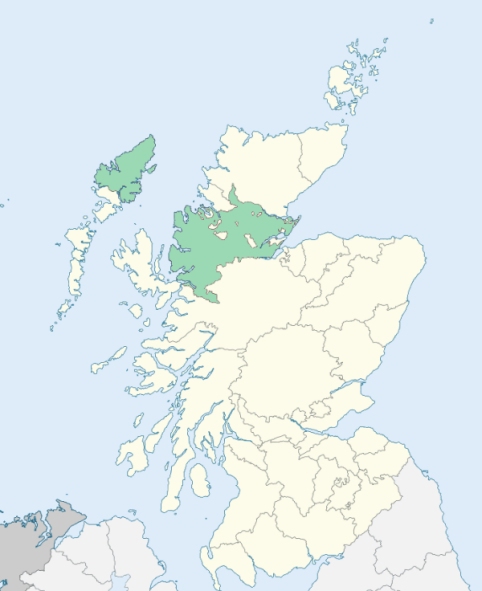
Logie Easter is a parish in the north-east of Ross-shire and Cromartyshire. It is bounded by Tain, Fearn, Nigg, Kilmuir-Easter, and Eddertoun. (1867: The Imperial Gazetteer of Scotland, by John Marius Wilson).
Arabella, Balchraggan, Balnagown, Calrossie, Kildary, Logie
Calrossie
PRE-REFORMATION GOVERNANCE:
POST-REFORMATION GOVERNANCE:
In the Chapter of Fortrose Cathedral there was a prebend of Logie Easter.
Includes ministers, licentiates, assistants, readers, and clerks.
(1928: Fasti Ecclesiæ Scoticanæ, by Hew Scott, D. D.)
Parish registers turned over to the Registrar-General, as a result of the Registration of Births, Deaths, and Marriages (Scotland) Act of 1854. The letters B. D. and M. indicate Births (or Baptisms), Deaths (or Burials), and Marriages (or Proclamations of Banns) respectively. Numbers indicate separate volumes or books. Note: These records are by no means complete or without damage; consult the Detailed List of the Old Parochial Registers of Scotland (1872) to learn more about the condition of the records.
| OPR and RD Numbers | |||
|---|---|---|---|
| Date Range | Name | Number | Type |
| 1665-1854 | Logie Easter | 77 | OPR |
| 1855-1965 | Logie Easter | 77 | RD |
| 2009 | Highland, Tain | 193 | RD |
| 2026 | Highland Council; Kilmuir and Logie Easter Community Council | ||
(2009: Parishes and Registration Districts of Scotland - Old and New, National Records of Scotland)
Local community councils (2026) are provided as a potential source of additional information for settlements within the original boundaries of the parish. (Source)
Statistics from informal and official censuses
Cameron, Fraser, MacDonald, MacKay, Mackenzie, MacLeod, Robertson, Ross, Thompson, Urquhart
Note: Names appearing in research materials, other than censuses. Simple names (First name, surname only) have been omitted unless they appear associated with large properties. All women's names, and men's names with occupations, military ranks, or peerage titles are included.
By the Reverend Mr John Ross.
"There are 258 houses possessed; a residing heritors, a gentleman captain on half pay, the minister, schoolmaster and kirk-officer, 49 farmers, 33 out-servants, 32 cottagers, 15 weavers, 11 shoemakers, 2 masons, a brick-maker, a cart-wright, a plough-wright, 3 smiths, 3 coopers, 3 millers, 3 peddlers, 2 turners, 3 public house keepers, 8 tailors, 2 house carpenters, 2 gardeners. The remaining 78 houses are possessed by day-labourers, poor widows and maidens who set up by themselves, sometimes only 1, generally 2 of them in a house.
The common people generally speak the Gaelic language; many of them understand something of the English, and speak it through the Gaelic accent and idiom. The inhabitants are in general of a pious, sober, and industrious disposition, well acquainted with the principles of religion, and regular in their practice. The necessaries of life are easily acquired here; its conveniencies and superfluities fall to the share of a very few persons."
(This section contains excerpts, at times restructured or paraphrased, from an article appearing in Statistical Account of Scotland, Sir John Sinclair, 1791-1799)
Primary Sources:
Statistical Account of Scotland (1791-1799), Volume 4, p. 472
New Statistical Account of Scotland (1834-1845), Volume 14, Section II, p. 52
See Parish Page Sources for all source information and links.