Sg̀ir na Manachainn
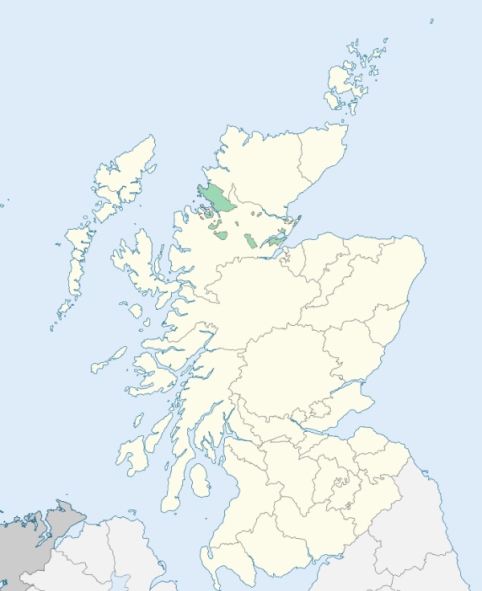
Fearn is a parish on the east coast of Ross-shire. It is bounded by the Moray Firth, and by the parishes of Tarbat, Tain, Logie Easter, and Nigg. (1867: The Imperial Gazetteer of Scotland, by John Marius Wilson).
Balintore, Fearn, Hill of Fearn, Hilton of Cadboll
Cadboll
PRE-REFORMATION GOVERNANCE:
POST-REFORMATION GOVERNANCE:
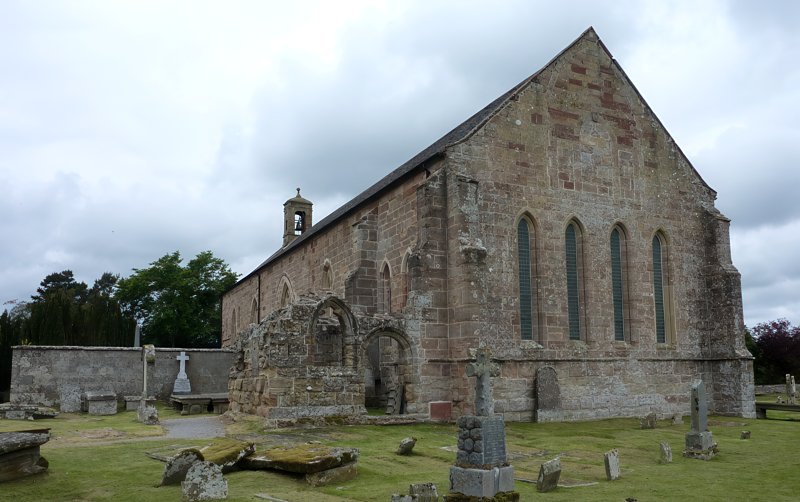
The parish of Fearn was disjoined from that of Tarbat in or about 1628, but the erection of the new parish was not carried through until 1640. Within the bounds assigned to it stood the disused Premonstratensian Abbey of St Ninian at Fearn, and the Abbey Church was restored for the use of the parish. The monastery of Fearn had been first founded in 1227 by Farquhar, first Earl of Ross, at Fearn in Edderton. Patrick Hamilton, Abbot of Fearn, who was burned as a heretic at St Andrews on 28 Feb 12527, was Superior of this monastery. He was not, however, a monk, but held the Abbey in commendam (as its patron). On 10th October 1742, during service, the church was struck by lightning, the roof of the ancient Abbey gave way and fell in upon the worshippers. Forty-two were killed and many were badly injured. The building was much damaged. It has been but partially restored. There is a Well of Our Lady at Fearn.
Includes ministers, licentiates, assistants, readers, and clerks.
(1928: Fasti Ecclesiæ Scoticanæ, by Hew Scott, D. D.)
Parish registers turned over to the Registrar-General, as a result of the Registration of Births, Deaths, and Marriages (Scotland) Act of 1854. The letters B. D. and M. indicate Births (or Baptisms), Deaths (or Burials), and Marriages (or Proclamations of Banns) respectively. Numbers indicate separate volumes or books. Note: These records are by no means complete or without damage; consult the Detailed List of the Old Parochial Registers of Scotland (1872) to learn more about the condition of the records.
| OPR and RD Numbers | |||
|---|---|---|---|
| Date Range | Name | Number | Type |
| 1749-1854 | Fearn | 64 | OPR |
| 1855-1967 | Fearn | 64 | RD |
| 2009 | Highland, Tain | 193 | RD |
| 2026 | Highland Council; Hill of Fearn Community Council | ||
(2009: Parishes and Registration Districts of Scotland - Old and New, National Records of Scotland)
Local community councils (2026) are provided as a potential source of additional information for settlements within the original boundaries of the parish. (Source)
Statistics from informal and official censuses
Fraser, MacAngus, MacDonald, Mackenzie, MacLeod, Munro, Ross, Skinner, Sutherland, Vass
Note: Names appearing in research materials, other than censuses. Simple names (First name, surname only) have been omitted unless they appear associated with large properties. All women's names, and men's names with occupations, military ranks, or peerage titles are included.
By the Reverend Mr John Urquhart.
"The inhabitants are generally farmers and cottagers, or crofters, except those afterwards mentioned. Besides the fishermen, there are 16 weavers, with 5 apprentices, 13 tailors, with 4 apprentices, 14 shoemakers, with 4 apprentices, 3 smiths, with 3 apprentices, 5 joiners or wrights, with 3 apprentices, 2 coopers, 2 masons, 1 turner or wheel-wright, 1 merchant, and 8 millers; all of whom are employed in working for the inhabitants of the parish, and not in manufacturing articles for sale. There may be 380 houses; 30 new ones within these 10 years, and about 12 pulled down. At an average, each family contains 4 or 5 persons, and each marriage produced from 5 to 7 children.
The people are sober, regular, decent, and industrious; they are also generous and humane. None are obliged to leave the parish for want of employment. Some few enlist yearly as soldiers. Many enlisted in the late General Fraser's regiment, and many also in the 73d, and some in the 42d and 75th regiments. The people are generally healthy and robust, and rather above the common stature. There maybe be 12 in the parish above 6 feet high. The common people speak the Gaelic language, though many of them now understand the English
(This section contains excerpts, at times restructured or paraphrased, from an article appearing in Statistical Account of Scotland, Sir John Sinclair, 1791-1799)
Primary Sources:
Statistical Account of Scotland (1791-1799), Volume 4, p. 288
New Statistical Account of Scotland (1834-1845), Volume 14, Section II, p. 360
See Parish Page Sources for all source information and links.