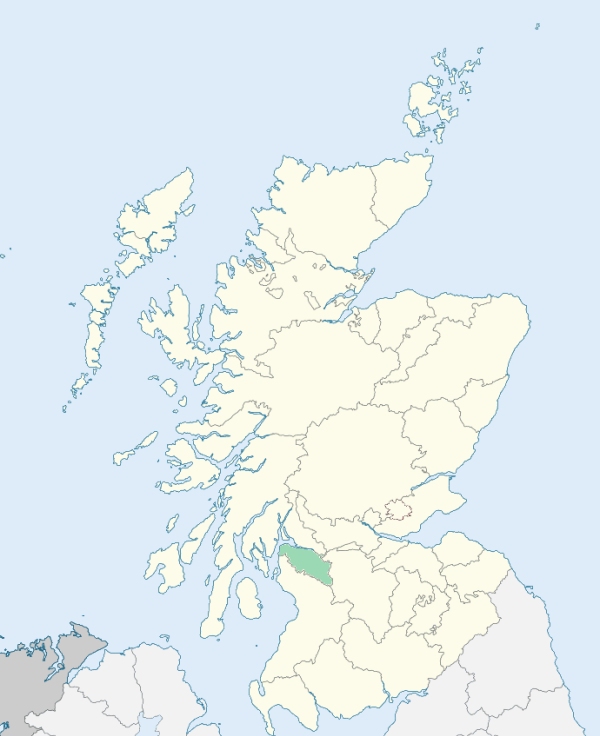
Renfrew is a parish on the northern border of Renfrewshire. It is bounded by the counties of Dumbarton and Lanark, and by the parishes of Abbey-Paisley, Kilbarchan, and Inchinnan. (1867: The Imperial Gazetteer of Scotland, by John Marius Wilson).
Jordanhill, Newton, Renfrew, Scaterig
Blythswood or Renfield, Elderslie, Jordanhill
PRE-REFORMATION GOVERNANCE:
POST-REFORMATION GOVERNANCE:
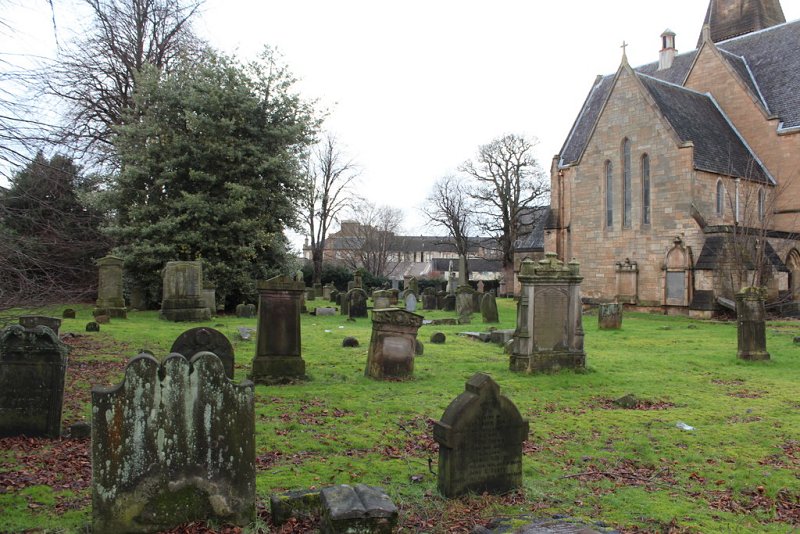
The church of Renfrew, dedicated to St James, was a prebend of Glasgow. Within it were chapels of St Ninian, St Conal, St Christopher, St Thomas the Apostle, and St Thomas the Martyr. Near the mill of Renfrew in the parish stood a chapel of St Mary, which, with its adjoining chapel lands, belonged to the Abbey of Paisley. In 1861 Renfrew Church was enlarged and in great part rebuilt.
Disjoined Quoad Sacra Parishes:
Clydebank, St James. A church was built here in 1875. St James's Parish was disjoined from Old Kilpatrick and Renfrew, 6 March 1876.
Scotstoun. A church was built here in 1901. The parish of Scotstoun was disjoined from Yoker, 28 May 1915.
Temple. The parish of Temple was disjoined from New Kilpatrick, Govan, and Renfrew, 13 March 1896.
Yoker. A church was built here in 1898. The parish of Yoker was disjoined from Renfrew and Clydebank, 8 June 1906. There is a mission chapel in the parish at Blawarthill.
Includes ministers, licentiates, assistants, readers, and clerks.
Renfrew (QO)
Clydebank, St James (QS)
Scotstoun (QS)
Temple (QS)
Yoker (QS)
(1928: Fasti Ecclesiæ Scoticanæ, by Hew Scott, D. D.)
Parish registers turned over to the Registrar-General, as a result of the Registration of Births, Deaths, and Marriages (Scotland) Act of 1854. The letters B. D. and M. indicate Births (or Baptisms), Deaths (or Burials), and Marriages (or Proclamations of Banns) respectively. Numbers indicate separate volumes or books. Note: These records are by no means complete or without damage; consult the Detailed List of the Old Parochial Registers of Scotland (1872) to learn more about the condition of the records.
| OPR and RD Numbers | |||
|---|---|---|---|
| Date Range | Name | Number | Type |
| 1673-1854 | Renfrew | 575 | OPR |
| 1855-1855 | Renfrew Burgh | 575-1 | RD |
| 1855-1855 | Renfrew Landward | 575-2 | RD |
| 1856-1909 | Renfrew | 575 | RD |
| 1910-1925 | Renfrew | 575-1 | RD |
| 1910-1925 | Scotstoun and Yoker | 575-2 | RD |
| 1926-1934 | Scotstoun and Yoker | 644-23 | RD |
| 1926-1971 | Renfrew | 575 | RD |
| 1972-2006 | Renfrew | 643 | RD |
| 2007 | Renfrew, Renfrewshire | 643 | RD |
| 2009 | Renfrewshire, Renfrew | 643 | RD |
| 2026 | (Renfrew) Renfrewshire Council; Renfrew Community Council | ||
| 2026 | (Scotstoun) Glasgow City Council; Scotstoun Community Council | ||
| 2026 | (Yoker) Glasgow City Council; High Knightswood and Anniesland Community Council | ||
(2009: Parishes and Registration Districts of Scotland - Old and New, National Records of Scotland)
Local community councils (2026) are provided as a potential source of additional information for settlements within the original boundaries of the parish. (Source)
Statistics from informal and official censuses
Brown, Campbell, Reid, Robertson, Scott, Smith, Stewart, Thomson, Wilson, Young
Note: Names appearing in research materials, other than censuses. Simple names (First name, surname only) have been omitted unless they appear associated with large properties. All women's names, and men's names with occupations, military ranks, or peerage titles are included.
By the Reverend Mr Thomas Burns.
"In May 1791, the population of the parish was 374 families, consisting of 800 males, and 828 females, total souls 1628. In the town were 261 families, consisting of 480 males and 533 females, 1013 total souls. There were 18 Seceders, 49 farmers, and 171 servants.
The town of Renfrew is governed by a provost, 2 baillies, and 16 counsellors. There is a ferry-house on each side of the river. There is a soap and candle work; there is also a small branch of the thread manufacture. Four mills are employed for this purpose, each is supposed to require, on an average 36 persons. There is also a small bleachfield, which employs about 6 men, and 24 women. There are 117 to 120 looms in the town, principally for muslin, on account of the manufacturers of Paisley.
The character of the people, is, on the whole, respectable. Many of them are extremely industrious, careful, and diligent, in providing for themselves and their families. Drunkenness is much less common than formerly. There are, however, too many public-houses in the town, (no less than 19, where one would imagine, that scarcely 3 could find employment); and these are found to be great promoters of idleness, and great enemies to industry."
(This section contains excerpts, at times restructured or paraphrased, from an article appearing in Statistical Account of Scotland, Sir John Sinclair, 1791-1799)
Primary Sources:
Statistical Account of Scotland (1791-1799), Volume 2, p. 166
New Statistical Account of Scotland (1834-1845), Volume 7, Section I, p. 1
See Parish Page Sources for all source information and links.