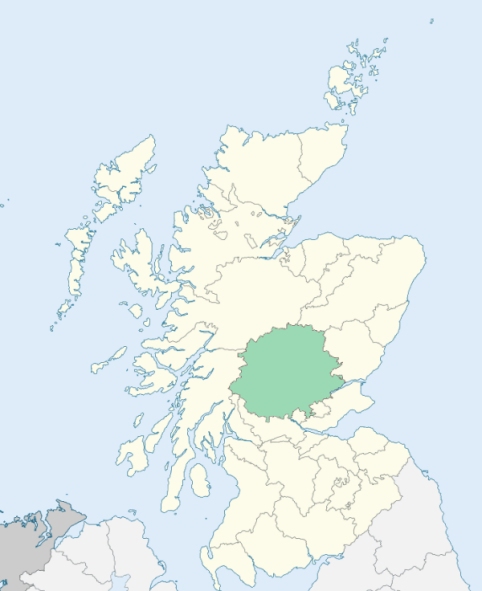
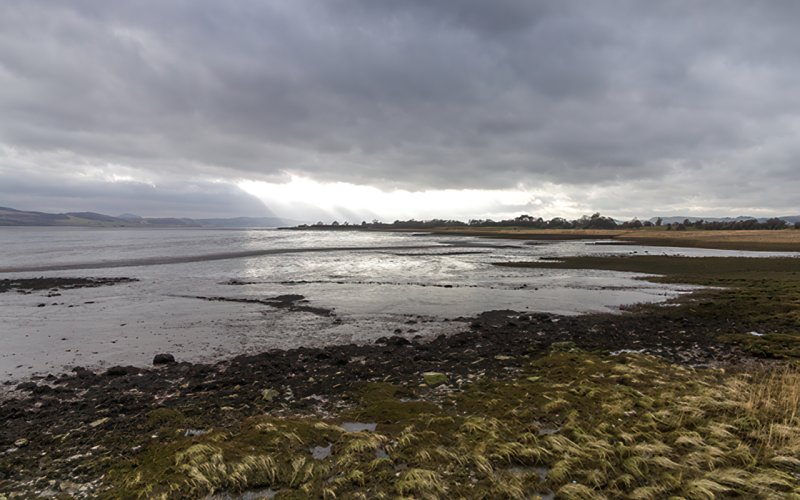
Longforgan is a parish on the eastern border of Perthshire. It is bounded by Forfarshire, by the Firth of Tay, and by the parishes of Inchture, Abernyte, and Fowlis Easter. (1867: The Imperial Gazetteer of Scotland, by John Marius Wilson).
Balbunnoch, Blairhall, Broomhall, Clattering Briggs, Invergowrie, Kingoodie, Ladyfield, Longforgan, Mylnefield
Ballo, Castle Huntly, Drimmie, Dron, Knap, Littleton, Lauriston, Lochton, Monorgan, Mylnefield, Temple Hall
Caputh detached No. 6 was annexed to Longforgan. The area thus transferred is very small, extending only to .016 of an acre. See affected properties and landholders. (1892: Boundary of counties and parishes in Scotland as settled by the Boundary Commissioners under the Local Government Act, 1889, by Hay Shennan)
PRE-REFORMATION GOVERNANCE:
POST-REFORMATION GOVERNANCE:
The church of Longforgan was dedicated to St Monenna. It belonged to the priory of St Andrews.
Includes ministers, licentiates, assistants, readers, and clerks.
(1928: Fasti Ecclesiæ Scoticanæ, by Hew Scott, D. D.)
Parish registers turned over to the Registrar-General, as a result of the Registration of Births, Deaths, and Marriages (Scotland) Act of 1854. The letters B. D. and M. indicate Births (or Baptisms), Deaths (or Burials), and Marriages (or Proclamations of Banns) respectively. Numbers indicate separate volumes or books. Note: These records are by no means complete or without damage; consult the Detailed List of the Old Parochial Registers of Scotland (1872) to learn more about the condition of the records.
| OPR and RD Numbers | |||
|---|---|---|---|
| Date Range | Name | Number | Type |
| 1633-1854 | Longforgan, Perth | 377 | OPR |
| 1855-1971 | Longforgan, Dundee City | 377 | RD |
| 1972-1984 | Longforgan, Dundee City | 392 | RD |
| 1985-2003 | Longforgan, Dundee City | 392 | RD |
| 2004-2007 | Longforgan, Perth and Kinross | 392 | RD |
| 2009 | Perth and Kinross, Longforgan | 392 | RD |
| 2026 | Perth and Kinross Council; Longforgan Community Council | ||
(2009: Parishes and Registration Districts of Scotland - Old and New, National Records of Scotland)
Local community councils (2026) are provided as a potential source of additional information for settlements within the original boundaries of the parish. (Source)
Statistics from informal and official censuses
Anderson, Buchan, Duff, Moncur, Robertson, Sellars, Shepherd, Scott, Smith, Stewart
Note: Names appearing in research materials, other than censuses. Simple names (First name, surname only) have been omitted unless they appear associated with large properties. All women's names, and men's names with occupations, military ranks, or peerage titles are included.
By a Proprietor in the Parish, a Friend to Statistical Inquiries.
"The population at present is 1526; of these 778 are males, and 748 females. There is 1 schoolmaster, 1 surgeon, 1 excise officer, 1 butcher, 1 baker, 2 brewers, 2 coopers, 2 masons, 2 innkeepers, 4 alehouses, 3 lint-dressers, 5 gardeners, 6 lint-millers, 6 corn-millers, 6 tailors, 7 shoemakers, 8 blacksmiths, 16 wrights, 61 weavers, 136 male servants, 85 female servants. There are 126 families in the village; 181 families in the rest of the parish.
The village of Longforgan contains 126 families, of 630 inhabitants of all ages. Of these, 3 are considerable farmers, 36 are small farmers. Of this last class almost every one has a trade or occupation; so that the management of his little farm is the employment of his leisure hours only, which improves his health, and gives him many little comforts, which he could not expect otherwise. Besides these, there are also manufacturers, tradesmen, and labourers, who have no land, but all of them have yards (gardens) attached to their houses.
There are two inns in the village, one at the west end, very convenient for the accommodation of country passengers; and another about the middle of the town, upon a much larger scale, with a brew-house, malt-barn, bakehouse, and good stabling attached to it. There are only two other places in this parish which have the least claim to be called villages; Kingoody, and Lochtown, a small village. The rest can only be called hamlets, but they are numerous.
The inhabitants of this parish are in general industrious, quiet and sober; some of them very intelligent in their professions; many of the better sort live exceedingly well; their tables are abundantly supplied with every necessary, and some with the luxuries of life. In general, the farmers are well lodged, and both they and their families are well dressed. The lesser farmers and manufacturers also live well, and have plenty of good wholesome food."
(This section contains excerpts, at times restructured or paraphrased, from an article appearing in Statistical Account of Scotland, Sir John Sinclair, 1791-1799)
Primary Sources:
Statistical Account of Scotland (1791-1799), Volume 19, p. 459
New Statistical Account of Scotland (1834-1845), Volume 10, p. 405
See Parish Page Sources for all source information and links.