Kirkpatrick-Dorand, Kirkpatrick-in-the-Muir, Kirkpatrick of the Mure
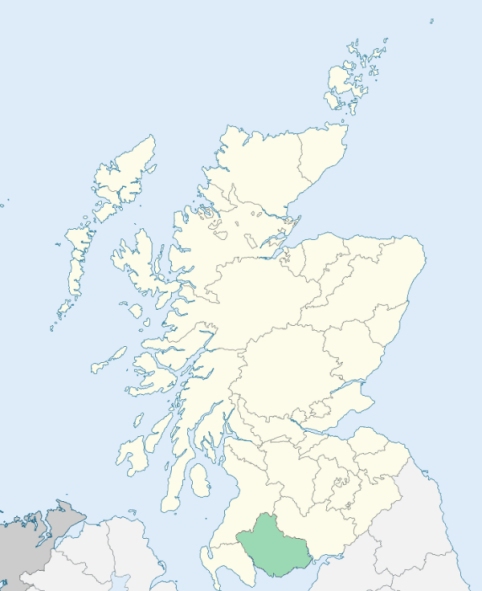
Kirkpatrick-Durham is a parish in Kirkcudbrightshire. It is bounded on the north by Dumfriesshire, and on other sides by the parishes of Kirkpatrick-Irongray, Urr, Crossmichael, Parton, and Balmaclellan. (1867: The Imperial Gazetteer of Scotland, by John Marius Wilson).
Bridge of Urr, Crocketford, Kirkpatrick-Durham, Springholm
Areeming
PRE-REFORMATION GOVERNANCE:
POST-REFORMATION GOVERNANCE:
The church, dedicated to St Patrick, belonged to the Abbey of Sweetheart. There is reason to believe that this parish and Kirkpatrick-Irongray were originally one parish of Kilpatrick. Dorand or Durham is the original name of the hamlet at which St Patrick's Church here was built. Patrickmas Fair was formerly held here on 17 March. St Patrick's Well is in the parish. At Kirkbride, on the Water of Urr, was a chapel of St Bride.
Includes ministers, licentiates, assistants, readers, and clerks.
(1928: Fasti Ecclesiæ Scoticanæ, by Hew Scott, D. D.)
Parish registers turned over to the Registrar-General, as a result of the Registration of Births, Deaths, and Marriages (Scotland) Act of 1854. The letters B. D. and M. indicate Births (or Baptisms), Deaths (or Burials), and Marriages (or Proclamations of Banns) respectively. Numbers indicate separate volumes or books. Note: These records are by no means complete or without damage; consult the Detailed List of the Old Parochial Registers of Scotland (1872) to learn more about the condition of the records.
| OPR and RD Numbers | |||
|---|---|---|---|
| Date Range | Name | Number | Type |
| 1683-1854 | Kirkpatrick Durham | 874 | OPR |
| 1855-1968 | Kirkpatrick Durham | 874 | RD |
| 2009 | Dumfries and Galloway, Castle Douglas | 852 | RD |
| 2026 | Dumfries and Galloway Council; Corsock and Kirkpatrick Durham Community Council | ||
(2009: Parishes and Registration Districts of Scotland - Old and New, National Records of Scotland)
Local community councils (2026) are provided as a potential source of additional information for settlements within the original boundaries of the parish. (Source)
Statistics from informal and official censuses
Carson, Clark, Gibson, Hunter, Johnstone, Peacock, Riddick, Scott, Thomson
Note: Names appearing in research materials, other than censuses. Simple names (First name, surname only) have been omitted unless they appear associated with large properties. All women's names, and men's names with occupations, military ranks, or peerage titles are included.
By the Reverend Dr David Lamont.
"The present computation of population is about 1000. Of these, nearly one half are males, and the other half females. There is no dissenting meeting-house of any denomination in the parish. There are a few Cameronians, and a few Seceders in it.
There are 69 farmers or tenants, 14 masons, 13 weavers, 6 joiners, 4 blacksmiths, 8 tailors, 5 shoemakers, 2 millers, 3 coopers, 1 butcher, 1 baker, 1 dancing master, 3 shopkeepers, and 7 innkeepers.
A village has lately been erected in the vicinity of the church, which, though projected only about 7 or 8 years ago, has advanced so rapidly, that there are about 50 dwelling houses already built. This village, though as yet but in its infancy, has given a liveliness and animation to the place, formerly unknown in that part of the country, and has made a very considerable addition to the number of the inhabitants. In the course of the last year, the three following societies, or co-partneries, were established: A society for carrying on a cotton manufactory; a society for carrying on a woollen manufactory; a society of trade and commerce: This society consists of 80 members."
(This section contains excerpts, at times restructured or paraphrased, from an article appearing in Statistical Account of Scotland, Sir John Sinclair, 1791-1799)
Primary Sources:
Statistical Account of Scotland (1791-1799), Volume 2, p. 249
New Statistical Account of Scotland (1834-1845), Volume 4, Section II, p. 256
See Parish Page Sources for all source information and links.