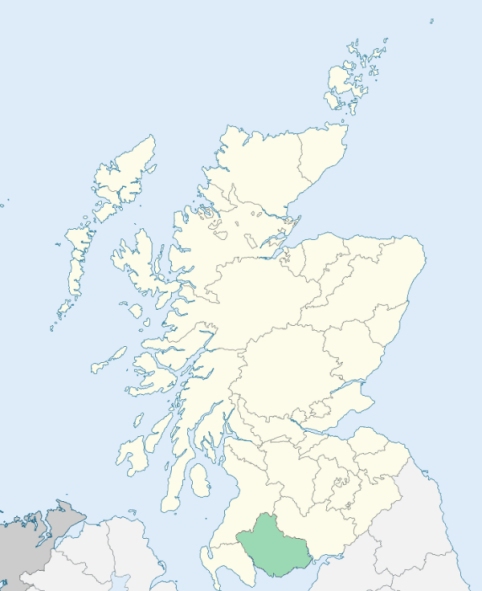
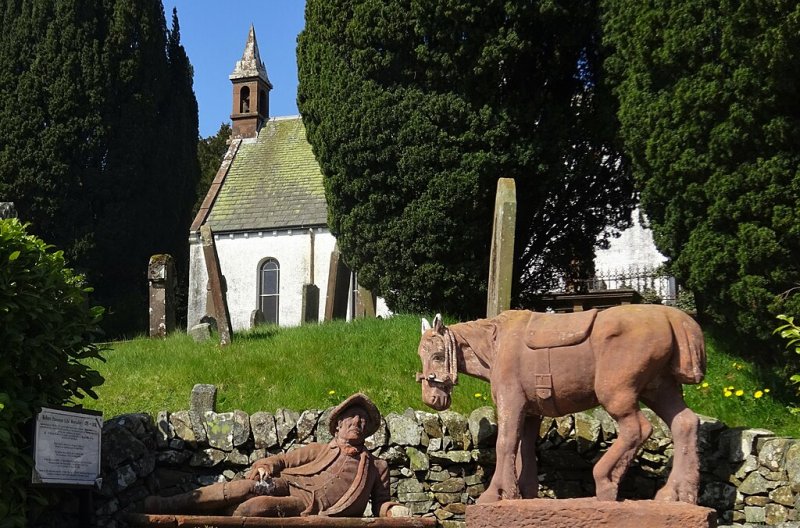
Balmaclellan is a parish on the north side of Kikcudbrightshire, bounded by Dumfriesshire and by the parishes of Kirkpatrick Durham, Parton, Kells, and Dalry. (1867: The Imperial Gazetteer of Scotland, by John Marius Wilson).
Balmaclellan, Crogo, New Galloway
PRE-REFORMATION GOVERNANCE:
POST-REFORMATION GOVERNANCE:
Before the Reformation the rectory of Balmaclellan belonged to the Chapel Royal of Stirling. Alexander Scott, who was tutor to Mary, Queen of Scots, was vicar for a time. The parish church was rebuilt about 1750.
Includes ministers, licentiates, assistants, readers, and clerks.
(1928: Fasti Ecclesiæ Scoticanæ, by Hew Scott, D. D.)
Parish registers turned over to the Registrar-General, as a result of the Registration of Births, Deaths, and Marriages (Scotland) Act of 1854. The letters B. D. and M. indicate Births (or Baptisms), Deaths (or Burials), and Marriages (or Proclamations of Banns) respectively. Numbers indicate separate volumes or books. Note: These records are by no means complete or without damage; consult the Detailed List of the Old Parochial Registers of Scotland (1872) to learn more about the condition of the records.
| OPR and RD Numbers | |||
|---|---|---|---|
| Date Range | Name | Number | Type |
| 1747-1854 | Balmaclellan | 856 | OPR |
| 1855-1968 | Balmaclellan | 856 | RD |
| 2009 | Dumfries and Galloway, Dalry | 850 | RD |
| 2026 | Dumfries and Galloway Council; Balmaclellan Community Council | ||
(2009: Parishes and Registration Districts of Scotland - Old and New, National Records of Scotland)
Local community councils (2026) are provided as a potential source of additional information for settlements within the original boundaries of the parish. (Source)
Statistics from informal and official censuses
Black, Craig, Grierson, Kirkpatrick, Morrison, Murray, Shaw, Thomson, Wallace, Wilson
Note: Names appearing in research materials, other than censuses. Simple names (First name, surname only) have been omitted unless they appear associated with large properties. All women's names, and men's names with occupations, military ranks, or peerage titles are included.
By the Reverend Mr James Thomson.
"By a very accurate account taken in person by the present minister, the population of the parish on the first day of January 1792 stood as follows: 231 males, 264 females, total 495, of whom 90 were under 10 years of age. There were 7 Antiburghers, and 3 Macmillanites. Of the above inhabitants, the greater number live in the country, there being but one village in the parish, viz. that by the church, and that consisting only of 77 persons.
There are in the parish 120 families, 3 mills, 2 blacksmiths, 6 weavers, 4 tailors, 4 shoemakers, 2 carpenters, and 1 mason. The division of labour is such as may be expected in a society who generally live and dress on their own productions. In the parish were formerly accounted about 46 or 60 farms. These are now held by 30 persons, who pay rent.
The manners and description of the inhabitants of this parish are such as may be expected from a mixed society. Generally exposed in the open air, and in all varieties of weather, their bodies acquire a hardiness unknown to those in a more sedentary situation. Conversant with a greater number of objects, their minds discover an expansion of ideas much beyond the mere manufacturer, or vulgar citizen. Their prominent virtues are peaceableness and sobriety, although by no means deprived of that portion of spirit which is necessary on occasions to assert their rights.
There are but three persons in the parish who have ever served in the army or navy. The young men generally adventure in the civil line, either in the character of mechanics or merchants; of last, the most are itinerant in the north of England. There is no foreigner, or any other than natives of Scotland at present resident within the parish."
(This section contains excerpts, at times restructured or paraphrased, from an article appearing in Statistical Account of Scotland, Sir John Sinclair, 1791-1799)
Primary Sources:
Statistical Account of Scotland (1791-1799), Volume 7, p. 223
New Statistical Account of Scotland (1834-1845), Volume 4, Section II, p. 98
See Parish Page Sources for all source information and links.