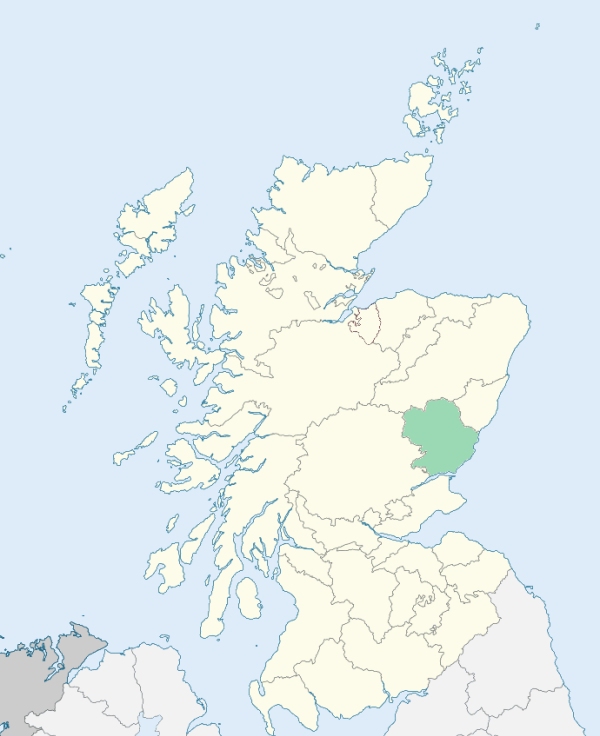
St Vigeans is a parish on the coast of Forfarshire. It comprises a large main body and two small detached districts. The main body is bounded on the north by Carmyllie and Inverkeilor, on the east by the German Ocean (North Sea), on the south by Arbroath and Arbirlot, and on the west by Carmyllie. One of the detached portions lies ½ mile south of the main body, and is separated from it by the burgh roods of Arbroath. The other detached portion is the estate of Inverpeffer; it lies 3 miles south of the main body and is bounded on the east by the sea, on the south by Panbride, and on other sides by Arbirlot. (1867: The Imperial Gazetteer of Scotland, by John Marius Wilson).
Auchmithie, Colliston, Gowanbank, Marywell, St Vigeans, Walkmills
Almerieclose, Beechwood, Letham Grange, Parkhill, Woodville
The parish of St Vigeans had two detached parts. St Vigeans detached No. 1 was situated at Hospitalfield, and lay between the parishes of Arbroath and Arbirlot. St Vigeans Detached No. 2 was situated at Inverpeffer, and adjoined the parishes of Arbirlot and Panbride. St. Vigeans Detached No. 2 was transferred to Panbride, and St Vigeans Detached No. 1 to Arbroath, while part of the parish of Arbroath was transferred to St Vigeans. See affected properties and landholders. (1892: Boundary of counties and parishes in Scotland as settled by the Boundary Commissioners under the Local Government Act, 1889, by Hay Shennan)
PRE-REFORMATION GOVERNANCE:
POST-REFORMATION GOVERNANCE:
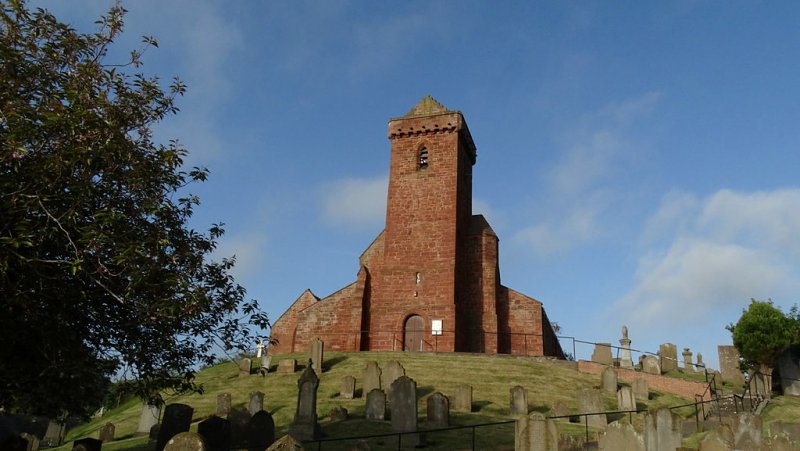
The church of this parish was dedicated to St Feachan. It was restored and enlarged in 1872. There was of old in the church a chapel of St Sebastian.
Disjoined Quoad Sacra Parishes:
Auchmithie. The parish of Auchmithie was disjoined from St Vigeans on 15 March 1886.
Colliston. The parish of Colliston was disjoined from St Vigeans on 6 December 1875.
Inverbrothock. A chapel was opened here on 19 October 1828. On 7 March 1855 the parish of Inverbrothock was disjoined from St Vigeans.
Ladyloan. A chapel was built here in 1837. The parish of Ladyloan was disjoined from Arbroath and St Vigeans on 19 July 1865.
St Margaret's. A church was opened here 13 Nov 1879. St Margaret's Parish was disjoined from Inverbrothock and Arbroath, 15 March 1886.
Includes ministers, licentiates, assistants, readers, and clerks.
St Vigeans (QO)
Auchmithie (QS)
Colliston (QS)
Inverbrothock (QS)
Ladyloan (QS)
St Margaret's (QS)
(1928: Fasti Ecclesiæ Scoticanæ, by Hew Scott, D. D.)
Parish registers turned over to the Registrar-General, as a result of the Registration of Births, Deaths, and Marriages (Scotland) Act of 1854. The letters B. D. and M. indicate Births (or Baptisms), Deaths (or Burials), and Marriages (or Proclamations of Banns) respectively. Numbers indicate separate volumes or books. Note: These records are by no means complete or without damage; consult the Detailed List of the Old Parochial Registers of Scotland (1872) to learn more about the condition of the records.
| OPR and RD Numbers | |||
|---|---|---|---|
| Date Range | Name | Number | Type |
| 1669-1854 | St Vigeans | 319 | OPR |
| 1855-1895 | St Vigeans | 319 | RD |
| 1896-1918 | St Vigeans | 272-2 | RD |
| 1919-1965 | Arbroath and St Vigeans | 272 | RD |
| 1966-1968 | Arbroath, St Vigeans and Arbirlot | 272 | RD |
| 2009 | Angus, Arbroath | 369 | RD |
| 2026 | Angus Council; Royal Burgh of Arbroath Community Council | ||
(2009: Parishes and Registration Districts of Scotland - Old and New, National Records of Scotland)
Local community councils (2026) are provided as a potential source of additional information for settlements within the original boundaries of the parish. (Source)
Statistics from informal and official censuses
Anderson, Brown, Cargill, Christie, Petrie, Reid, Robertson, Scott, Smith, Stewart
Note: Names appearing in research materials, other than censuses. Simple names (First name, surname only) have been omitted unless they appear associated with large properties. All women's names, and men's names with occupations, military ranks, or peerage titles are included.
By the Reverend Mr John Aitkin.
"In April 1793, the houses in this parish were 730, and the number of people of all ages is 3336; and in that number there are 65 females more than males. In the parish there are 225 weavers, 70 farmers, 40 wrights, 13 smiths, 22 tailors, 17 masons, 23 shoemakers, 4 coopers, 2 dyers, 9 shopkeepers, 16 public houses, the most part of these near Arbroath, 12 gardeners, 12 flax-dressers, 2 slaters, 2 bakers, 8 wheel-wrights, 2 midwives, and 2 tanners.
Auchmithy is a small village situated about 3 miles eastward from the church; it contains 180 people of all ages. The men are generally employed in fishing. The people of that place are become sober and industrious, and much civilized in their manners within 30 years past. They find a ready market for their fish in the neighbouring district, but especially in the town of Arbroath, which alone would consume ten times the quantity they catch.
There is nothing uncommon or remarkable in the stature, form, or appearance, of inhabitants of the parish. They are generally from 5 feet 6 inches, to 5 feet 9 inches high; their shape and size seem to indicate health and strength, and in fact, they possess a considerable share of both. Several young persons betake themselves to a sea-faring life, and a few to the army. On almost all the large farms in the parish, both young men and married cottagers are employed as servants. The farmers generally dress in a plain manner; the common colour of their clothes is blue; and many of them still wear the Scotch broad bonnet. The dress of a number of the men servants is a little showy, and rather superior to that of the females of the same rank."
(This section contains excerpts, at times restructured or paraphrased, from an article appearing in Statistical Account of Scotland, Sir John Sinclair, 1791-1799)
Primary Sources:
Statistical Account of Scotland (1791-1799), Volume 12, p. 165
New Statistical Account of Scotland (1834-1845), Volume 11, Section I, p. 489
See Parish Page Sources for all source information and links.