Aberelliot
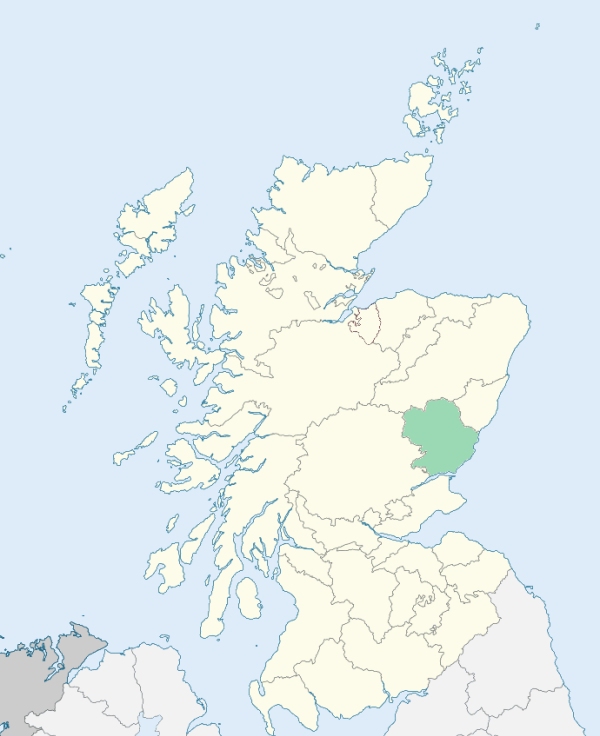
Arbirlot, in old writings Aberelliot, is a parish on the coast of Forfarshire. It is bounded on the north by the parishes of St Vigeans and Carmylie; on the east by Arbroath; on the south by the sea; and on the west by Panbride parish. (1867: The Imperial Gazetteer of Scotland, by John Marius Wilson)
Arbirlot, Bonnington or Bonnyton, Kirkton
PRE-REFORMATION GOVERNANCE:
POST-REFORMATION GOVERNANCE:
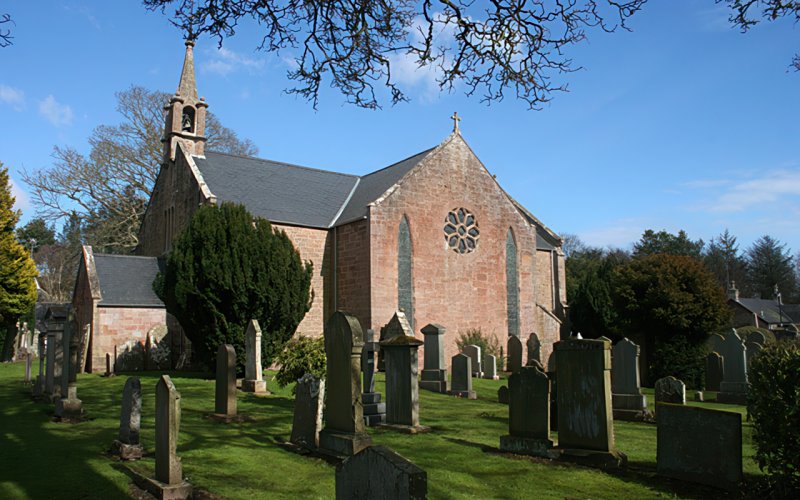
The church of Arbirlot was dedicated to St Ninian. It belonged to the Abbey of Arbroath. The early name of the parish was Aberelliot. There was within the bounds a Well of St Ninian. (1928: Fasti Ecclesiæ Scoticanæ, by Hew Scott, D. D.)
Includes ministers, licentiates, assistants, readers, and clerks.
(1928: Fasti Ecclesiæ Scoticanæ, by Hew Scott, D. D.)
Parish registers turned over to the Registrar-General, as a result of the Registration of Births, Deaths, and Marriages (Scotland) Act of 1854. The letters B. D. and M. indicate Births (or Baptisms), Deaths (or Burials), and Marriages (or Proclamations of Banns) respectively. Numbers indicate separate volumes or books. Note: These records are by no means complete or without damage; consult the Detailed List of the Old Parochial Registers of Scotland (1872) to learn more about the condition of the records.
| OPR and RD Numbers | |||
|---|---|---|---|
| Date Range | Name | Number | Type |
| 1632-1854 | Arbirlot | 271 | OPR |
| 1855-1965 | Arbirlot | 271 | RD |
| 1966-1968 | Arbroath, St Vigeans and Arbirlot | 272 | RD |
| 1969-1971 | Arbroath | 272 | RD |
| 2009 | Angus, Arbroath | 369 | RD |
| 2026 | Angus Council; Royal Burgh of Arbroath Community Council | ||
(2009: Parishes and Registration Districts of Scotland - Old and New, National Records of Scotland)
Local community councils (2026) are provided as a potential source of additional information for settlements within the original boundaries of the parish. (Source)
Statistics from informal and official censuses
Baird, Brown, Hunter, Jack, Martin, Milne, Petrie, Robertson, Scott, Smith
Note: Names appearing in research materials, other than censuses. Simple names (First name, surname only) have been omitted unless they appear associated with large properties. All women's names, and men's names with occupations, military ranks, or peerage titles are included.
By the Reverend Mr Richard Watson.
"In September 1790, an exact list of the inhabitants was made up, and their number amounted to 1055, of whom there were 550 males, and 505 females.
The inhabitants of this parish enjoy the advantages of raising, watering, dressing, and spinning of flax, in a high degree, which might surely be an object of great importance, both to flax dealers and manufacturers; though, as yet, there is no established linen manufactory in the parish.
Several houses have been built within these last 10 years for tradesmen, especially weavers. It is probable that these persons, from their industry, economy, and attention to business, will increase the produce, the wealth, and the population of the parish.
There is one brewer in this parish, and 4 persons who sell ale and spiritous liquors, and are known by the name of tapsters. These alehouses are rather for the accommodation of strangers, than for the use of the parishioners, who look upon idleness, debauchery, and intemperance, as the principal sources of human misery.
The inhabitants of this parish are sober, industrious, and regular in their attendance on the ordinances of religion. Sensible of the advantages which they enjoy, both of a civil and religious nature, they wish to relieve the miseries, and promote the happiness of their fellow creatures. They are just in their dealings, true to their promises, liberal to the poor, and mutually helpful to one another."
(This section contains excerpts, at times restructured or paraphrased, from an article appearing in Statistical Account of Scotland, Sir John Sinclair, 1791-1799)
Primary Sources:
Statistical Account of Scotland (1791-1799), Volume 3, p. 467
New Statistical Account of Scotland (1834-1845), Volume 11, Section I, p. 332
See Parish Page Sources for all source information and links.