Aberbrothock, Aberbrothwick
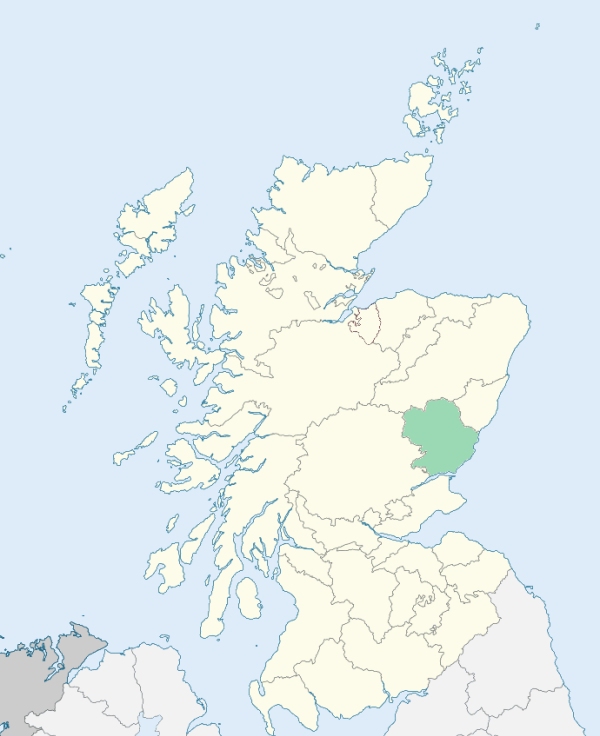
Arbroath is a parish on the coast of Forfarshire. It is bounded on the north by St Vigeans parish, on the east by the German Ocean (North Sea), and on the south and west by Arbirlot parish. (1867: The Imperial Gazetteer of Scotland, by John Marius Wilson).
Arbroath, Hayshead
Hospitalfield
The parish of St Vigeans had two detached parts. St Vigeans detached No. 1 was situated at Hospitalfield, and lay between the parishes of Arbroath and Arbirlot. St Vigeans Detached No. 2 was situated at Inverpeffer, and adjoined the parishes of Arbirlot and Panbride. St. Vigeans Detached No. 2 was transferred to Panbride, and St Vigeans Detached No. 1 to Arbroath, while part of the parish of Arbroath was transferred to St Vigeans.
See affected properties and landholders. (1892: Boundary of counties and parishes in Scotland as settled by the Boundary Commissioners under the Local Government Act, 1889, by Hay Shennan)
PRE-REFORMATION GOVERNANCE:
POST-REFORMATION GOVERNANCE:
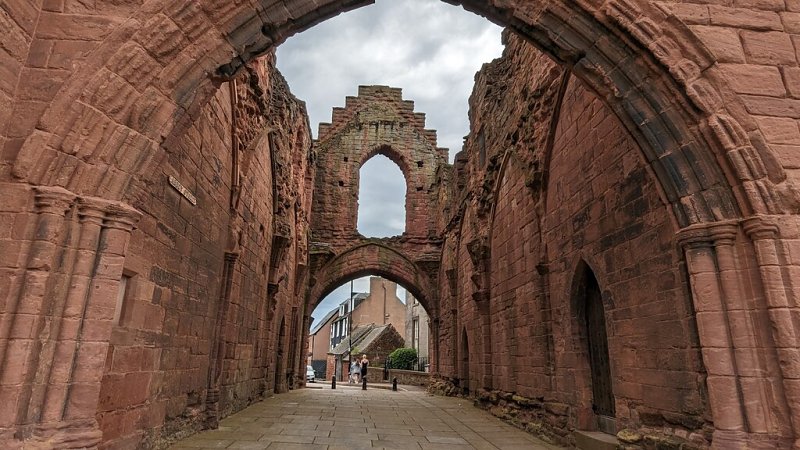
The parish of Arbroath was disjoined from St Vigeans in or about 1585. The Tyronesian Abbey of St Thomas the Martyr (Thomas A'Becket, Archbishop of Canterbury) at Arbroath was built by William the Lion. Close beside the abbey was a chapel of St Michael. In the town there were a hospital of St John the Baptist and a chapel of St Mary, which contained an altar of St Duthac. There were also Wells of St Mary and St Ninian. Fairs were held at Arbroath in honour of St Ninian, St Feachan, and St Thomas the Martyr.
Disjoined Quoad Sacra Parishes:
Abbey. A chapel was opened here on 17 September 1797. On 19th July 1869, the Abbey Parish was disjoined from that of Arbroath.
Ladyloan. A chapel was built here in 1837. The parish of Ladyloan was disjoined from Arbroath and St Vigeans on 19 July 1865.
St Margaret's. A church was opened here 13 November 1879. St Margaret's Parish was disjoined from Inverbrothock and Arbroath, 15 March 1886.
(1928: Fasti Ecclesiæ Scoticanæ, by Hew Scott, D. D.)
Includes ministers, licentiates, assistants, readers, and clerks.
Arbroath (QO)
Abbey (QS)
Ladyloan (QS)
St Margaret's (QS)
(1928: Fasti Ecclesiæ Scoticanæ, by Hew Scott, D. D.)
Parish registers turned over to the Registrar-General, as a result of the Registration of Births, Deaths, and Marriages (Scotland) Act of 1854. The letters B. D. and M. indicate Births (or Baptisms), Deaths (or Burials), and Marriages (or Proclamations of Banns) respectively. Numbers indicate separate volumes or books. Note: These records are by no means complete or without damage; consult the Detailed List of the Old Parochial Registers of Scotland (1872) to learn more about the condition of the records.
| OPR and RD Numbers | |||
|---|---|---|---|
| Date Range | Name | Number | Type |
| 1653-1854 | Arbroath | 272 | OPR |
| 1855-1856 | Arbroath Burgh | 272-1 | RD |
| 1855-1856 | Arbroath Landward | 272-2 | RD |
| 1857-1895 | Arbroath | 272 | RD |
| 1896-1918 | Arbroath | 272-1 | RD |
| 1896-1918 | St Vigeans | 272-2 | RD |
| 1919-1965 | Arbroath and St Vigeans | 272 | RD |
| 1966-1968 | Arbroath, St Vigeans and Arbirlot | 272 | RD |
| 1969-1971 | Arbroath | 272 | RD |
| 1972-2003 | Arbroath | 369 | RD |
| 2009 | Angus, Arbroath | 369 | RD |
| 2026 | Angus Council; Royal Burgh of Arbroath Community Council | ||
(2009: Parishes and Registration Districts of Scotland - Old and New, National Records of Scotland)
Local community councils (2026) are provided as a potential source of additional information for settlements within the original boundaries of the parish. (Source)
Statistics from informal and official censuses
Anderson, Brown, Cargill, Christie, Gordon, Milne, Petrie, Scott, Smith, Thomson
Note: Names appearing in research materials, other than censuses. Simple names (First name, surname only) have been omitted unless they appear associated with large properties. All women's names, and men's names with occupations, military ranks, or peerage titles are included.
By the Reverend Mr George Gleig.
"The total amount of souls in the parish this year (1792), in town and country, is 4676, of which there are, in the country, 131, and 4545 in town. In this parish there are 517 females more than males. For some years past the town has increased considerably. Last year 30 houses were built, many of them of considerable value; and this year there is much about the same number, though not of equal value. This increase is no doubt owing to our manufactures; and from the aspect which they at present wear, there is every reason to look for a rapid increase of population, and consequently of buildings."
(This section contains excerpts, at times restructured or paraphrased, from an article appearing in Statistical Account of Scotland, Sir John Sinclair, 1791-1799)
Primary Sources:
Statistical Account of Scotland (1791-1799), Volume 7, p. 340
New Statistical Account of Scotland (1834-1845), Volume 11, Section I, p. 74
See Parish Page Sources for all source information and links.