Forfar and Restenneth
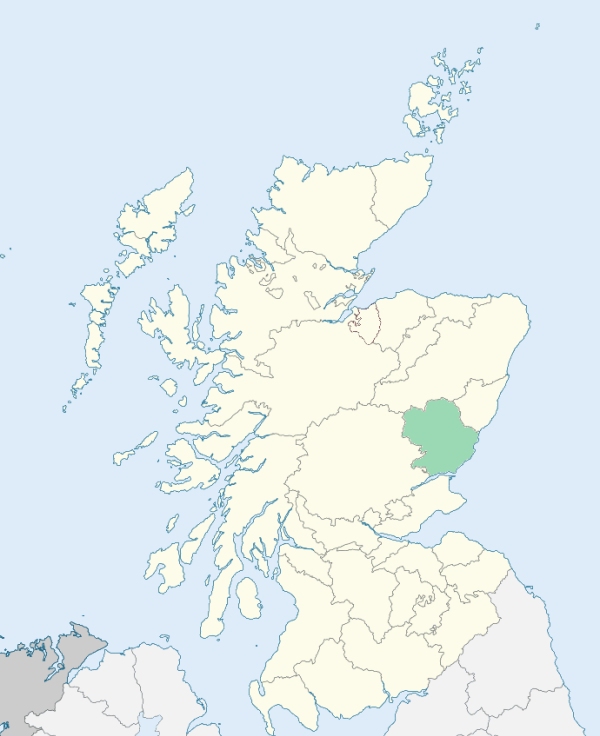
Forfar is a parish nearly in the centre of Forfarshire. It is bounded on the north by Rescobie, on the east by Rescobie, Dunnichen, and Inverarity, on the south by Inverarity, and on the west by Kinnettles, Glamis, and Kirriemuir. (1867: The Imperial Gazetteer of Scotland, by John Marius Wilson).
Carseburn, Forfar, Kingsmuir, Lunanhead
Lour
PRE-REFORMATION GOVERNANCE:
POST-REFORMATION GOVERNANCE:
The parishes of Forfar and Restenneth were united early in the seventeenth century.
Forfar. The church of Forfar was dedicated to St James. It belonged to the Abbey of Jedburgh. There were in the parish chapels of St Curadan and St Margaret. Two fairs held at Forfar bore the names of St James and St Ethernan.
Restenneth. The church of Restenneth was dedicated to St Peter. It belonged to the Abbey of Jedburgh. From a very early time Restennth was the seat of a Celtic monastery, which appears to have been founded in 710. In 1159 it was converted into the Augustinian Priory of St Peter.
Disjoined Quoad Sacra Parishes:
Lowson Memorial. The Lowson Memorial Parish was disjoined from the parish of Forfar and erected quoad sacra on 29 May 1914. The church was built, furnished, and endowed through the generosity of Mrs Steel of Beechhill, Forfar, and other members of the family of John Lowson, Junior, manufacturer, Forfar, and was named in memory of their father.
St James's. St James's parish was disjoined from Forfar and erected into a parish quoad sacra on 18 March 1872.
Includes ministers, licentiates, assistants, readers, and clerks.
Forfar and Restenneth (QO)
Lowson Memorial (QS)
St James's (QS)
(1928: Fasti Ecclesiæ Scoticanæ, by Hew Scott, D. D.)
Parish registers turned over to the Registrar-General, as a result of the Registration of Births, Deaths, and Marriages (Scotland) Act of 1854. The letters B. D. and M. indicate Births (or Baptisms), Deaths (or Burials), and Marriages (or Proclamations of Banns) respectively. Numbers indicate separate volumes or books. Note: These records are by no means complete or without damage; consult the Detailed List of the Old Parochial Registers of Scotland (1872) to learn more about the condition of the records.
| OPR and RD Numbers | |||
|---|---|---|---|
| Date Range | Name | Number | Type |
| 1633-1854 | Forfar | 288 | OPR |
| 1855-1855 | Forfar Burgh | 288-1 | RD |
| 1855-1855 | Forfar Landward | 288-2 | RD |
| 1856-1892 | Forfar | 288 | RD |
| 1893-1962 | Forfar | 288a | RD |
| 1893-1968 | Fowlis Easter | 288b | RD |
| 1963-1968 | Forfar and Rescobie | 288a | RD |
| 1969-1971 | Forfar | 288 | RD |
| 1972-2004 | Forfar | 364 | RD |
| 2009 | Angus, Forfar | 364 | RD |
| 2026 | (Forfar) Angus Council; Royal Burgh of Forfar Community Council | ||
| 2026 | (Fowlis Easter) Angus Council; Muirhead, Birkhill and Liff Community Council | ||
| 2026 | (Rescobie) Angus Council; Aberlemno Community Council | ||
(2009: Parishes and Registration Districts of Scotland - Old and New, National Records of Scotland)
Local community councils (2026) are provided as a potential source of additional information for settlements within the original boundaries of the parish. (Source)
Statistics from informal and official censuses
Anderson, Brown, Clark, Duncan, Milne, Petrie, Simpson, Smith, Stewart, Whyte
Note: Names appearing in research materials, other than censuses. Simple names (First name, surname only) have been omitted unless they appear associated with large properties. All women's names, and men's names with occupations, military ranks, or peerage titles are included.
By the Reverend Mr John Menzies.
"The number of souls in 1792 was 4756, with 3452 in the burgh and 1174 in the country. There were 983 families in the burgh, and 269 families in the country.
The inhabitants of both town and country share alike the praise of industry, economy, and hospitality. If fewer instances of intemperance, impurity, and prodigality appear in the country than in the town in proportion to the number in each, it is perhaps chiefly, because simplicity of manners is less liable to corruption in the former than in the latter, from a multiplicity of low ale-houses, these seminaries of impiety and dissipation. The farmers and manufacturers in the former, however, have experienced a change in their dress and expenditure as perceptible as what has taken place among the inhabitants of the burgh."
(This section contains excerpts, at times restructured or paraphrased, from an article appearing in Statistical Account of Scotland, Sir John Sinclair, 1791-1799)
Primary Sources:
Statistical Account of Scotland (1791-1799), Volume 6, p. 510
New Statistical Account of Scotland (1834-1845), Volume 11, Section I, p. 691
See Parish Page Sources for all source information and links.