Cupar and Tarvit
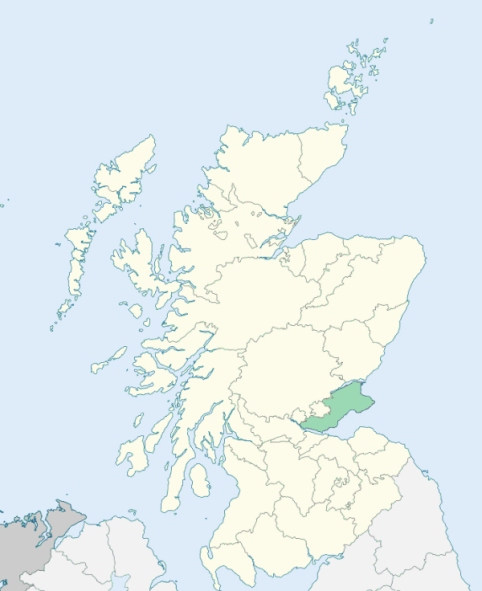
Cupar is a central parish of Fife. It is bounded by Kilmany, Dairsie, Kemback, Ceres, Cults, Monimail, and Moonzie. (1867: The Imperial Gazetteer of Scotland, by John Marius Wilson).
Brighton, Cupar, Cuparmill, Gladney or Glaidney, Springfield
Bellfield, Cairnie, Carslogie, Ferrybank, Foxton, PItbladdo
PRE-REFORMATION GOVERNANCE:
POST-REFORMATION GOVERNANCE:
The parishes of Cupar and Tarvit were united in 1618.
Cupar. The church of Cupar was dedicated to St Christopher. It belonged to the Priory of St Andrews. The Black Friars had a convent in Cupar, dedicated to St Katherine. Fairs of St James and St Martin were held in this parish.
Tarvit. The church of Tarvit was dedicated to St Michael. It belonged to the Abbey of Cambuskenneth.
Disjoined Quoad Sacra Parishes:
Springfield. The church was opened for worship 27 July 1862. The parish was disjoined from Cupar on 19 July 1865.
(1928: Fasti Ecclesiæ Scoticanæ, by Hew Scott, D. D.)
Includes ministers, licentiates, assistants, readers, and clerks.
Cupar (QO)
Springfield (QS)
(1928: Fasti Ecclesiæ Scoticanæ, by Hew Scott, D. D.)
Parish registers turned over to the Registrar-General, as a result of the Registration of Births, Deaths, and Marriages (Scotland) Act of 1854. The letters B. D. and M. indicate Births (or Baptisms), Deaths (or Burials), and Marriages (or Proclamations of Banns) respectively. Numbers indicate separate volumes or books. Note: These records are by no means complete or without damage; consult the Detailed List of the Old Parochial Registers of Scotland (1872) to learn more about the condition of the records.
| OPR and RD Numbers | |||
|---|---|---|---|
| Date Range | Name | Number | Type |
| 1654-1854 | Cupar | 420 | OPR |
| 1855-1856 | Cupar Burgh | 420-1 | RD |
| 1855-1856 | Cupar Landward | 420-2 | RD |
| 1857-1971 | Cupar | 420 | RD |
| 1972-2006 | Cupar | 417 | RD |
| 2009 | Fife, Cupar | 417 | RD |
| 2026 | Fife Council; Royal Burgh of Cupar and District Community Council | ||
(2009: Parishes and Registration Districts of Scotland - Old and New, National Records of Scotland)
Local community councils (2026) are provided as a potential source of additional information for settlements within the original boundaries of the parish. (Source)
Statistics from informal and official censuses
Brown, Duncan, Mitchell, Robertson, Scott, Smith, Thomson, Walker, Wilson, Young
Note: Names appearing in research materials, other than censuses. Simple names (First name, surname only) have been omitted unless they appear associated with large properties. All women's names, and men's names with occupations, military ranks, or peerage titles are included.
By the Reverend Mr George Campbell, D. D., Minister.
"The population, which was accurately ascertained in the month of June 1793, numbers 3135 inhabitants in the town, of whom 1464 are males, and 1671 females; in the country there are 567 inhabitants, of whom 255 are males, and 312 females. Number of souls in both, 1719 males, 1983 females, 3702 total. The number of females, so much exceeding that of the males, must be accounted for chiefly from this circumstance, that the youth of Cupar, at all times forward to engage in the military life, are many of them, at present, abroad in the service of their country.
There are in the parish 12 attorneys or writers with 20 clerks and apprentices, 5 medical practitioners, 3 schoolmasters, 6 milliners, 3 house painters, 2 stationers, 19 bakers and servants, 16 butchers and servants, 5 brewers, 29 tailors, 5 dyers, 21 masons, 48 wrights, 24 smiths, 35 shoemakers, 5 glovers, 2 hatters, 7 barbers, 5 saddlers, 2 candle-makers, 6 linen merchants, 31 shopkeepers, 4 midwives, 3 watchmakers, 3 excise officers, 4 carriers, 3 messengers, and 20 footmen. The burgh of Cupar is at present governed by a provost, three bailies, a dean of guild, 13 guild counsellors, and 8 trades counsellors or deacons.
In Cupar, and the neighbouring country, a considerable manufacture of coarse linens has been established. There are at present in the parish 223 looms, employed chiefly in making of linens.
The labourer and the mechanic are in general able, by the exertions of their industry, to make a decent livelihood for themselves and their families; they possess more foresight and economy than those of the same rank in the neighbouring kingdom."
(This section contains excerpts, at times restructured or paraphrased, from an article appearing in Statistical Account of Scotland, Sir John Sinclair, 1791-1799)
Primary Sources:
Statistical Account of Scotland (1791-1799), Volume 17, p. 137
New Statistical Account of Scotland (1834-1845), Volume 9, Section I, p. 1
See Parish Page Sources for all source information and links.