Duffus and Unthank
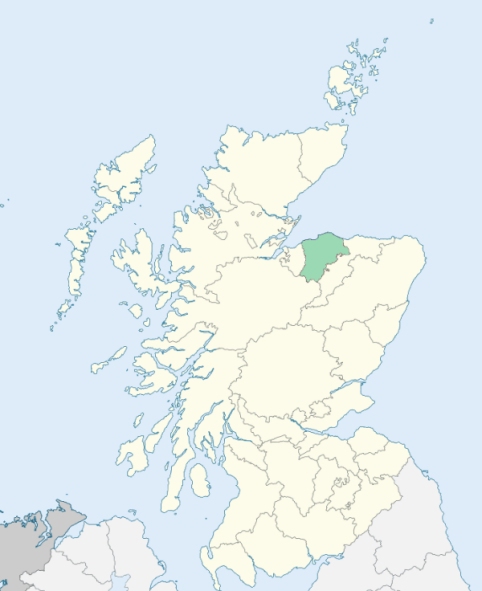
Duffus is a parish on the coast of Morayshire. It is bounded by the Moray Firth, and by the parishes of Drainie, Spynie, and Alves. (1867: The Imperial Gazetteer of Scotland, by John Marius Wilson)
Burghead or Burghhead, Buthill, Cummingston or Cummingstown, Duffus, Hopeman, Inskiel, Kaim, Kirktown, New Duffus, Old Roseisle, Roseisle, Starwood, Unthank
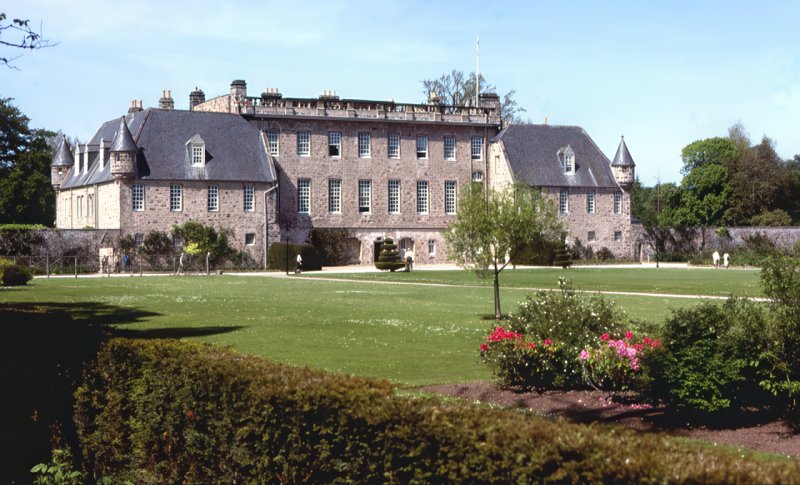
Gordonstoun House, Inverugie
PRE-REFORMATION GOVERNANCE:
POST-REFORMATION GOVERNANCE:
The parishes of Duffus and Unthank were united before 1550.
Duffus. Duffus was a prebend of the Cathedral of Elgin. Its church was dedicated to St Peter. In the parish there were Wells of St Peter and St Laurence.
Unthank. Unthank was a prebend of the Cathedral of Elgin.
Disjoined Quoad Sacra Parishes:
Burghead. There was of old at Burghead a chapel of St Aidan. The parish of Burghead was disjoined from Duffus on 19 June 1867.
(1928: Fasti Ecclesiæ Scoticanæ, by Hew Scott, D. D.)
Includes ministers, licentiates, assistants, readers, and clerks.
Duffus and Unthank (QO)
Burghead (QS)
(1928: Fasti Ecclesiæ Scoticanæ, by Hew Scott, D. D.)
Parish registers turned over to the Registrar-General, as a result of the Registration of Births, Deaths, and Marriages (Scotland) Act of 1854. The letters B. D. and M. indicate Births (or Baptisms), Deaths (or Burials), and Marriages (or Proclamations of Banns) respectively. Numbers indicate separate volumes or books. Note: These records are by no means complete or without damage; consult the Detailed List of the Old Parochial Registers of Scotland (1872) to learn more about the condition of the records.
| OPR and RD Numbers | |||
|---|---|---|---|
| Date Range | Name | Number | Type |
| 1629-1854 | Duffus | 131 | OPR |
| 1855-1895 | Duffus | 131 | RD |
| 1896-1967 | Burghead | 131-1 | RD |
| 1896-1967 | Duffus | 131-2 | RD |
| 2009 | Moray, Elgin | 280 | RD |
| 2026 | Moray Council, Heldon Community Council | ||
(2009: Parishes and Registration Districts of Scotland - Old and New, National Records of Scotland)
Local community councils (2026) are provided as a potential source of additional information for settlements within the original boundaries of the parish. (Source)
Statistics from informal and official censuses
Anderson, Davidson, Fraser, Grant, Main, Moore, Ralph, Ross, Sutherland, Young
Note: Names appearing in research materials, other than censuses. Simple names (First name, surname only) have been omitted unless they appear associated with large properties. All women's names, and men's names with occupations, military ranks, or peerage titles are included.
By a Friend to Statistical Inquiries.
"Our population is at present 1500. It has not greatly diminished for some years past, notwithstanding there have been a few emigrations. About the end of the last war, some individuals went to North America, a few of whom returned and settled at home, bringing bad tidings of the country, which their imaginations had figured to be the fairy-land of wealth. Since that time, those who would have gone to America, had the prospect been favourable, have preferred a home emigration to the southern parts of Scotland, particularly Glasgow, Paisley, &c. And from this part of the north, there is, and always has been, a constant succession of adventurers issuing forth to the British capital, the East and West Indies, and other parts of the empire.
The Gaelic is not spoken on the coast of Morayshire. We speak the English mixed with a large portion of provincial dialect. Our accent is, in the ear of a stranger, snappish and provoking, assimilating to that of Aberdeen, but is said not to be quite so invincible as theirs, to those who leave the country. It is more disagreeable and more difficult to overcome, than the accent of our western neighbours of Inverness; besides, that they have and advantage over us in using none but modern English words.
Society in this country is as yet chiefly divided into high and low. The latter class, though poor and depressed, are not querulous, but peaceable and well disposed. The higher ranks still retain, comparatively, a considerable portion of the manners of the old barons. Our middle ranks, compared with those of other countries, are yet inconsiderable. They are not fully occupied with business, have no style of manners appropriated to their station, but are fond of the company and manners of their superiors, and converse more frequently, than is done in other places, about modes and fashions in dress and manners.
A superior degree of shrewdness, has been commonly affixed to the character of a north-country man, which is well expressed in the common adage, "you are too far north for me." The remark is more applicable to our neighbours of the Aberdeen and Inverness districts, than to us; compared to them, we, in Morayshire, are a blunt and plain people. Our people are as yet sober, and little addicted to the intemperate use of spirits.
The dress is what is common in the low countries. The women, among the common people, come abroad to church and fair, without caps or bonnets on their heads; and, instead of cloaks or mantles, are often dressed in striped blankets; such as are used for beds. Surnames are here more numerous, in proportion to the population, than in the Highlands, but less numerous than in the southern districts of Britain."
(This section contains excerpts, at times restructured or paraphrased, from an article appearing in Statistical Account of Scotland, Sir John Sinclair, 1791-1799)
Primary Sources:
Statistical Account of Scotland (1791-1799), Volume 8, p. 384
New Statistical Account of Scotland (1834-1845), Volume 13, Section II, p. 33
See Parish Page Sources for all source information and links.