Musselburgh
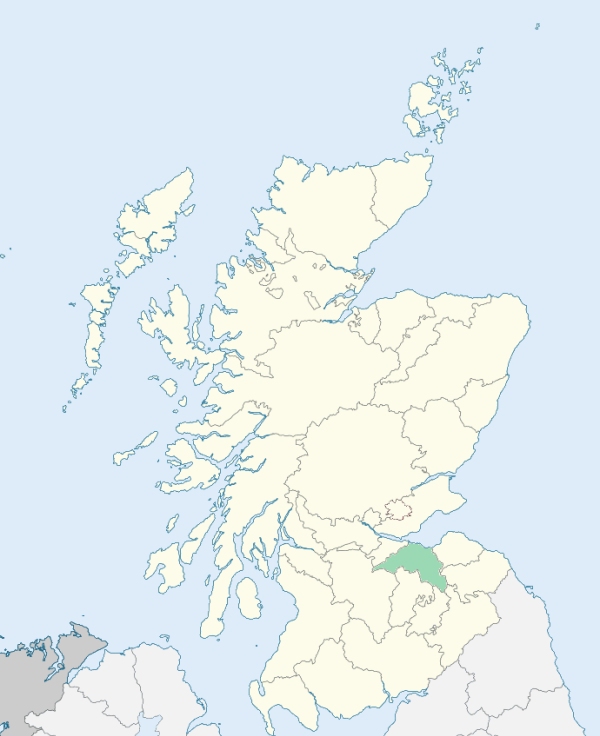
Inveresk is a parish in the extreme north-east of Edinburghshire. It is bounded on the north, by the Firth of Forth, on the east by Haddingtonshire, and on other sides by the parishes of Cranston, Dalkeith, Newton, Liberton, and Duddingston. (1867: The Imperial Gazetteer of Scotland, by John Marius Wilson).
Cowpits, Craighall, Crossgatehall, Fisherrow, Inveresk, Levenhall, Magdalen Bridge, Monktonhall, Musselburgh, New Craighall, Old Craighall, Stonyhall, Wallyford, Westpans
Pinkie
PRE-REFORMATION GOVERNANCE:
POST-REFORMATION GOVERNANCE:
The church was dedicated to St Michael, and previous to the Reformation belonged to the Abbey of Dunfermline. Disjoined from the Presbytery of Edinburgh by the General Assembly in July 1591, and annexed to that of Dalkeith, 28 October, same year.
Disjoined Quoad Sacra Parishes:
New Craighall. Disjoined from Inveresk and erected into a parish quoad sacra, 15 March 1886.
Northesk. In 1838 a church was opened at Northesk, and a parish quoad sacra erected by the Court of Teinds, 6 July 1859.
Includes ministers, licentiates, assistants, readers, and clerks.
Inveresk (QO)
New Craighall (QS)
Northesk (QS)
(1928: Fasti Ecclesiæ Scoticanæ, by Hew Scott, D. D.)
Parish registers turned over to the Registrar-General, as a result of the Registration of Births, Deaths, and Marriages (Scotland) Act of 1854. The letters B. D. and M. indicate Births (or Baptisms), Deaths (or Burials), and Marriages (or Proclamations of Banns) respectively. Numbers indicate separate volumes or books. Note: These records are by no means complete or without damage; consult the Detailed List of the Old Parochial Registers of Scotland (1872) to learn more about the condition of the records.
| OPR and RD Numbers | |||
|---|---|---|---|
| Date Range | Name | Number | Type |
| 1606-1854 | Inveresk | 689 | OPR |
| 1855-1971 | Inveresk | 689 | RD |
| 1972-2003 | Inveresk | 760 | RD |
| 2004-2006 | Inveresk, East Lothian | 760 | RD |
| 2007 | East Lothian, Musselburgh | 760 | RD |
| 2026 | East Lothian Council; Musselburgh and Inveresk Community Council Wallyford Community Council Whitecraig Community Council | ||
(2009: Parishes and Registration Districts of Scotland - Old and New, National Records of Scotland)
Local community councils (2026) are provided as a potential source of additional information for settlements within the original boundaries of the parish. (Source)
Statistics from informal and official censuses
Archibald, Brown, Gibson, Millar, Mitchell, Moffat, Ritchie, Robertson, Scott, Wilson
Note: Names appearing in research materials, other than censuses. Simple names (First name, surname only) have been omitted unless they appear associated with large properties. All women's names, and men's names with occupations, military ranks, or peerage titles are included.
By the Reverend Dr Alexander Carlyle, Minister.
"The people of all ages were carefully numbered in November and December 1792, when none of the summer lodgers were here, and amounted as follows: In the burgh, 4013; in the country, 865; employed in the coal-works, 513; total number of souls in the parish, 5392.
The trades, with the number of masters in each trade, are as follows: 70 wrights and smiths, 30 tailors, 96 shoemakers, 44 bakers, 16 gardeners, 140 weavers, 50 fleshers, 50 masons, 10 grocers, 49 fishermen, 90 fish-wives, 50 salt-wives, 4 wine merchants, 2 milliners, 10 manuta-makers, 6 hair-dressers, 2 perfumers, and 63 carters, who have no land, and live by carrying coals, &c. There are four surgeons in this parish.
There are in this parish, a broad-cloth manufactory, a stoneware pottery, several soap-boilers and starch-makers, and a distillery of great extent.
The people of this parish are not free from such vices, as are incident to persons in their situation. Few great crimes have been attempted, or brought to light in this parish. The change in dress, of mechanics and labourers, is as remarkable here as any where in Scotland, as indeed might well be expected from their vicinity to the capital."
(This section contains excerpts, at times restructured or paraphrased, from an article appearing in Statistical Account of Scotland, Sir John Sinclair, 1791-1799)
Primary Sources:
Statistical Account of Scotland (1791-1799), Volume 16, p. 1
New Statistical Account of Scotland (1834-1845), Volume 1, p. 246
See Parish Page Sources for all source information and links.