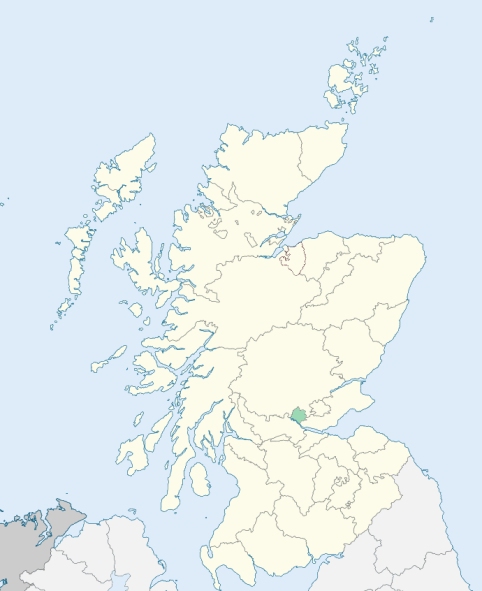
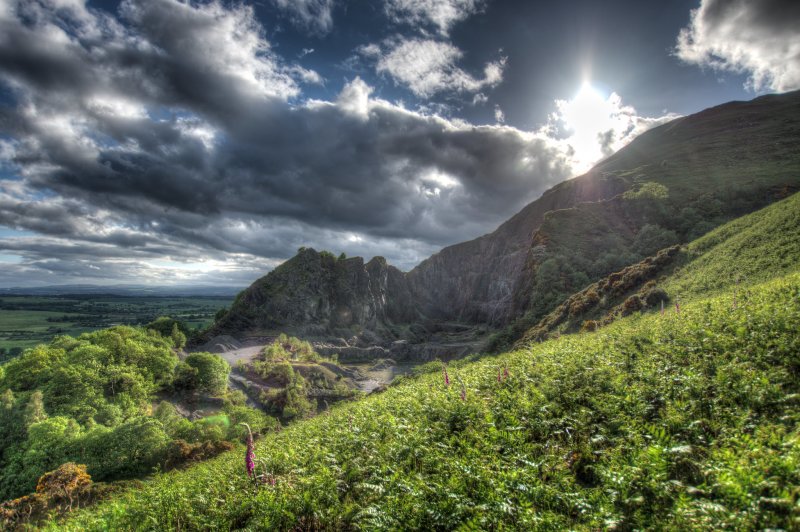
Tillicoultry is a parish in Clackmannanshire. It is bounded by the Stirlingshire detached parish of Alva, by the Perthshire parishes of Blackford and Glendevon, and by the Clackmannanshire parishes of Dollar, Clackmannan, and Alloa. (1867: The Imperial Gazetteer of Scotland, by John Marius Wilson).
Coalsnaughton, Devonside, Tillicoultry
Harviestoun
PRE-REFORMATION GOVERNANCE:
POST-REFORMATION GOVERNANCE:
The church of Tillicoultry was dedicated to St Serf. It belonged to the Abbey of Cambuskenneth. The parish of Alva was united to Tillicoultry from 1581 to 1632.
Includes ministers, licentiates, assistants, readers, and clerks.
(1928: Fasti Ecclesiæ Scoticanæ, by Hew Scott, D. D.)
Parish registers turned over to the Registrar-General, as a result of the Registration of Births, Deaths, and Marriages (Scotland) Act of 1854. The letters B. D. and M. indicate Births (or Baptisms), Deaths (or Burials), and Marriages (or Proclamations of Banns) respectively. Numbers indicate separate volumes or books. Note: These records are by no means complete or without damage; consult the Detailed List of the Old Parochial Registers of Scotland (1872) to learn more about the condition of the records.
| OPR and RD Numbers | |||
|---|---|---|---|
| Date Range | Name | Number | Type |
| 1639-1854 | Tillicoultry | 468 | OPR |
| 1855-1969 | Tillicoultry | 468 | RD |
| 2009 | Clackmannanshire | 460 | RD |
| 2026 | Clackmannanshire Council; Tillicoultry, Coalsnaughton and Devonside Community Council | ||
(2009: Parishes and Registration Districts of Scotland - Old and New, National Records of Scotland)
Local community councils (2026) are provided as a potential source of additional information for settlements within the original boundaries of the parish. (Source)
Statistics from informal and official censuses
Allan, Campbell, Dawson, Harrower, Hunter, Johnstone, Miller, Paterson, Stalker, Thomson
Note: Names appearing in research materials, other than censuses. Simple names (First name, surname only) have been omitted unless they appear associated with large properties. All women's names, and men's names with occupations, military ranks, or peerage titles are included.
By the Reverend Mr William Osburn, Minister.
"In January 1792 there were 853 total number of souls, of whom 373 were males, and 480 females. There were 359 communicants of the Establishment, 97 of the Secession, 2 Episcopalians, and 1 Cameronian. There were 34 farmers, 21 weavers, 6 wrights, 7 masons, 3 smiths, 3 shoemakers, 8 tailors, 4 miners, 41 labourers, 1 gardener, 1 miller, 1 dancing master, 1 male house servant, 12 female house servants, 25 male labouring servants, and 12 female labouring servants. Tillicoultry contains three villages, Westertown, Earlstown, and Coalsnaughton, and all the inhabitants live in these except 36 families.
The people are sober and industrious, and attached to the King and Constitution, and to the Presbyterian form of worship and Church Government. The men mostly betake themselves to country work, or to employments connected with husbandry. Few of them enlist in the army, and not many of them engage in the seafaring line. The women are thrifty and laborious, attentive to their families, and are much employed in spinning worsted and woolen yarn; particularly the latter. All ranks dress better and finer than they formerly did."
(This section contains excerpts, at times restructured or paraphrased, from an article appearing in Statistical Account of Scotland, Sir John Sinclair, 1791-1799)
Primary Sources:
Statistical Account of Scotland (1791-1799), Volume 15, p. 189
New Statistical Account of Scotland (1834-1845), Volume 8, Section III, p. 66
See Parish Page Sources for all source information and links.