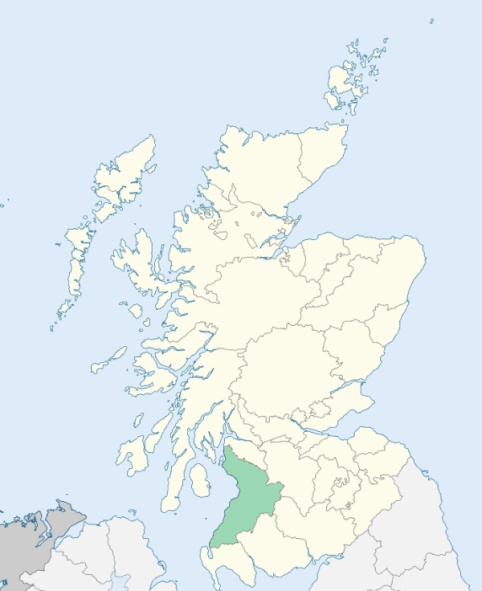
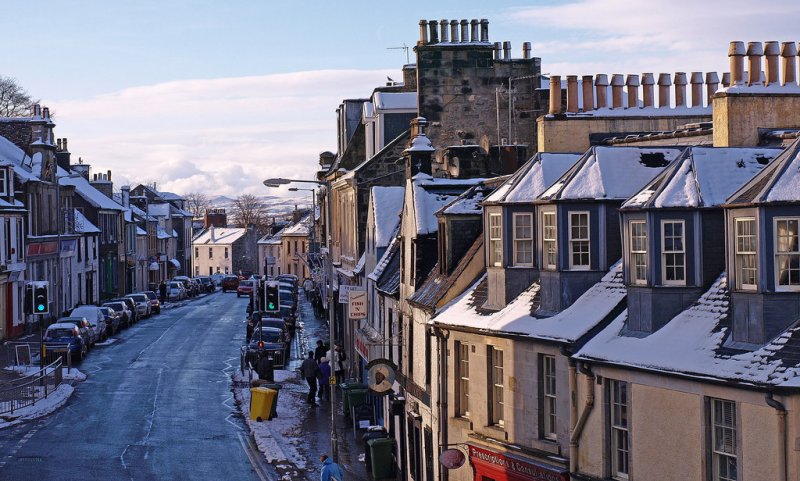
Beith is a parish partly in Renfrewshire but chiefly in Ayrshire. It is bounded by the parishes of Lochwinnoch, Neilston, Dunlop, Kilwinning, Dalry, and Kilbirnie. (1867: The Imperial Gazetteer of Scotland, by John Marius Wilson).
Beith, Burnhouse, Gateside, Langbar, Northbar
Morishill, Woodside
The parish of Beith was situated partly in the county of Ayr and partly in the county of Renfrew. The parish was placed wholly within the county of Ayr. See affected properties and landholders. (1892: Boundary of counties and parishes in Scotland as settled by the Boundary Commissioners under the Local Government Act, 1889, by Hay Shennan)
PRE-REFORMATION GOVERNANCE:
POST-REFORMATION GOVERNANCE:
The church of Beith was dedicated to St Inan. It belonged to the Abbey of Kilwinning. At Cuff Hill in the parish is St Inan's Chair, and near it St Inan's Well. There was also within the bounds a Well of St Bride. A yearly tryst named St Inan's Fair used to be held at Beith on St Inan's Day in August. Beith Church was rebuilt in 1810.
Disjoined Quoad Sacra Parishes:
Caldwell. A church was built in 1888. The parish was disjoined from Neilston and Beith by the Court of Teinds, 10 March 1891.
Includes ministers, licentiates, assistants, readers, and clerks.
Beith (QO)
Caldwell (QS)
(1928: Fasti Ecclesiæ Scoticanæ, by Hew Scott, D. D.)
Parish registers turned over to the Registrar-General, as a result of the Registration of Births, Deaths, and Marriages (Scotland) Act of 1854. The letters B. D. and M. indicate Births (or Baptisms), Deaths (or Burials), and Marriages (or Proclamations of Banns) respectively. Numbers indicate separate volumes or books. Note: These records are by no means complete or without damage; consult the Detailed List of the Old Parochial Registers of Scotland (1872) to learn more about the condition of the records.
| OPR and RD Numbers | |||
|---|---|---|---|
| Date Range | Name | Number | Type |
| 1659-1854 | Beith | 582 | OPR |
| 1855-1971 | Beith | 582 | RD |
| 1972-1979 | Beith | 665 | RD |
| 1980-2004 | Kilbirnie, Beith and Dalry | 663 | RD |
| 2009 | North Ayrshire, Kilbirnie | 663 | RD |
| 2026 | North Ayrshire Council; Beith and District Community Council | ||
(2009: Parishes and Registration Districts of Scotland - Old and New, National Records of Scotland)
Local community councils (2026) are provided as a potential source of additional information for settlements within the original boundaries of the parish. (Source)
Statistics from informal and official censuses
Anderson, Crawford, Fulton, Hamilton, Kerr, Love, Smith, Stevenson, Walker, Wilson
Note: Names appearing in research materials, other than censuses. Simple names (First name, surname only) have been omitted unless they appear associated with large properties. All women's names, and men's names with occupations, military ranks, or peerage titles are included.
By the Reverend Mr David M'Clellan.
"From a very accurate enumeration taken lately, the population was found to be as follows: In the town there were 488 families, consisting of 797 males and 957 females, total 1754 people. In the country there were 216 families, consisting of 553 males and 565 females, total 1118 people. In the whole parish there were 704 families, consisting of 1350 males and 1522 females, total souls in the parish 2872.
The present state of trade and manufactures in the parish of Beith is as follows: 2 candle works, 3 licensed distillers, 1 tobacco manufacturing company, 1 tan-work, 1 malt-work, 4 corn mills, 5 lint mills, 1 waulk mill; there are 63 persons employed in making thread, 70 employed in weaving muslin, 44 in weaving silk gauze, and 32 in country work. There are 9 cloth merchants, 18 grocers, 11 yarn merchants, and 1 bookseller.
The number of artificers is as follows: 22 masons, 21 house-carpenters, 2 saddlers, 29 shoemakers, 15 smiths, 4 coopers, 4 bakers, 13 tailors, 6 flax-dressers, 1 watchmaker, 2 barbers, 6 butchers, 1 hatter. There are also 2 bankers, 2 surgeons, 1 druggist, 2 justices of the peace, 17 keepers of licensed public houses, 24 carriers and carters, 56 dyke builders, and 20 day labourers."
(This section contains excerpts, at times restructured or paraphrased, from an article appearing in Statistical Account of Scotland, Sir John Sinclair, 1791-1799)
Primary Sources:
Statistical Account of Scotland (1791-1799), Volume 8, p. 314
New Statistical Account of Scotland (1834-1845), Volume 5, Section I, p. 570
See Parish Page Sources for all source information and links.