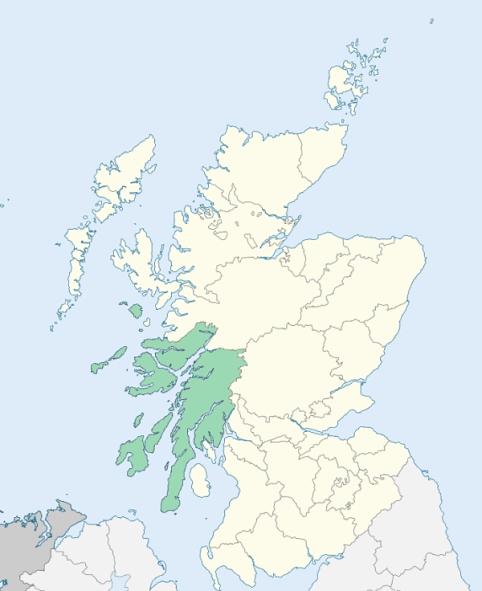
Lismore and Appin is a united parish in the north of Argyleshire. It is bounded by the counties of Inverness and Perth, and by the parishes of Glenorchy, Ardchattan, Kilmore, Torosay, Morven, and Ardnamurchan. It comprises the three great districts of Lismore, Kingairloch, and Appin, the first within Loch Linnhe, the second on the north-west side of that loch, the third on the south-east side of that loch, with Loch Leven, Loch Creran, and the Sound of Mull on its boundaries. (1867: The Imperial Gazetteer of Scotland, by John Marius Wilson)
Duror - Duror is a district in the north of Appin, Argyleshire. It occupies the angle between Loch Linnhe and Loch Leven. (1867: The Imperial Gazetteer of Scotland, by John Marius Wilson)
Ellanmunde - An ancient parish, now comprehended in the united parish of Lismore and Appin, Argyleshire. The parish of Ellanmunde comprehended Glencoe, the adjacent parts of Appin, and the districts of Mamore and Ouriah. (1867: The Imperial Gazetteer of Scotland, by John Marius Wilson)
Achnacone, Achosragan, Achindarroch, Appin, Ardnaclach, Auchnaion, Auchuorain, Balevolan, Clovulin, Coalard, Cregganich, Cuil, Dallens, Duror, Fiart, Glensanda, Inverfolla, Keil, Kentalen or Kentallen, Lagnaha, Laroch, Lecknaskoir, Port Appin, Portcarren, Portnacroish, Portramsay, Shian, Tayfuirst, Tayribbie, Tirlaggan
Airds, Ardhsiel
The parish of Lismore and Appin had a detached part situated at Kingairloch on the north side of Loch Linnhe. This detached part was transferred to the parish of Kilmallie. See affected properties and landholders. (1892: Boundary of counties and parishes in Scotland as settled by the Boundary Commissioners under the Local Government Act, 1889, by Hay Shennan)
PRE-REFORMATION GOVERNANCE:
POST-REFORMATION GOVERNANCE:
This parish is made up of the island of Lismore and the smaller islands adjoining it. In 1661 it was united with the parishes of Appin, Duror, and Glencoe, or Eilean Munda, from which they had at first been taken. At various times they have all now been severed again.
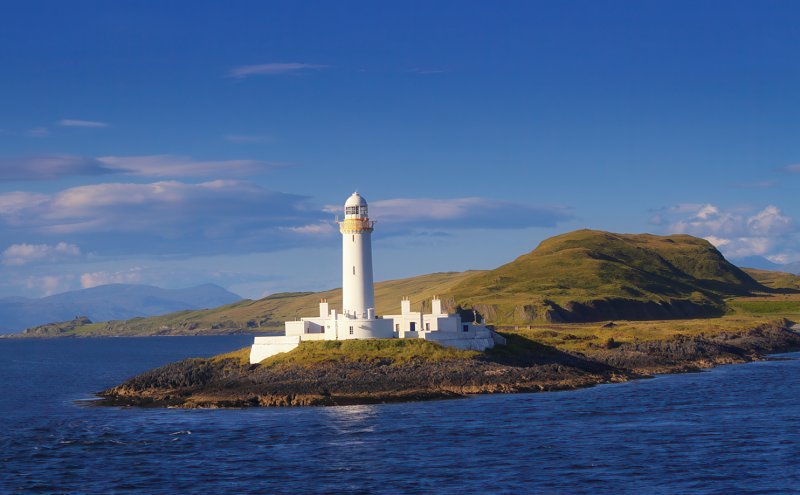
Lismore. St Luag, often called Mo Luag, had the seat of his mission at Lismore. He died in the year 592. The ancient church of this parish at Kilmaluag was dedicated to him. In Lismore stood also the cathedral of the diocese of Argyll. It too was dedicated to St Luag. The building of the cathedral at Lismore does not appear to have been begun until 1236. In 1749 its choir was restored to form the church of the parish instead of the small ancient building at Kilmaluag. There were three chapels on Lismore, St Kiaran's at Cill Chiarain, St John's at Cill Iain, and St Andrews at Cill Anriais. On the adjacent island of Bernera stands the remains of another chapel.
Appin. The parish of Appin was first disjoined from Lismore in or about the year 1650. This was revoked 9 February 1661, and Appin was joined again to Lismore. On 15 May 1868 the parish of Appin was disjoined a second time. The present church was built in 1889. There was of old a chapel of St Patrick within the bounds, on Loch Creran. There is now a mission chapel in Glencreran.
Disjoined Quoad Sacra Parishes:
Duror. In 1650, or very near that time, the Commissioners of Teinds disjoined this district from Lismore, and erected the new parish of Duror. In 1661 Parliament annulled this erection, and Duror was united again to Lismore, as were at the same time Eilean Munda and Appin. This state of things lasted for nearly 200 years. Early in the nineteenth century a parliamentary chapel was built here. On 9 December 1846 the parish of Duror was again disjoined quoad sacra from Lismore.
Glencoe, or Eilean Munda. The island of Eilean Munda lies in Loch Leven near the place where the River Coe falls into the loch. On the island are the ruins of the ancient church of this parish. It was dedicated to St Fintan Munu, after whom the place is named. Early in the sixteenth century the parishes of Lismore and Eilean Munda were already united. In or about 1650 the Commissioners of Teinds disjoined Eilean Munda from Lismore, making it again a separate parish. At about that time too, the church on the island was restored and enlarged. In 1661 Parliament rendered void the erection of Eilean Munda. Sometime in the nineteenth century a new church for the district was built on the mainland near the mouth of Glencoe. To it also was given the name of St Fintan Munu. Thenceforth services were again held regularly, and on 14 July 1890, the parish of Glencoe was once more disjoined from Lismore. There is now a mission chapel within the bound at Kinlochleven.
Includes ministers, licentiates, assistants, readers, and clerks.
Lismore and Appin (QO)
Appin (QO)
Duror (QS)
Glencoe, or Eilean Munda (QS)
(1928: Fasti Ecclesiæ Scoticanæ, by Hew Scott, D. D.)
Parish registers turned over to the Registrar-General, as a result of the Registration of Births, Deaths, and Marriages (Scotland) Act of 1854. The letters B. D. and M. indicate Births (or Baptisms), Deaths (or Burials), and Marriages (or Proclamations of Banns) respectively. Numbers indicate separate volumes or books. Note: These records are by no means complete or without damage; consult the Detailed List of the Old Parochial Registers of Scotland (1872) to learn more about the condition of the records.
| OPR and RD Numbers | |||
|---|---|---|---|
| Date Range | Name | Number | Type |
| 1751-1854 | Lismore, Appin and Duror | 525 | OPR |
| 1751-1854 | Glencoe and Ballachulish | 525 | OPR |
| 1855-1969 | Lismore | 525-1 | RD |
| 1855-1969 | Appin | 525-2 | RD |
| 1856-1969 | Glencoe and Ballachulish | 525-3* | RD |
| 1856-1912 | Duror | 525-4 | RD |
| 1913-1969 | Kinlochleven | 525-4 | RD |
| 1913-1969 | Duror | 525-5 | RD |
| 1970-1971 | Lismore | 525 | RD |
| 1972-2006 | Lismore | 524 | RD |
| 2007-2010 | (Lismore) Argyll and Bute, Lismore | 524 | RD |
| 2009 | (Appin) Highland, Appin | 526 | RD |
| 2009 | (Ballachulish) Highland, Fort William and Ballachulish | 239 | RD |
| 2009 | (Duror) Highland, West Highlands | 525 | RD |
| 2009 | (Glencoe) Highland, West Highlands | 525 | RD |
| 2009 | (Kinlochleven) Highland, West Highlands | 525 | RD |
| 2026 | (Lismore) Argyll and Bute Council; Lismore Community Council | ||
| 2026 | (Appin) Argyll and Bute Council; Appin Community Council | ||
| 2026 | (Ballachulish) Highland Council; Ballachulish Community Council | ||
| 2026 | (Duror) Highland Council; Duror and Kentallen Community Council | ||
| 2026 | (Glencoe) Highland Council; Glencoe and Glen Etive Community Council | ||
| 2026 | (Kinlochleven) Highland Council; Kinlochleven Community Council | ||
* Ballachulish is listed as both RD 506 (with Corran of Ardgour) and RD 525-3 (with Glencoe) for the years 1856-1969 in the source material listed below.
(2009: Parishes and Registration Districts of Scotland - Old and New, National Records of Scotland)
Local community councils (2026) are provided as a potential source of additional information for settlements within the original boundaries of the parish. (Source)
Statistics from informal and official censuses
Black, Cameron, Campbell, Clark, Downie, Ferguson, Livingston, Rankin, Robertson, Stewart
Note: Names appearing in research materials, other than censuses. Simple names (First name, surname only) have been omitted unless they appear associated with large properties. All women's names, and men's names with occupations, military ranks, or peerage titles are included.
By the Reverend Mr Donald M'Nicol.
"The inhabitants amount at present to 3526 souls; Lismore contains 1121 of that number. All the inhabitants of Lismore are of the Established Church of Scotland, and, excepting, a few there is not a Seceder in either parish. There are four or five Papists in the parish of Appin, all of whom came from other parishes except one man, who was converted by his wife, and Irishwoman. There are great numbers of Episcopalians in the higher parts of the parish of Appin.
The common language of the parish is the Gaelic, a branch of the ancient Celtic. The people in this parish are, in general, laborious and industrious. Crimes of an enormous nature are hardly known here. No instance of suicide, or of murder, has occurred for 25 years past. The common people are less addicted to drinking than they were 20 years ago. All ranks are remarkable for their charity to the poor. No inhabitant of these extensive parishes has been executed or banished for 25 years past. One or two persons, guilty of some irregularities, voluntarily banished themselves. There has been no instance of child murder in the parish in the murder of man. This is a crime hardly known in the west Highlands.
A rage for emigration has got to a great height, of late, in the Highlands. There have been two emigrations from these parishes, particularly from Appin. The inhabitants are now become so crowded, that some relief of this sort, in one shape or other, seems absolutely necessary. In 1775, the first ship, completely loaded with emigrants, mostly from these parishes, sailed for North Carolina. The American war, which broke out next year, put a stop to all attempts of this nature till last autumn, when another ship, with emigrants, mostly from Appin, and the higher parts of Ardchattan parish, carried away about 200 people for North Carolina. Preparations are making for another emigration from these parishes this year."
(This section contains excerpts, at times restructured or paraphrased, from an article appearing in Statistical Account of Scotland, Sir John Sinclair, 1791-1799)
Primary Sources:
Statistical Account of Scotland (1791-1799), Volume 1, p. 482
New Statistical Account of Scotland (1834-1845), Volume 7, Section II, p. 223
See Parish Page Sources for all source information and links.