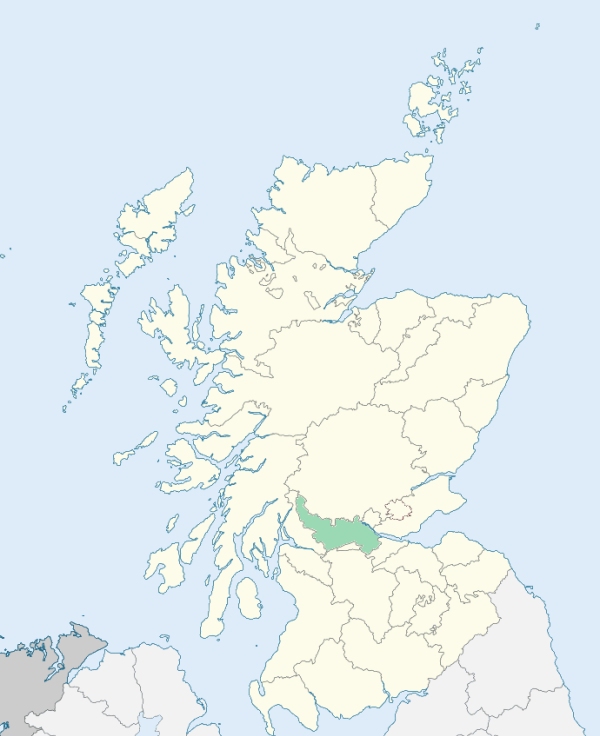
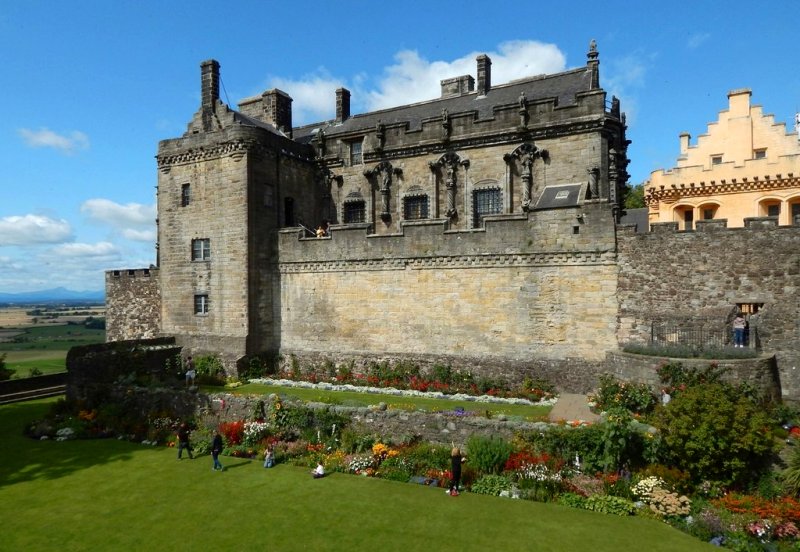
Stirling is a parish in the north of Stirlingshire, comprising also a small district of Clackmannanshire. The parish is bounded by St Ninians, Lecropt, and Logie. (1867: The Imperial Gazetteer of Scotland, by John Marius Wilson).
Causewayhead, Raploch, Stirling
Craigforth
The parish of St Ninians had three detached parts, all situated within the parliamentary limits of the burgh of Stirling, and all, either wholly or partly, surrounded by the parish of Stirling. In order to adjust the boundaries of the two parishes, certain exchanges of territory have been made. See affected properties and landholders. (1892: Boundary of counties and parishes in Scotland as settled by the Boundary Commissioners under the Local Government Act, 1889, by Hay Shennan)
PRE-REFORMATION GOVERNANCE:
POST-REFORMATION GOVERNANCE:
The parish church of the Holy Rood at Stirling (The Rood Kirk) was built in 1500, to replace the church of St Modan, which had been burned down. In 1463, when James III was King, the Hospital of St James was erected at the Stirling end of the bridge over the Forth. Near the bridge, somewhat later, was built a chapel of St Roque. In James IV's time Stirling acquired another hospital. During the same reign, in 1494, a house of the Grey Friars, dedicated to St Modan, was established in the town. King James IV lived much at Stirling, and it was he who set up the Collegiate Church of the Chapel Royal. It was dedicated to St Mary and St Michael. In the part of this parish that lies on the left bank of the Forth stands the ruins of St Mary's Augustinian Abbey of Cambuskenneth. It was founded by King David I in 1147. Stirling held fairs on Ascension Day, Roodmas Day, and Our Lady Day in Harvest.
Disjoined Quoad Sacra Parishes:
Marykirk. The parish of Marykirk was disjoined from that of the Rood Kirk of Stirling on 18 February 1878.
Includes ministers, licentiates, assistants, readers, and clerks.
East Church (QO)
West Church (QO)
North Church (QO)
Marykirk (QS)
(1928: Fasti Ecclesiæ Scoticanæ, by Hew Scott, D. D.)
Parish registers turned over to the Registrar-General, as a result of the Registration of Births, Deaths, and Marriages (Scotland) Act of 1854. The letters B. D. and M. indicate Births (or Baptisms), Deaths (or Burials), and Marriages (or Proclamations of Banns) respectively. Numbers indicate separate volumes or books. Note: These records are by no means complete or without damage; consult the Detailed List of the Old Parochial Registers of Scotland (1872) to learn more about the condition of the records.
| OPR and RD Numbers | |||
|---|---|---|---|
| Date Range | Name | Number | Type |
| 1672-1854 | Stirling | 490 | OPR |
| 1855-1971 | Stirling | 490 | RD |
| 1972-2008 | Stirling | 473 | RD |
| 2009 | Stirling | 473 | RD |
| 2026 | Stirling Council; Braehead and Broomridge Community Council Bridge of Allan Community Council Cambuskenneth Community Council Causewayhead Community Council Cornton Community Council Hillpark and Milton Community Council King's Park Community Council Mercat Cross Community Council Raploch Community Council Riverside Community Council St Ninians Community Council | ||
(2009: Parishes and Registration Districts of Scotland - Old and New, National Records of Scotland)
Local community councils (2026) are provided as a potential source of additional information for settlements within the original boundaries of the parish. (Source)
Statistics from informal and official censuses
Brown, Campbell, Ferguson, Henderson, Robertson, Smith, Stevenson, Stewart, Taylor, Thomson
Note: Names appearing in research materials, other than censuses. Simple names (First name, surname only) have been omitted unless they appear associated with large properties. All women's names, and men's names with occupations, military ranks, or peerage titles are included.
By the Reverend Mr James Sommerville, one of the Ministers of the Town.
"By a pretty accurate survey made in the year 1790, there were 1188 heads of families, and 4483 souls. Besides, in this list, there are above 30 families in the environs of the town, not included. As the enrollment of the year 1790 was deemed incomplete, a new one was made this year, (1792,) and the number of souls in the parish was found to be 4698. Since the commencement of the summer 1792, they are probably augmented to 5000, by the increase of hands employed in the cotton manufactory.
Of the 4698, there are 2795 belonging to the Established Church, 1415 the Burgher Secession, 172 the Antiburgher Secession, 120 Cameronians, 89 Episcopalians, 74 Presbytery of Relief, and 33 Bereans.
Of the different professions there are 3 physicians, 3 surgeons, 18 writers, 30 merchants, 12 bakers, 68 weavers, 13 hammermen, 2 skinners, 2 butchers, 14 tailors, and 18 shoemakers. The town council consists of 21 members, 14 of whom are merchants, and 7 tradesmen, viz. a provost, 4 baillies, a dean of guild, a treasurer, 7 merchant counsellors, and 7 deacons of trade."
(This section contains excerpts, at times restructured or paraphrased, from an article appearing in Statistical Account of Scotland, Sir John Sinclair, 1791-1799)
Primary Sources:
Statistical Account of Scotland (1791-1799), Volume 8, p. 271
New Statistical Account of Scotland (1834-1845), Volume 8, Section II, p. 390
See Parish Page Sources for all source information and links.