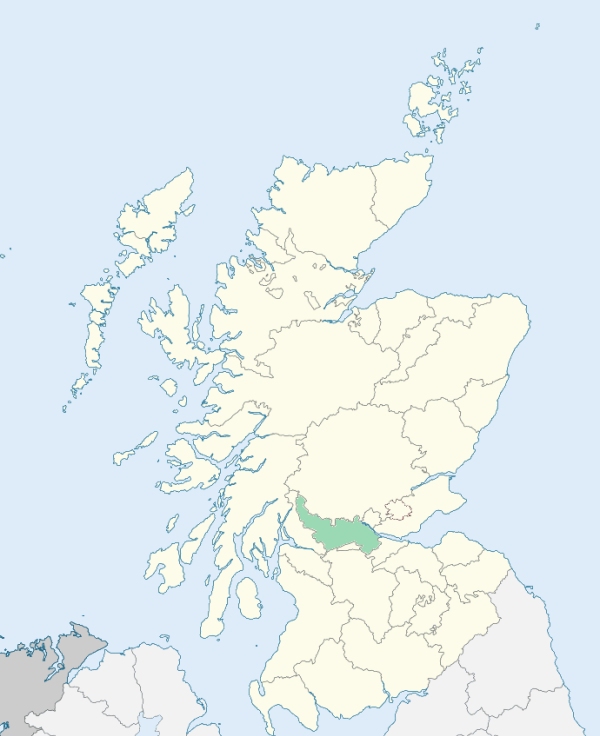
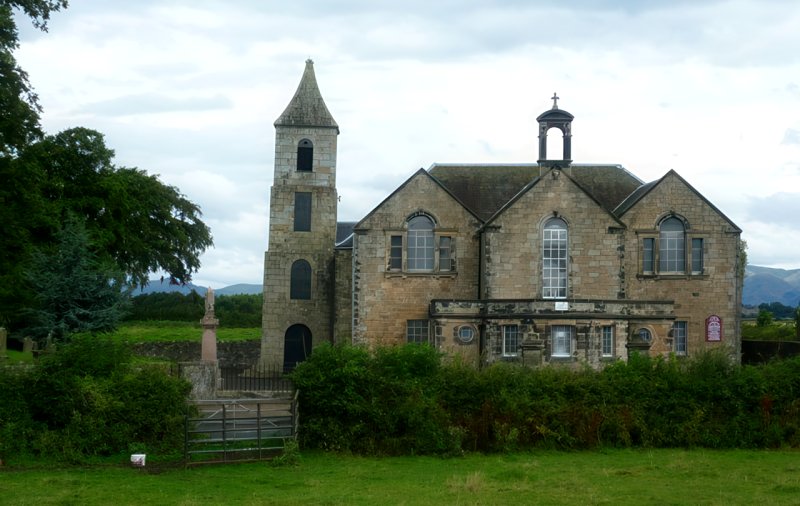
Bothkennar is a parish in the Carse of Falkirk, Stirlingshire. It is bounded on the east by the Firth of Forth, and on other sides by the parishes of Airth, Larbert, and Falkirk. (1867: The Imperial Gazetteer of Scotland, by John Marius Wilson).
Carronshore, Longdyke, Skinflats
PRE-REFORMATION GOVERNANCE:
POST-REFORMATION GOVERNANCE:
The church of Bothkennar is said to have been dedicated to St Kinnera. The Abbey of Cambuskenneth had large possessions in this parish.
Includes ministers, licentiates, assistants, readers, and clerks.
(1928: Fasti Ecclesiæ Scoticanæ, by Hew Scott, D. D.)
Parish registers turned over to the Registrar-General, as a result of the Registration of Births, Deaths, and Marriages (Scotland) Act of 1854. The letters B. D. and M. indicate Births (or Baptisms), Deaths (or Burials), and Marriages (or Proclamations of Banns) respectively. Numbers indicate separate volumes or books. Note: These records are by no means complete or without damage; consult the Detailed List of the Old Parochial Registers of Scotland (1872) to learn more about the condition of the records.
| OPR and RD Numbers | |||
|---|---|---|---|
| Date Range | Name | Number | Type |
| 1623-1854 | Bothkennar | 473 | OPR |
| 1855-1900 | Bothkennar | 473 | RD |
| 1901-1969 | Bothkennar | 481b1 | RD |
| 2009 | Stirling, Larbert | 483 | RD |
| 2026 | Falkirk Council; Grangemouth Community Council | ||
(2009: Parishes and Registration Districts of Scotland - Old and New, National Records of Scotland)
Local community councils (2026) are provided as a potential source of additional information for settlements within the original boundaries of the parish. (Source)
Statistics from informal and official censuses
Brown, Campbell, Hunter, Laing, Laird, Marshall, Rae, Russell, Thomson, Wilson
Note: Names appearing in research materials, other than censuses. Simple names (First name, surname only) have been omitted unless they appear associated with large properties. All women's names, and men's names with occupations, military ranks, or peerage titles are included.
By the Reverend Mr David Dickson, Minister.
"In the year 1793, a list was taken, from which it appears, that there are now 144 families, and in all about 600 inhabitants, of whom 303 are males, and 297 females; 164 married, and 436 unmarried, among which last 45 are widowers, and widows, and 133 children below 10 years of age.
There are 38 farmers, and about 86 servants, 2 masons, 3 wrights with 2 journeymen and apprentices, 3 coopers, 3 weavers with 1 journeyman, 3 shoemakers and 1 cobbler, 2 tailors, 6 smiths, 3 innkeepers, 1 baker with 1 apprentice, 1 barber, 1 excise officer, 8 shipmasters, 6 sailors, 3 carpenters, and 10 day-labourers.
The people, in general, attend the Established Church; of those who do not, there are about 9 Burghers, and equal number who are connected with the Relief congregation in Falkirk, 8 Antiburghers, 2 Cameronians, and 2 Episcopalians.
The inhabitants are, for the most part, sober, industrious, and kindly affectioned one to another, maintaining a decent and becoming respect to the ordinances of religions; whilst, among the few dissenters from the Established Church, there is very little of that narrow bigoted spirit, for which the sectaries in other corners have been too frequently blamed."
(This section contains excerpts, at times restructured or paraphrased, from an article appearing in Statistical Account of Scotland, Sir John Sinclair, 1791-1799)
Primary Sources:
Statistical Account of Scotland (1791-1799), Volume 17, p. 295
New Statistical Account of Scotland (1834-1845), Volume 8, Section II, p. 201
See Parish Page Sources for all source information and links.