Plaidwerx


Features: Scottish Parishes » Historic Shires » Stirlingshire » Falkirk

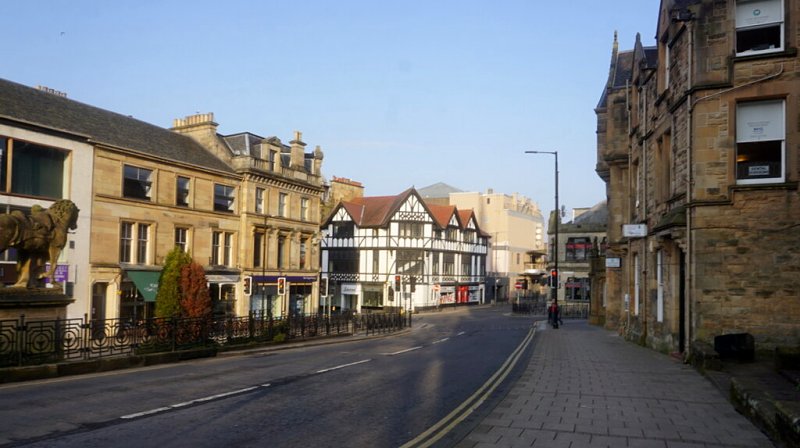
Upper Newmarket Street, Falkirk by Ian S
Upper Newmarket Street, Falkirk © 2022, Ian S

FALKIRK PARISH

TABLE OF CONTENTS


ALTERNATE NAMES AND SPELLING:

Elgesbrich, Varia Capella


LOCATION

Location Description:

Falkirk is a parish in the eastern part of Stirlingshire. It is bounded on the north by Dunipace, Larbert, and Bothkennar, on the east by Polmont and Muiravonside, and on the west by Dumbartonshire and Denny. (1867: The Imperial Gazetteer of Scotland, by John Marius Wilson).

Shire, District, and Region Timeline:

  • Shire: Stirlingshire (Before 1707)
  • County: Stirling (After 1707)
  • District: Stirling (Before 1930)
  • Landward District: Central No. 2 (1930-1975)
  • Landward District: Eastern No. 2 (1930-1975) [Laurieston]
  • Region: Central (1975-1996)
  • District: Falkirk (1975-1996)

Burghs:

  • Name: Falkirk
  • Burgh of Barony (1600)
  • Burgh of Regality (1646)
  • Large Burgh (1929)
  • Burgh system abolished (1975-1996)
  • Name: Grangemouth
  • Police Burgh (1872)
  • Small Burgh (1929)
  • Burgh system abolished (1975-1996)

Cities, Towns, Villages, and Hamlets:

Bainsford or Brainsford, Barleyside, Bonnybridge, Camelon, Castlecary, Falkirk, Glen, Grahamstown, Grangemouth, Laurieston, West Carron Ironworks

Estates:

Bantaskine, Callendar, Kerse House


PARISH TIMELINE

PRE-REFORMATION GOVERNANCE:

  • Diocese: St Andrews
  • Deanery: Linlithgow

POST-REFORMATION GOVERNANCE:

  • Synod: Lothian and Tweeddale
  • Presbytery: Linlithgow

PAROCHIAL OVERVIEW:

The church, dedicated to St Modan, previous to the Reformation belonged to the Abbey of Holyroodhouse. It was included in the Presbytery of Stirling until 1508, though in Linlithgow, 17 May 1614.

Disjoined Quoad Sacra Parishes:
Bonnybridge. A church was opened here on 11 November 1877. The parish of Bonnybridge was disjoined from Denny, Dunipace and Camelon on 14 March 1878.
Camelon. Disjoined from Falkirk, and erected into a parish quoad sacra by Court of Teinds, March 1853. Church built in 1839.
Grahamston. Disjoined from Falkirk and erected into a parish quoad sacra by Court of Teinds, 6 December 1875.
Grangemouth. Declared a parish quoad sacra by the General Assembly, 29 May 1837. Disjoined from Falkirk and erected a parish quoad sacra by Court of Teinds, 7 June 1880. Church built in 1866.
Kerse. Disjoined from Falkirk and erected into a parish quoad sacra by Court of Teinds, 13 July 1906. Church and halls built in 1899.
Laurieston. Disjoined from Falkirk and erected into a parish quoad sacra, 10 July 1914.

CHURCH OF SCOTLAND CLERGY:

Includes ministers, licentiates, assistants, readers, and clerks.

Falkirk (QO)

  • Andrew Hogge, 1560
  • James Erskine, 1567
  • Andrew Forrester, 1574
  • Adam Bellenden, 1593
  • James Caldwell, 1616
  • William Annan, 1617
  • Thomas Spittal, 1626
  • Edward Wright, 1646
  • Richard Callendar, 1663
  • Archibald Muschet, 1686
  • William Crichton, 1693
  • William Burnet, 1696
  • Andrew Fullarton, 1706
  • James Anderson, 1718
  • William Anderson (nephew of above), 1733
  • John Adams, 1744
  • John Aitchison, 1759
  • John Muir, 1787
  • James Wilson, 1794
  • John Brown Patterson, 1830
  • Alexander Melville, 1836
  • William Begg, 1840
  • George Carruthers, 1888
  • Alexander Loudon, 1899

Bonnybridge (QS)

  • James Steel, 1878
  • Duncan M'Corkindale, 1919

Camelon (QS)

  • John Oswald, 1853
  • John Scott, 1867
  • Robert Agnew, 1913

Grahamston (QS)

  • Duncan Campbell, 1876
  • Andrew Ross Taylor, 1881

Grangemouth (QS)

  • James William Taylor, 1839
  • William Purdie Dickson, 1846
  • William Holdom, 1880
  • George Miles Thomson, 1884
  • William Reid Wiseman, 1909
  • Alexander MacPherson, 1914

Kerse (QS)

  • William Andrew Knowles, 1906
  • Walter Roland Lacey, 1910
  • William Robrtson Brown, 1914

Laurieston (QS)

  • Charles Brownlie, 1896
  • Thomas Nelson Allen, 1898
  • John Archibald Dron, 1900
  • Alexander Barrie Robb, 1908

(1928: Fasti Ecclesiæ Scoticanæ, by Hew Scott, D. D.)


RECORDS

Parochial Registers:

Parish registers turned over to the Registrar-General, as a result of the Registration of Births, Deaths, and Marriages (Scotland) Act of 1854. The letters B. D. and M. indicate Births (or Baptisms), Deaths (or Burials), and Marriages (or Proclamations of Banns) respectively. Numbers indicate separate volumes or books. Note: These records are by no means complete or without damage; consult the Detailed List of the Old Parochial Registers of Scotland (1872) to learn more about the condition of the records.

  • (1) B. 1611-86
  • (2) B. 1686-1743
  • (3) B. 1744-88
  • (4) B. 1788-1819
  • (5) M. 1611-70
  • (6) M. 1670-1720
  • (7) M. 1720-94
  • (8) M. 1794-1819; D. 1817-19
  • (9) B. 1820-37
  • (10) B. 1837-54
  • (11) M. 1820-37
  • (12) M. 1837-54; D. 1820-44

OPR and RD Numbers
Date RangeNameNumberType
1594-1854Falkirk479OPR
1855-1891Falkirk Burgh479-1RD
1855-1891Falkirk Landward479-2RD
1892-1971Falkirk479RD
1972-2003Falkirk, Stirling479RD
2004-2008Falkirk, Falkirk479RD
2009Falkirk Council, Falkirk479RD
2026Falkirk Council; Falkirk Central Community Council

(2009: Parishes and Registration Districts of Scotland - Old and New, National Records of Scotland)

Local community councils (2026) are provided as a potential source of additional information for settlements within the original boundaries of the parish. (Source)

Population:

Statistics from informal and official censuses

  • 1755: 3,932
  • 1831: 12,743
  • 1841: 15,621
  • 1851: 16,438
  • 1861: 17,026 (Falkirk burgh: 9,030; Landward: 7,996)
  • 1901: 42,301 (Falkirk: 33,815; Grangemouth: 8,486)
  • 1911: 48,569 (Falkirk: 38,571; Grangemouth: 9,998)

RESIDENTS


Common Surnames:

Anderson, Brown, Campbell, Miller, Mitchell, Morrison, Scott, Smith, Taylor, Wilson

Land-owners, teachers, and other professionals:

Note: Names appearing in research materials, other than censuses. Simple names (First name, surname only) have been omitted unless they appear associated with large properties. All women's names, and men's names with occupations, military ranks, or peerage titles are included.

  • John BAIRD, of Camelon
  • John CALLANDER, of Woodburn
  • Thomas DUNDAS, Earl of Zetland, of Kerse
  • William FORBES, of Callendar
  • Thomas C. HAGART, Esq., of Bantaskine
  • Sir Thomas LIVINGSTONE, Bart.
  • Alexander MACFARLANE, of Thornhill
  • Thomas MARSHALL, of Broomhill
  • John B. RALSTON, of Ellrig
  • Robert RUSSELL, of Dalnair
  • Henry SALMON, of Bonnyside
  • Andrew SPEIRS, of Lochgreen
  • Henry STAINTON, Esq., of London
  • John STRACHAN, of Thornton, Yorkshire
  • (Rev) Thomas SWORDE, of Thetford

Other residents:

By James Wilson, M. A., Minister of the Parish.
"The parish of Falkirk contains about 8020 inhabitants. In the town there are 3892; in the village of Camelon there are 568; in that of Briansford, 758; in the village of Grangemouth, 410; and in that of Laurieston, 858; in the country part of the parish the inhabitants are about 1534 in number.

Forty years ago there were but 3 surgeons in the town of Falkirk; but at present there is 1 physician, 5 surgeons, and 2 druggists. About 60 years ago there were then only 3 bakers in Falkirk, and they were but occasionally employed. There are now 18 bakers in the town of Falkirk, and 6 in the different villages within the parish. Forty years ago there were but 2 grocers in Falkirk; they complained of little business, and one of them was also a tallow-chandler. We have now 22 in that line of business; some of them carry on an extensive trade, both in wholesale and retail, and import wine, &c. from foreign parts. There are now four clock and watchmakers in the town of Falkirk."
(This section contains excerpts, at times restructured or paraphrased, from an article appearing in Statistical Account of Scotland, Sir John Sinclair, 1791-1799)


NOTES:

Primary Sources:
Statistical Account of Scotland (1791-1799), Volume 19, p. 71
New Statistical Account of Scotland (1834-1845), Volume 8, Section II, p. 1

See Parish Page Sources for all source information and links.
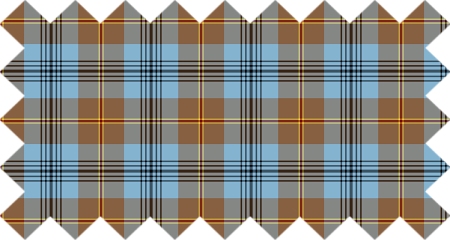

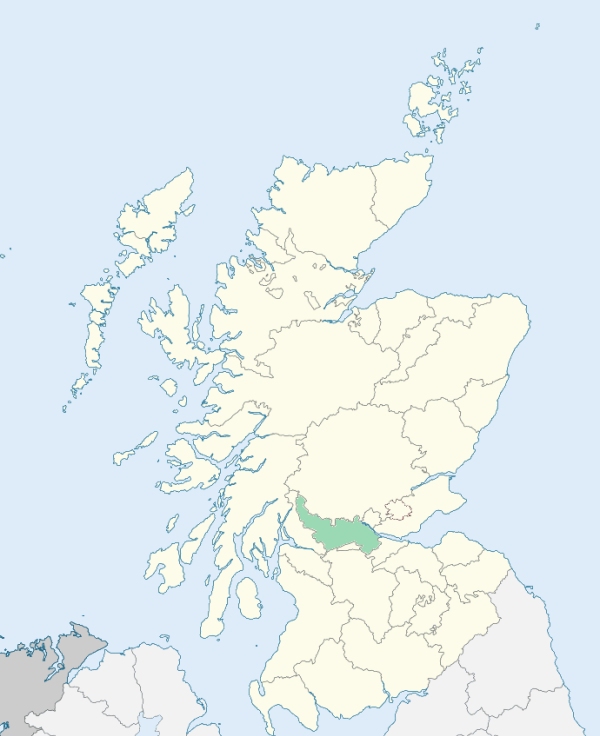
Photo credits: (Featured) Upper Newmarket Street, Falkirk, © 2022 Ian S, used under Creative Commons License CC BY-SA 2.0, (Related Resources) Stirlingshire Locator Map, © 2024, Elianfoo, used under Creative Commons License CC BY-SA 4.0.
Related Resources
Map of Scotland with Stirlingshire highlighted
Location of Stirlingshire
See more maps at Wikimedia Commons
Glossary
  • Burghs:
  • Royal - Towns on royal lands
  • Regality - Towns granted to noblemen/landowners
  • Barony - Towns granted to tenant-in-chief (laird)
  • Police - Towns with elected officials
  • Small - Population under 20,000
  • Large - Population over 20,000
  •  
  • Chapel-of-Ease: Small church for those living far from the main church
  • Collegiate church: See What is a Collegiate Church?
  • Commune kirk: Owned by a larger church
  • Court of Teinds: Controlled funds for support of clergy
  •  
  • Friars:
  • Black - Dominican
  • Grey - Franciscan
  • Red - Trinitarian
  • White - Carmelite
  •  
  • Iron chapel: Building made of corrugated galvanized iron
  •  
  • Landward District: Rural part of a district
  •  
  • Mensal: Source of income to support clergy member (Roman Catholic)
  •  
  • OPR: Old Parochial Register
  •  
  • Pre-Reformation: Before 1560
  • Prebend: Source of income to support a clergy member
  •  
  • QO: Quoad Omnia - Civil and church control
  • QS: Quoad Sacra - Church control only
  •  
  • RD: Registration District - Civil control
  •  
  • Tryst: Large-scale market or fair, particularly for livestock
  •  
Browse the Plaidwerx Shop
Plaidwerx tartan shop
FALKIRK TARTAN
Fabric, clothing, home decor, bags, mugs & more
Browse the collection
The Plaidwerx shop funds this site and furthers its development