Fetlar and Yell
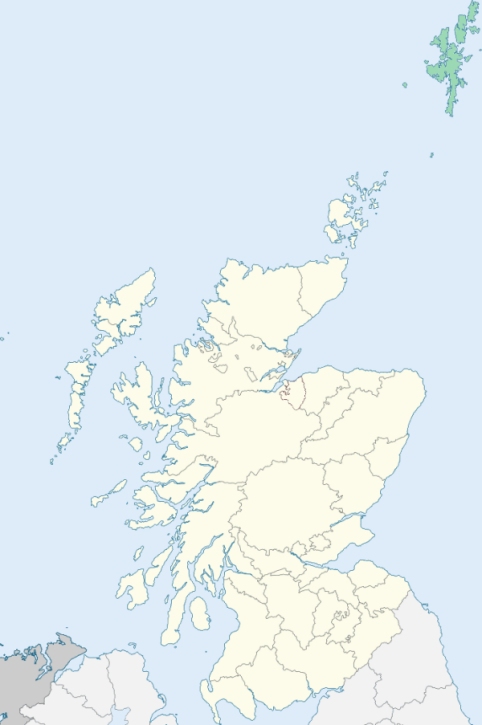
Fetlar and North Yell is a united parish in the north of Shetland.
Fetlar: Fetlar is one of the northerly Shetland islands. It lies three miles east of Yell and four miles south of Unst.
North Yell: Yell is the second largest of the Shetland Islands, and, except Unst, the most northerly of the group. It lies 25 to 40 miles north of Lerwick. It is separated on the west and southwest from the mainland by Yell Sound.
(1892-6: Ordnance Gazetteer of Scotland, by Francis H. Groome)
Cullivoe, Gloup, Gutcher, Kellister, Kirkbister, Odsta, Tofts
The parish of Fetlar & North Yell was a combined parish, formed by the union of the two ancient parishes of Fetlar and North Yell, which were separated from each other by the sea. The ancient parish of North Yell was disjoined from the parish of Fetlar & North Yell, and annexed to the parish of Mid & South Yell. Under this arrangement and with an accompanying simplification in nomenclature, the island of Fetlar, with dependent islands, becomes the parish of Fetlar, and the island of Yell, with dependent islands, parish of Yell. See details. (1892: Boundary of counties and parishes in Scotland as settled by the Boundary Commissioners under the Local Government Act, 1889, by Hay Shennan)
PRE-REFORMATION GOVERNANCE:
POST-REFORMATION GOVERNANCE:
These parishes were united into one charge at the Reformation. In 1689 it was annexed to Yell, but disjoined and re-erected again 9 Feb 1709. 1709. The church of Fetlar was formerly known as Cross Kirk. There was in ancient times a chapel dedicated to St Hillary near Feal, another called Old Kirk at Fetchie, and remains of eight pre-Reformation chapels still exist, at West-a-firth, Gloup, St Olaf's at Ness near Tofts, Down Herra, Kellister, Kirkbister, St John's at Gutcher, and Odsta. The present church was built in 1790. North Yell was disjoined and erected into a parish quoad sacra 15 July 1868.
Includes ministers, licentiates, assistants, readers, and clerks.
Fetlar and North Yell (QO)
North Yell (QO)
(1928: Fasti Ecclesiæ Scoticanæ, by Hew Scott, D. D.)
Parish registers turned over to the Registrar-General, as a result of the Registration of Births, Deaths, and Marriages (Scotland) Act of 1854. The letters B. D. and M. indicate Births (or Baptisms), Deaths (or Burials), and Marriages (or Proclamations of Banns) respectively. Numbers indicate separate volumes or books. Note: These records are by no means complete or without damage; consult the Detailed List of the Old Parochial Registers of Scotland (1872) to learn more about the condition of the records.
| OPR and RD Numbers | |||
|---|---|---|---|
| Date Range | Name | Number | Type |
| 1754-1854 | Fetlar and North Yell | 4 | OPR |
| 1855-1892 | Fetlar | 4-1 | RD |
| 1855-1892 | North Yell | 4-2 | RD |
| 1893-1971 | Fetlar | 4 | RD |
| 1893-1971 | North Yell | 6-2 | RD |
| 1972-2006 | Fetlar | 103 | RD |
| 1972-2006 | Yell (North) | 101 | RD |
| 2009 | Shetland Islands, Fetlar | 103 | RD |
| 2009 | Shetland Islands, North Yell | 101 | RD |
| 2026 | (Fetlar) Shetland Islands Council; Fetlar Community Council | ||
| 2026 | (North Yell) Shetland Islands Council; Yell Community Council | ||
(2009: Parishes and Registration Districts of Scotland - Old and New, National Records of Scotland)
Local community councils (2026) are provided as a potential source of additional information for settlements within the original boundaries of the parish. (Source)
Statistics from informal and official censuses
Fetlar: Brown, Coutts, Hart, Jamieson, Park, Petrie, Robertson, Sinclair, Tait, Tulloch
North Yell: Anderson, Brown, Gray, Henderson, Irvine, Nisbet, Robertson, Sinclair, Spence, Williamson
Note: Names appearing in research materials, other than censuses. Simple names (First name, surname only) have been omitted unless they appear associated with large properties. All women's names, and men's names with occupations, military ranks, or peerage titles are included.
By the Reverend Mr James Gordon.
"We have few regular bred artificers here; the people are all of a mechanical turn; we have 3 smiths in this ministry, and one carpenter; but the people in general, according to the Danish mode, are their own artificers. They are in general very quick in comprehending any branch of literature, or mechanical employments which they apply to. We have here three gentlemen in the medical line, who are very eminent in their profession."
(This section contains excerpts, at times restructured or paraphrased, from an article appearing in Statistical Account of Scotland, Sir John Sinclair, 1791-1799)
Primary Sources:
Statistical Account of Scotland (1791-1799), Volume 13, p. 278
New Statistical Account of Scotland (1834-1845), Volume 15, Section IV, p. 23
See Parish Page Sources for all source information and links.