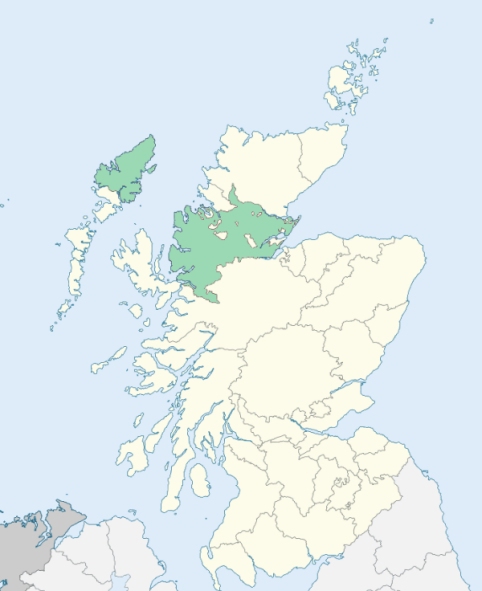
Alness is a parish in the east side of Ross-shire. It is bounded on the south-east by the Cromarty Firth, and on other sides by the parishes of Kiltearn, Kincardine, and Rosskeen. (1867: The Imperial Gazetteer of Scotland, by John Marius Wilson).
Alness, Alness Bridge, Culcraigie, Fyrish, Kildermorie
Novar
PRE-REFORMATION GOVERNANCE:
POST-REFORMATION GOVERNANCE:
Alness was a prebend of the Cathedral of Fortrose. There were chapels in this parish at Fyrish and Culcraigie. Another stood at Kildermorie (Celtair Mhuiri = the Shrine of Mary). There were also Wells of St Mary and St Columba.
Includes ministers, licentiates, assistants, readers, and clerks.
(1928: Fasti Ecclesiæ Scoticanæ, by Hew Scott, D. D.)
Parish registers turned over to the Registrar-General, as a result of the Registration of Births, Deaths, and Marriages (Scotland) Act of 1854. The letters B. D. and M. indicate Births (or Baptisms), Deaths (or Burials), and Marriages (or Proclamations of Banns) respectively. Numbers indicate separate volumes or books. Note: These records are by no means complete or without damage; consult the Detailed List of the Old Parochial Registers of Scotland (1872) to learn more about the condition of the records.
| OPR and RD Numbers | |||
|---|---|---|---|
| Date Range | Name | Number | Type |
| 1783-1854 | Alness | 57 | OPR |
| 1855-1967 | Alness | 57 | RD |
| 2009 | Highland, Rosskeen | 195 | RD |
| 2026 | Highland Council; Alness Community Council | ||
(2009: Parishes and Registration Districts of Scotland - Old and New, National Records of Scotland)
Local community councils (2026) are provided as a potential source of additional information for settlements within the original boundaries of the parish. (Source)
Statistics from informal and official censuses
Campbell, Fraser, MacDonald, Mackenzie, MacLeod, MacRae, Munro, Ross, Stewart, Urquhart
Note: Names appearing in research materials, other than censuses. Simple names (First name, surname only) have been omitted unless they appear associated with large properties. All women's names, and men's names with occupations, military ranks, or peerage titles are included.
By the Reverend Mr Angus Bethune, Minister.
"The people are naturally judicious and acute, possessing considerable vigour of mental faculties. They are also, on the whole, industrious and sober, and, with a few exceptions, of good morals. They abstain carefully from profane swearing, and rarely utter an oath. To the Sabbath they pay a sacred regard; many of them are devoutly disposed, and seem to feel deep impressions of religion on their hearts. They all belong to the Established Church, and discover no particular propensity to fanatical sectarism. It must be confessed, however, that some of them do not distinguish as they ought between the means and the end of religions, an error not uncommon where religion is most professed. The Gaelic or Erse language is generally spoken by the country people, and is their native tongue. The English, however, has made very considerable progress in the parish or 20 years back, owing to the benefits received from the number of schools planted in it much of that time."
(This section contains excerpts, at times restructured or paraphrased, from an article appearing in Statistical Account of Scotland, Sir John Sinclair, 1791-1799)
Primary Sources:
Statistical Account of Scotland (1791-1799), Volume 19, p. 234
New Statistical Account of Scotland (1834-1845), Volume 14, Section II, p. 332
See Parish Page Sources for all source information and links.