Birsay and Harray
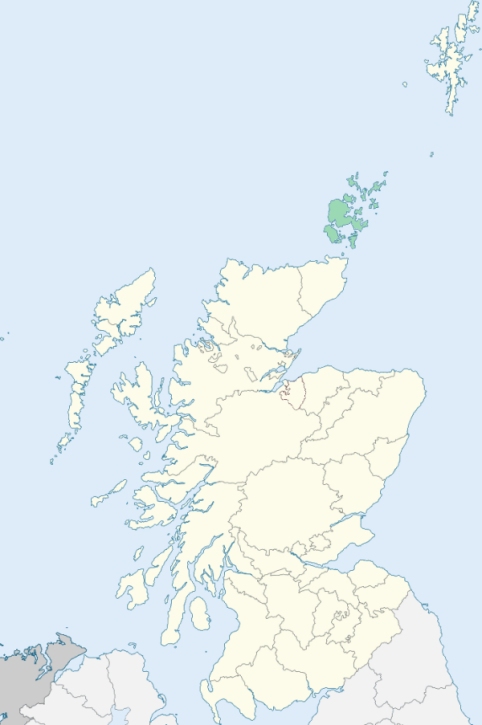
Birsay is a parish in Pomona, or the mainland of Orkney. Birsay occupies the north-west of Pomona and is bounded on the west and north by the sea, and on other sides by the parishes of Evie and Rendall, Harray, and Sandwick. (1867: The Imperial Gazetteer of Scotland, by John Marius Wilson).
Birsay, Harray
PRE-REFORMATION GOVERNANCE:
POST-REFORMATION GOVERNANCE:
Birsay was a prebend of Kirkwall Cathedral. At an early date the church of Birsay was dedicated to St Columba. There is, however, reason to think that, in later times, the dedication may have been changed, perhaps more than once. The chief residence of the Earls of Orkney, in the early Norse times, was at Birsay. There too the first Orcadian Bishops had their seat. The headland at the Brough of Birsay was strongly fortified, and within its lines there was a chapel of St. Peter. In the sixteenth century this parish was united to Harray. It was severed again quoad omnia on 17th July 1876.
Includes ministers, licentiates, assistants, readers, and clerks.
Harray and Birsay (QO)
Birsay (QO)
(1928: Fasti Ecclesiæ Scoticanæ, by Hew Scott, D. D.)
Parish registers turned over to the Registrar-General, as a result of the Registration of Births, Deaths, and Marriages (Scotland) Act of 1854. The letters B. D. and M. indicate Births (or Baptisms), Deaths (or Burials), and Marriages (or Proclamations of Banns) respectively. Numbers indicate separate volumes or books. Note: These records are by no means complete or without damage; consult the Detailed List of the Old Parochial Registers of Scotland (1872) to learn more about the condition of the records.
| OPR and RD Numbers | |||
|---|---|---|---|
| Date Range | Name | Number | Type |
| 1645-1854 | Birsay | 13 | OPR |
| 1855-1971 | Birsay | 13 | RD |
| 1972-2008 | Birsay | 138 | RD |
| 2009 | Orkney Islands, Birsay | 138 | RD |
| 2026 | Orkney Islands Council; Birsay Community Council | ||
(2009: Parishes and Registration Districts of Scotland - Old and New, National Records of Scotland)
Local community councils (2026) are provided as a potential source of additional information for settlements within the original boundaries of the parish. (Source)
Statistics from informal and official censuses
Flett, Harvey, Isbister, Johnston, Linklater, Mowat, Scott, Spence, Stanger, Taylor
Note: Names appearing in research materials, other than censuses. Simple names (First name, surname only) have been omitted unless they appear associated with large properties. All women's names, and men's names with occupations, military ranks, or peerage titles are included.
By the Reverend Mr George Low.
"As to their economy, they cannot spend much; but there is a great odds within these 20 years, both in apparel and living. When I came first to the parish, there was not a piece of English cloth to be seen on a man's back; no figured waistcoats or velvet breeches; their stockings made of their own wool, their shoes of their own leather, tied with good strong sufficient points: Now the case differs; the young fellows, instead of bonnets, almost all wear hats; upon Sunday, a suit of decent S. country clothes, with cotton waistcoats, and corduroy breeches; some few wear cotton or thread stockings; shoes much the same as formerly; buckles universal.
The living, in general among the lower people and servants, is much better, owing to the rise of prices of what they can dispose of, and perhaps by making a more liberal use of what the parish produces. There is not much tea nor sugar expended here. The women, on Sundays or holidays, come out neatly dressed in callicoes, calimancoes, or neat stuffs, with grey or brown cloaks, scarlet cloaks, and a great number of beautiful scarlet plaids; their linen fine, clean, and neat.
The reason of the superior finery of late among the young people, may be attributed to the following particulars: 1st, They have a good part of their own earning to themselves; 2ndly, New methods of earning are daily occurring, and the price of their annual labour produces much more than it did 20 years ago. The old men and women are just in the style of their forefathers. As they are sprung from the Norweigians, they still continue to wear good strong black clothes without dying, called by the ancient Norse, Vadmell, and by them wrought in a loom called Upstagang."
(This section contains excerpts, at times restructured or paraphrased, from an article appearing in Statistical Account of Scotland, Sir John Sinclair, 1791-1799)
Primary Sources:
Statistical Account of Scotland (1791-1799), Volume 14, p. 311
New Statistical Account of Scotland (1834-1845), Volume 15, Section III, p. 148
See Parish Page Sources for all source information and links.