
Plaidwerx


Features: Scottish Parishes » Historic Shires » Orkney » Harray

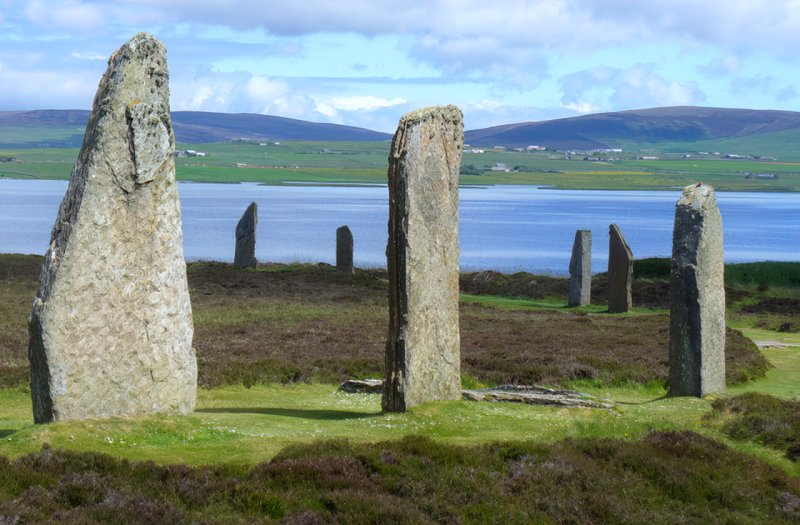
Ring of Brodgar and Loch Harray, by Colin Smith
Ring of Brodgar and Loch Harray, near Sultigeo © 2007, Colin Smith

HARRAY PARISH

TABLE OF CONTENTS


ALTERNATE NAMES AND SPELLING:

Birsay and Harray


LOCATION

Location Description:

Harray is a parish in the northwest of the mainland of Orkney. Harray projects southward from the southeast of Birsay, and is wholly inland. (1892-6: Ordnance Gazetteer of Scotland, by Francis H. Groome)

Shire, District, and Region Timeline:

  • Shire: Orkney (Before 1707)
  • County: Orkney (After 1707)
  • District: Mainland (Before 1930)
  • Landward District: Mainland (1930-1975)
  • Island Area: Orkney (1975-1996)

Cities, Towns, Villages, and Hamlets:

Bimbister, Harray


PARISH TIMELINE

PRE-REFORMATION GOVERNANCE:

  • Diocese: Orkney

POST-REFORMATION GOVERNANCE:

  • Synod: Orkney
  • Presbytery: Cairston

PAROCHIAL OVERVIEW:

The church of Harray was dedicated to St Mary. The parishes of Harray and Birsay were united in the sixteenth century. Their union was annulled quoad omnia on 17 Jul 1876.

CHURCH OF SCOTLAND CLERGY:

Includes ministers, licentiates, assistants, readers, and clerks.

Harray and Birsay (QO)

  • Donald Walker, 1567
  • Robert Stewart, 1567
  • Robert Foulzie, 1570
  • John Swinton (son of Thomas, below), 1599
  • Thomas Swenton (or Swinton), 1616
  • Francis LIddell, 1627
  • Patrick Inglis, 1635
  • Daniel Callendar, 1640
  • James Aitkin, 1642
  • David Kennedy, 1654
  • William Davidson, 1666
  • John Cobb, 1686
  • George Spence, 1692
  • James Sands, 1701
  • Andrew Giles, 1724
  • George Copland, 1730
  • Alexander Geddes, 1736
  • Thomas Hepburn, 1752
  • Hugh Sutherland, 1772
  • George Low, 1774
  • James Thomson, 1796
  • Andrew Anderson, 1797
  • Thomas Blyth, 1836
  • Samuel Trail, 1844
  • David Johnston, 1868
  • William James Steele Dickey, 1895
  • George Frederick Cox, 1922

(1928: Fasti Ecclesiæ Scoticanæ, by Hew Scott, D. D.)


RECORDS

Parochial Registers:

Parish registers turned over to the Registrar-General, as a result of the Registration of Births, Deaths, and Marriages (Scotland) Act of 1854. The letters B. D. and M. indicate Births (or Baptisms), Deaths (or Burials), and Marriages (or Proclamations of Banns) respectively. Numbers indicate separate volumes or books. Note: These records are by no means complete or without damage; consult the Detailed List of the Old Parochial Registers of Scotland (1872) to learn more about the condition of the records.

  • (1) B. and M. 1784-1819; D. 1810-1819
  • (2) B. 1820-54; M. 1817-54; D. 1820-24

OPR and RD Numbers
Date RangeNameNumberType
1784-1854Harray18OPR
1855-1971Harray18RD
1972-2003Harray141RD
2009Orkney Islands, Harray141RD
2026Orkney Islands Council; Harray and Sandwick Community Council

(2009: Parishes and Registration Districts of Scotland - Old and New, National Records of Scotland)

Local community councils (2026) are provided as a potential source of additional information for settlements within the original boundaries of the parish. (Source)

Population:

Statistics from informal and official censuses

  • 1755: 2,200 (Harray and Birsay)
  • 1841: 2,406 (Birsay and Harray)
  • 1861: 819
  • 1901: 675
  • 1911: 608

RESIDENTS


Common Surnames:

Flett, Harvey, Isbister, Johnston, Linklater, Mowat, Scott, Spence, Stanger, Taylor

Land-owners, teachers, and other professionals:

Note: Names appearing in research materials, other than censuses. Simple names (First name, surname only) have been omitted unless they appear associated with large properties. All women's names, and men's names with occupations, military ranks, or peerage titles are included.

  • Thomas DUNDAS, Earl of Zetland

Other residents:

By the Reverend Mr George Low.
"The people are as well contented as poor people can be expected; can put a new suit of clothes upon their backs now and then, partly of their own making, and partly bought; and can make a feast, at a wedding or a christening on their own provisions, with a drink of their own ale. There is a good deal of malt brewed in different houses, where sometimes a battle will happen, which often brings forth a petty lawsuit of little consequence. No cottagers are employed except in harvest, and but few hired servants, most of the labour being done by the children of the house, except in cases of minority. As to artisans, there are 1 smith, a few tailors, a few shoemakers, and few weavers employed in woollen stuffs for their own use."
(This section contains excerpts, at times restructured or paraphrased, from an article appearing in Statistical Account of Scotland, Sir John Sinclair, 1791-1799)


NOTES:

Primary Sources:
Statistical Account of Scotland (1791-1799), Volume 14, p. 297
New Statistical Account of Scotland (1834-1845), Volume 15, Section III, p. 148

See Parish Page Sources for all source information and links.
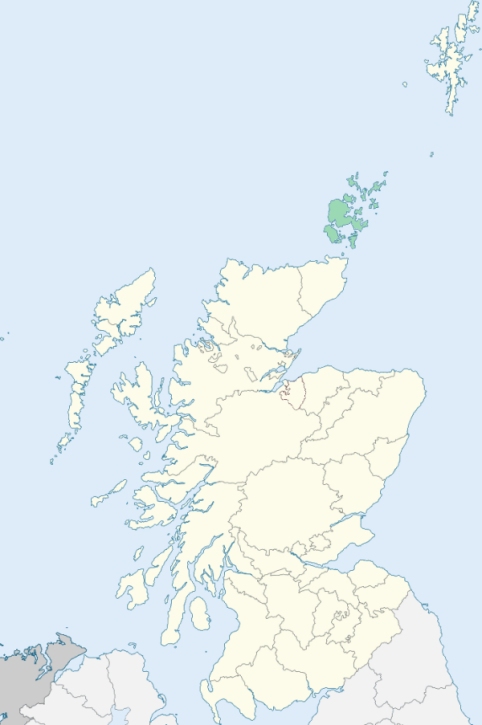

Photo credits: (Featured) Ring of Brodgar and Loch Harray, near Sultigeo, © 2007 Colin Smith, used under Creative Commons License CC BY-SA 2.0, (Related Resources) Orkney Locator Map, © 2024, Susan Wallace, used under Creative Commons License CC BY-SA 4.0.
Related Resources
Map of Scottish highland clans and lowland families
Orkney locator map
See more maps at Wikimedia Commons
Glossary
  • Burghs:
  • Royal - Towns on royal lands
  • Regality - Towns granted to noblemen/landowners
  • Barony - Towns granted to tenant-in-chief (laird)
  • Police - Towns with elected officials
  • Small - Population under 20,000
  • Large - Population over 20,000
  •  
  • Chapel-of-Ease: Small church for those living far from the main church
  • Collegiate church: See What is a Collegiate Church?
  • Commune kirk: Owned by a larger church
  • Court of Teinds: Controlled funds for support of clergy
  •  
  • Friars:
  • Black - Dominican
  • Grey - Franciscan
  • Red - Trinitarian
  • White - Carmelite
  •  
  • Iron chapel: Building made of corrugated galvanized iron
  •  
  • Landward District: Rural part of a district
  •  
  • Mensal: Source of income to support clergy member (Roman Catholic)
  •  
  • OPR: Old Parochial Register
  •  
  • Pre-Reformation: Before 1560
  • Prebend: Source of income to support a clergy member
  •  
  • QO: Quoad Omnia - Civil and church control
  • QS: Quoad Sacra - Church control only
  •  
  • RD: Registration District - Civil control
  •  
  • Tryst: Large-scale market or fair, particularly for livestock
  •