East Monkland
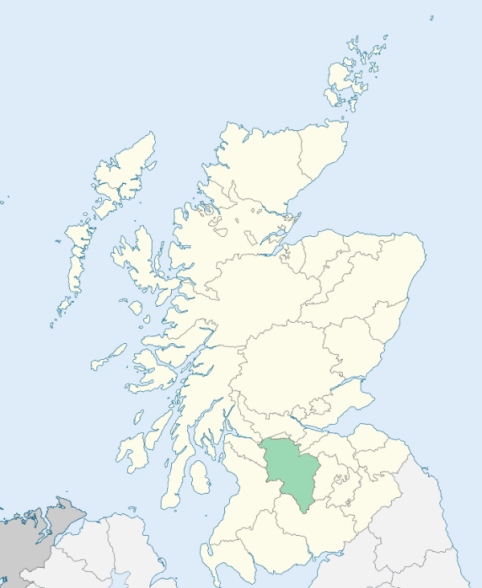
New Monkland is a parish in the north corner of the middle ward of Lanarkshire. It is bounded by the counties of Dumbarton and Stirling, and by the parishes of Shotts, Bothwell, Old Monkland, and Cadder. (1867: The Imperial Gazetteer of Scotland, by John Marius Wilson).
Airdrie, Arbuckle, Arden, Avonhead, Ballochney, Caldercruix, Clarkston or Clerkston, Drumgelloch, Drumgray, East Langrigg, Glenboig, Glengairs, Longriggend, Moffat, New Monkland, Riggend, Roughrigg, Watt's Town or Wattstown, Whiterigg
Auchingray, Cairnhill, Rochsoles
PRE-REFORMATION GOVERNANCE:
POST-REFORMATION GOVERNANCE:
The parish of New Monkland was disjoined from Monkland in 1640. There is a mission chapel within the bounds at Glenboig.
Disjoined Quoad Sacra Parishes:
Airdrie. A chapel was opened at Airdrie 5 February 1792. In or about 1833 a second mission chapel was opened in the town, and was called the East Chapel of Airdrie. On 31 May 1834 the General Assembly granted a chapel constitution, with a definite district, to this East Chapel. On 2 June 1834 a similiar chapel constitution was given to the older mission of 1792, and it was styled the West Chapel Mission. In 1835 a new church building was erected for the West Mission, to take the place of the old chapel built in the eighteenth century. A year or two later a third chapel was built in the town, and was named the High Chapel of Airdrie. On 28 May 1838 it also received a chapel constitution. The High Chapel had little success, and was retained by the Free Church in 1843. Meanwhile, owing to coal-working underneath the East Chapel, that building became unsafe, and in 1851 the East Mission was also brought to an end. There then remained only the West Mission, begun in 1791. On 13 March 1867 it was erected into the parish of Airdrie and was disjoined from New Monkland. There is a mission chapel in the parish at Rawyards.
Caldercruix. The parish of Caldercruix was disjoined from Shotts, New Monkland, and Clarkston, 23 February 1894.
Clarkston. A church was built at Clarkston in 1830. The parish was disjoined from New Monkland and Shotts in November 1869.
Coatdyke. The parish of Coatdyke was disjoined from Airdrie and Coats, 7 July 1905.
Flowerhill. A church was built here by the Reformed Presbyterians in 1873. Its minister and congregation, having petitioned the General Assembly, were admitted to the Church of Scotland that year. The parish of Flowerhill was disjoined from Airdrie, 6 December 1875.
Greengairs. A church was opened 18 June 1876. The parish of Greengairs was disjoined from New Monkland, 13 July 1894.
Meadowfield. A church was built in 1875. The parish of Meadowfield was disjoined from New Monkland and Clarkston, 3 Nov 1905.
Includes ministers, licentiates, assistants, readers, and clerks.
New Monkland (QO)
Airdrie, East Chapel (QS)
Airdrie, West Chapel (QS)
Airdrie, High Chapel (QS)
Caldercruix (QS)
Clarkston (QS)
Coatdyke (QS)
Flowerhill (QS)
Greengairs (QS)
Meadowfield (QS)
(1928: Fasti Ecclesiæ Scoticanæ, by Hew Scott, D. D.)
Parish registers turned over to the Registrar-General, as a result of the Registration of Births, Deaths, and Marriages (Scotland) Act of 1854. The letters B. D. and M. indicate Births (or Baptisms), Deaths (or Burials), and Marriages (or Proclamations of Banns) respectively. Numbers indicate separate volumes or books. Note: These records are by no means complete or without damage; consult the Detailed List of the Old Parochial Registers of Scotland (1872) to learn more about the condition of the records.
| OPR and RD Numbers | |||
|---|---|---|---|
| Date Range | Name | Number | Type |
| 1693-1854 | New Monkland | 651 | OPR |
| 1855-1894 | New Monkland, Airdrie Burgh | 651-1 | RD |
| 1855-1894 | New Monkland Landward | 651-2 | RD |
| 1895-1967 | New Monkland | 651 | RD |
| 1968-1971 | Airdrie | 651 | RD |
| 1972-2006 | Airdrie | 564 | RD |
| 2007-2008 | Airdrie, North Lanarkshire | 564 | RD |
| 2009 | North Lanarkshire, Airdrie | 564 | RD |
| 2026 | North Lanarkshire Council; Cairnhill Community Council Chapelside Community Council Clarkston Community Council Gartlea Community Council Monkland Glen Community Council North Calder Community Council Whinhall Community Council | ||
(2009: Parishes and Registration Districts of Scotland - Old and New, National Records of Scotland)
Local community councils (2026) are provided as a potential source of additional information for settlements within the original boundaries of the parish. (Source)
Statistics from informal and official censuses
Anderson, Brown, Campbell, Hunter, Paterson, Russell, Smith, Thomson, Walker, Wilson
Note: Names appearing in research materials, other than censuses. Simple names (First name, surname only) have been omitted unless they appear associated with large properties. All women's names, and men's names with occupations, military ranks, or peerage titles are included.
By Mr William Mack, Writer in Edinburgh.
"The village, or, as it is commonly called, the town of Airdrie, is the only one in the parish. The number of souls, from an actual survey, taken this present year (1792), is 1762 souls in the town and suburbs. The number of souls in the landward part of the parish is not exactly known, but in the year 1789 there were found to be 1300 persons above 8 years of age, members of the church of Scotland, besides dissenters. Adding these numbers together, with that of the children below 8 years of age, it is evident that the population of the whole parish cannot be less than 3560.
There are in the parish 3 surgeons, 2 druggists, 1 writer, 2 messengers, 204 farmers, 32 shopkeepers, grocers, and victual dealers, 5 slaters, 16 masons, 21 wrights, 2 coopers, 227 weavers, 16 shoemakers, 13 tailors, 4 butchers, 14 millers, 7 bakers including apprentices, 2 candlemakers, 3 brewers, 3 saddlers, 1 clockmaker, 3 iron founders and servants, 25 stocking-makers, and 202 tambourers (children who flower muslin with the tambour-needle).
The distillery of malt spirits, brewing of ale, malting, candle making, and iron founding, are the only manufactures of consequence carried on at Airdrie, as the weavers and tambourers are chiefly employed by Glasgow manufacturers.
Considering the number of the inhabitants, and the want of magistrates, the morals of the people are much better than could be expected. None born in the parish have ever suffered either corporal or capital punishment. The people, in general, are hospitable and sober. Dissipation is only to be found among a few of the lower rank. They attend church regularly, and are generally very clean and well dressed. As every person, who chooses to work, finds employment, the trades people, in general, are in easy circumstances, and appear to be contented. Almost every tradesman is proprietor of a house and garden, which gives them a natural attachment to the place. The people of Airdrie seem to have a peculiar foible of keeping a great number of useless dogs, which are a nuisance, and plainly points out the propriety of a tax being laid on these animals."
(This section contains excerpts, at times restructured or paraphrased, from an article appearing in Statistical Account of Scotland, Sir John Sinclair, 1791-1799)
Primary Sources:
Statistical Account of Scotland (1791-1799), Volume 7, p. 209
New Statistical Account of Scotland (1834-1845), Volume 6, p. 242
See Parish Page Sources for all source information and links.