Dalrossie (Dalarossie)
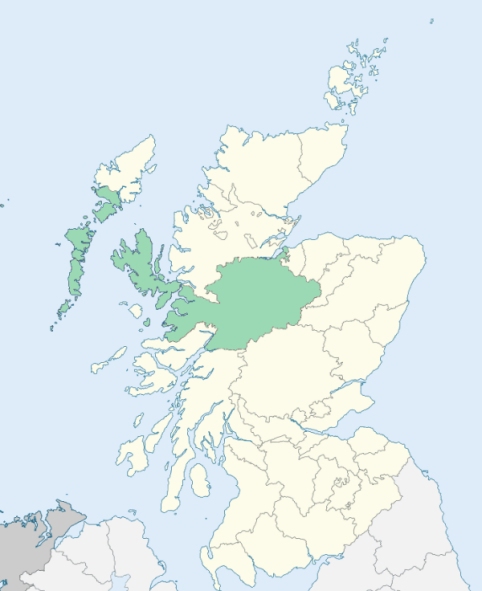
Moy and Dalarossie is a united parish, partly in Nairnshire, but chiefly in Inverness-shire. It is bounded by Cawdor, Ardclach, Duthill, Alvie, and Dunlichity and Daviot. (1867: The Imperial Gazetteer of Scotland, by John Marius Wilson).
Balvraid, Clune, Coignafearn, Corrybrough, Freeburn, Invereen, Kirkton, Moy, Raigbeg, Ruthven, Tomatin, Woodend
Corrybrough, Dalmigavie
The parish of Moy & Dalarossie was situated partly in the county of Inverness and partly in the county of Nairn. No change is made in the county boundary, but the Nairnshire part of the parish has been transferred to the Nairnshire parish of Cawdor. The parish of Moy & Dalarossie now consists solely of that part of the old parish which was in the county of Inverness. See affected properties and landholders. (1892: Boundary of counties and parishes in Scotland as settled by the Boundary Commissioners under the Local Government Act, 1889, by Hay Shennan)
PRE-REFORMATION GOVERNANCE:
POST-REFORMATION GOVERNANCE:
The parishes of Moy and Dalarossie were united about 1500. Each of them still has its own church.
Moy. The vicarage of Moy was, for a long time, united to the parish of Croy.
Dalarossie. The church of Dalarossie was dedicated to St Fergus.
Includes ministers, licentiates, assistants, readers, and clerks.
Moy and Dalarossie (QO)
Dalarossie (QO)
(1928: Fasti Ecclesiæ Scoticanæ, by Hew Scott, D. D.)
Parish registers turned over to the Registrar-General, as a result of the Registration of Births, Deaths, and Marriages (Scotland) Act of 1854. The letters B. D. and M. indicate Births (or Baptisms), Deaths (or Burials), and Marriages (or Proclamations of Banns) respectively. Numbers indicate separate volumes or books. Note: These records are by no means complete or without damage; consult the Detailed List of the Old Parochial Registers of Scotland (1872) to learn more about the condition of the records.
| OPR and RD Numbers | |||
|---|---|---|---|
| Date Range | Name | Number | Type |
| 1788-1854 | Moy and Dalarossie | 105 | OPR |
| 1855-1970 | Moy and Dalarossie | 105 | RD |
| 2009 | Highland, Inverness | 240 | RD |
| 2026 | Highland Council; Strathdearn Community Council | ||
(2009: Parishes and Registration Districts of Scotland - Old and New, National Records of Scotland)
Local community councils (2026) are provided as a potential source of additional information for settlements within the original boundaries of the parish. (Source)
Statistics from informal and official censuses
Davidson, Dunbar, Fraser, Grant, Kennedy, MacBean, MacKintosh, Noble, Robertson, Rose
Note: Names appearing in research materials, other than censuses. Simple names (First name, surname only) have been omitted unless they appear associated with large properties. All women's names, and men's names with occupations, military ranks, or peerage titles are included.
By the Reverend Mr William M'Bean, late Minister of that Parish, and now Minister of Alves.
"In these united parishes, there are no towns, villages, nor manufactories of any kind. All the inhabitants are employed in cultivating the ground, and in tending their cattle, excepting a few artificers; such as, square wrights, blacksmiths, weavers, tailors and shoemakers, who work for the other inhabitants.
The inhabitants of these parishes are, in general, sober, peaceable, and industrious. Crimes of an atrocious nature are rare among them. The language, dress, and most of the peculiarities of the old Highlanders, continue in this place, with very little alteration. Excepting the gentry, few of the inhabitants of this place speak English; nor do they discover much inclination to acquire that language. The tartan plaid and kilt, and the other parts of dress peculiar to the Highlanders, are still in general use among the men; the women, in like manner, retain the Highland dress of that sex. Their houses are of the same construction with those of their predecessors for ages past; and they still place the fire in the middle of the house, and the family sits in the form of a circle around it."
(This section contains excerpts, at times restructured or paraphrased, from an article appearing in Statistical Account of Scotland, Sir John Sinclair, 1791-1799)
Primary Sources:
Statistical Account of Scotland (1791-1799), Volume 8, p. 499
New Statistical Account of Scotland (1834-1845), Volume 14, Section I, p. 97
See Parish Page Sources for all source information and links.