Calder, Braaven, Baraven
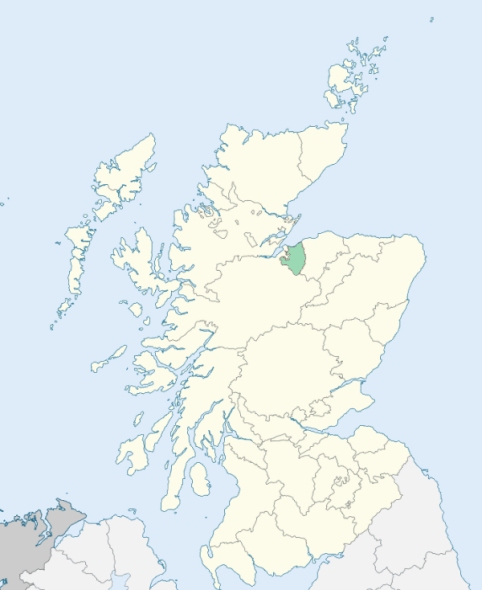
Calder, or Cawdor, is a parish partly in Inverness-shire, but chiefly in Nairnshire. (1867: The Imperial Gazetteer of Scotland, by John Marius Wilson).
Barevan, Brackla, Cawdor, Clunas, Culcharry, Piperhill, Urchany
(1) The parish of Moy & Dalarossie was situated partly in the county of Inverness and partly in the county of Nairn. No change is made in the county boundary, but the Nairnshire part of the parish has been transferred to the Nairnshire parish of Cawdor. The parish of Moy & Dalarossie now consists solely of that part of the old parish which was in the county of Inverness. See affected properties and landholders. (1892: Boundary of counties and parishes in Scotland as settled by the Boundary Commissioners under the Local Government Act, 1889, by Hay Shennan)
(2) The parish of Cawdor was situated partly in the county of Inverness and partly in the county of Nairn. The Inverness-shire portion has been transferred to the county of Nairn, the whole parish being thus placed in that county. See affected properties and landholders. (1892: Boundary of counties and parishes in Scotland as settled by the Boundary Commissioners under the Local Government Act, 1889, by Hay Shennan)
PRE-REFORMATION GOVERNANCE:
POST-REFORMATION GOVERNANCE:
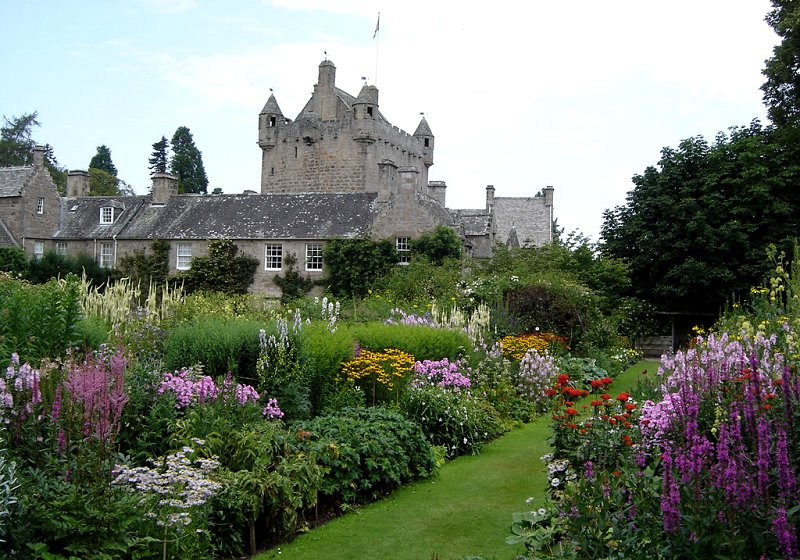
The parish church was dedicated to St Ewan. It was a commune kirk of the Cathedral of Elgin. There were chapels within the bounds at Old Cawdor, Cawdor Castle, and Dallas in the Streens.
Includes ministers, licentiates, assistants, readers, and clerks.
(1928: Fasti Ecclesiæ Scoticanæ, by Hew Scott, D. D.)
Parish registers turned over to the Registrar-General, as a result of the Registration of Births, Deaths, and Marriages (Scotland) Act of 1854. The letters B. D. and M. indicate Births (or Baptisms), Deaths (or Burials), and Marriages (or Proclamations of Banns) respectively. Numbers indicate separate volumes or books. Note: These records are by no means complete or without damage; consult the Detailed List of the Old Parochial Registers of Scotland (1872) to learn more about the condition of the records.
| OPR and RD Numbers | |||
|---|---|---|---|
| Date Range | Name | Number | Type |
| 1716-1854 | Cawdor | 122 | OPR |
| 1855-1967 | Cawdor | 122 | RD |
| 2009 | Highland, Nairn | 270 | RD |
| 2026 | Highland Council; Cawdor and West Nairnshire Community Council | ||
(2009: Parishes and Registration Districts of Scotland - Old and New, National Records of Scotland)
Local community councils (2026) are provided as a potential source of additional information for settlements within the original boundaries of the parish. (Source)
Statistics from informal and official censuses
Campbell, Clark, Dallas, Davidson, Falconer, Fraser, Grant, MacKintosh, Sinclair, Tulloch
Note: Names appearing in research materials, other than censuses. Simple names (First name, surname only) have been omitted unless they appear associated with large properties. All women's names, and men's names with occupations, military ranks, or peerage titles are included.
By the Reverend Mr Alexander Grant.
"There is every reason to believe that the parish is better peopled now than it was some years ago. Although the farms are enlarged, several small ones being thrown into one, yet the number of improvers of moor and waste lands is increasing. Tradesmen are more numerous and so are cottagers. The parish may now contain about 850 persons, above the age of 6; of which 400 may be males, and 450 females. There are about 160 inhabited houses, and about 5 or 6 to a family.
The number of farmers, and their families, is upwards of 60; of traders, dyers, carpenters, shoemakers, wheel-wrights, tailors, smiths, masons, &c. upwards of 40, and about 20 apprentices. There are upwards of 150 labouring servants, including both sexes; 2 students at the University; 1 person a native of Wales, and 1 of America. There has been no emigration of consequence from this parish; but every other year there are some young lads, in the character of adventurers, servants, and apprentices, who go to America, London, Edinburgh, and other parts.
The people in general are humane, moral, and religious. There are few quarrels or lawsuits among them, and horning* has scarcely been executed against any one in the parish for many years. They seem to be very much contented with their situation, and, as a proof of this, show little or no desire to leave the parish."
*Horning: A horn is blown three times in a public place to proclaim that a debtor has failed to obey a summons to pay, and is consequently now considered an outlaw, subject to arrest and imprisonment. (See: Letters of horning, at Wikipedia)
(This section contains excerpts, at times restructured or paraphrased, from an article appearing in Statistical Account of Scotland, Sir John Sinclair, 1791-1799)
Primary Sources:
Statistical Account of Scotland (1791-1799), Volume 4, p. 349
New Statistical Account of Scotland (1834-1845), Volume 13, Section III, p. 19
See Parish Page Sources for all source information and links.